All species › Waders, gulls and terns › Sandpipers and snipes › Red-Necked Phalarope
Red-Necked Phalarope | Phalaropus lobatus
Grauwe franjepoot | Falaropo Picofino
The Red-Necked Phalarope is the smallest phalarope, a slender wader that picks its food from the water surface while swimming. The world population winters mainly in the Arabian Sea and off Peru; in southern Africa it is a rare but fairly regular visitor, mostly on the salt pans of the Namibian coast.
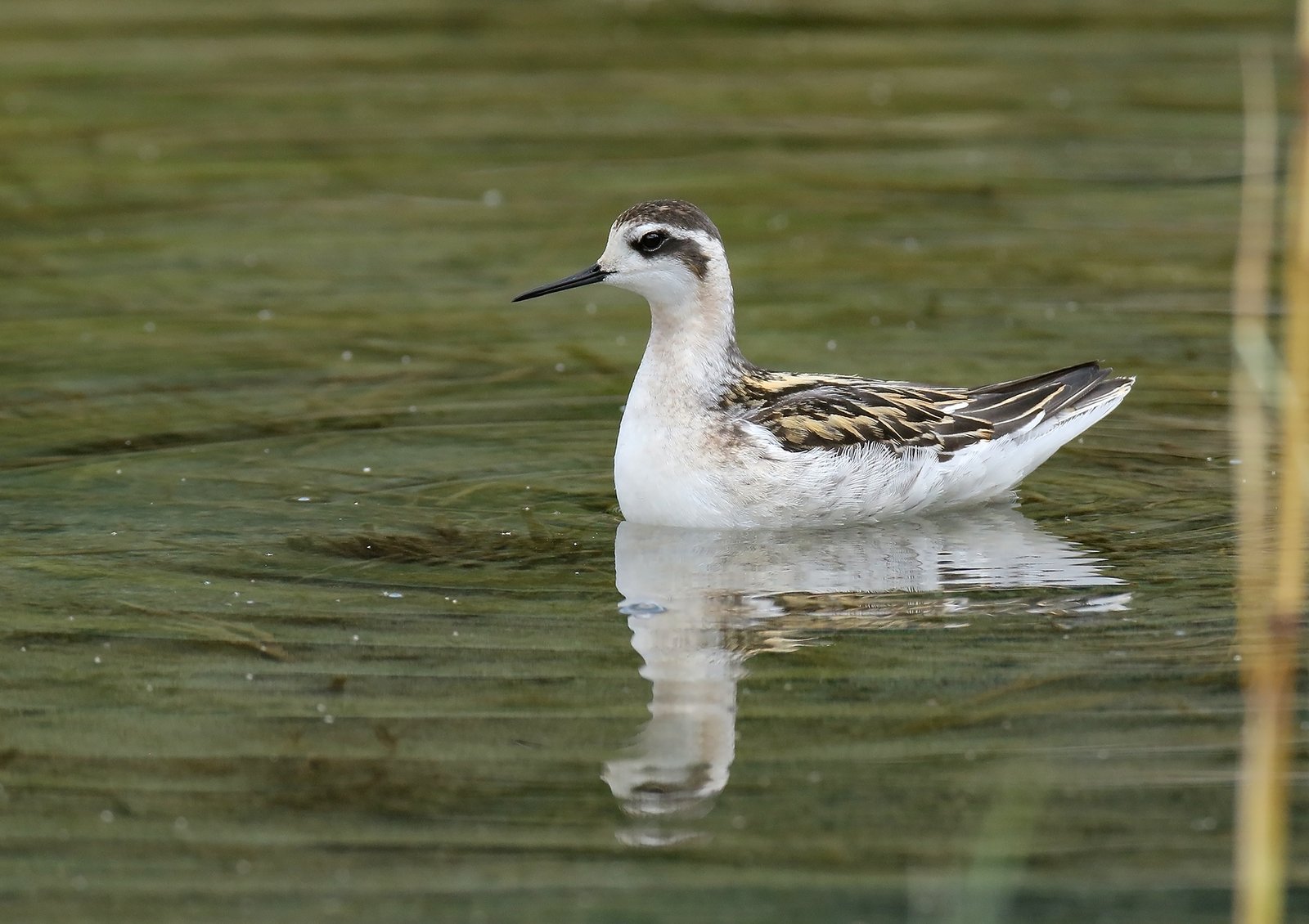
Click a thumbnail to switch the photo above.
Voice
A short, soft but rather hard chik or kip, sometimes in quick series from a group.
Recording: Stanislas Wroza — CC BY-NC-SA 4.0 · converted to mono · xeno-canto
Identification
18–19 cm. In non-breeding plumage white below with a black patch behind the eye and a dark rear crown; the upperparts are dark grey with two pale, whitish stripes along mantle and scapulars. The bill is black, short and needle-fine. In flight it shows a narrow white wing bar on a dark wing. In breeding plumage the female has a slate-grey head, white throat and a chestnut neck side; the male is duller. It swims lightly and nimbly, with rapid pecking, and often spins like a top.
Confusion species
Red Phalarope Phalaropus fulicarius is larger, with a thicker bill, often yellow at the base, and plain pale grey upperparts without stripes; it mostly stays at sea. Wilson's Phalarope Phalaropus tricolor is larger, with longer legs and bill, a white rump and no wing bar. Little Stint Calidris minuta is just as small but browner and does not swim.
Habitat
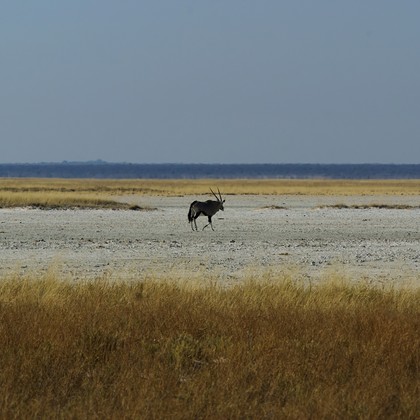
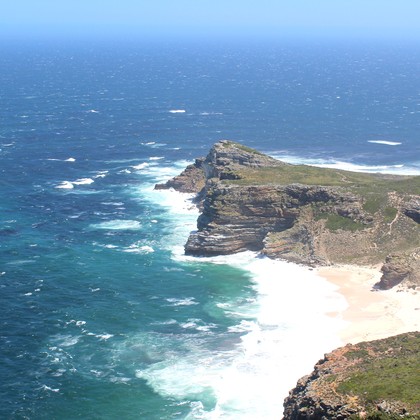
In the region mainly salt pans, salt works, sewage ponds and brackish coastal lagoons; less often fresh and saline pans inland. Elsewhere in winter it occurs in flocks on the open sea.
Where the bird is most at home, classified by the vegetation units of southern Africa.
Range and movements
Rare but almost annual on the Namibian coast, with Walvis Bay and Swakopmund the best sites; otherwise scattered records in South Africa (both coast and interior, including highveld pans), and exceptionally in Botswana, Zimbabwe and Zambia. Beyond the region it breeds right around the Arctic; the main wintering areas lie in the Arabian Sea, around Indonesia and off the west coast of South America.
- Resident
- Summer visitor (c. Oct–Mar)
- dark = core range, pale = thinly spread
How and when to look
Between November and March check the salt works of Walvis Bay and Swakopmund, where one may spin among hundreds of Curlew Sandpipers and Little Stints. Look for a small grey-and-white bird that swims rather than walks.
Conservation status
Not threatened, but the world population has declined and important staging areas, such as the Bay of Fundy, have collapsed. In the region it is too rare to matter much, though the Namibian salt works are a regular stopping place.
Scientific name
Phalaropus lobatus | (Linnaeus, 1758)
Linnaeus described the species in 1758 as Tringa tobata; because it was later moved to another genus, the author and year stand in brackets. The genus Phalaropus was introduced in 1760 by Brisson. Phalaropus comes through French phalarope from Greek phalaris 'coot' and pous 'foot': like coots, phalaropes have lobed toes. lobatus is modern Latin for 'lobed', after the swimming lobes along the toes. The specimen the first description was based on came from Hudson Bay.