All species › Passerines › Shrikes › Red-Tailed Shrike
Red-Tailed Shrike | Lanius phoenicuroides
Turkestaanse klauwier | Alcaudón Colirrojo
The Red-Tailed Shrike breeds in the steppes and semi-deserts of Central Asia and normally winters in Arabia and north-eastern Africa. In southern Africa it is an extreme rarity: only a handful of pale, rufous-tailed shrikes have been recorded, and not all of them have been securely identified to species. Anyone who sees a brown shrike with a rufous tail in thornveld has good reason to look carefully and take photographs.
Voice
Almost silent on the wintering grounds. In alarm a hard chek or a harsh cherr, similar to that of Red-Backed Shrike.
Recording: Hsishu — CC BY-NC-SA 4.0 · converted to mono · xeno-canto
Identification
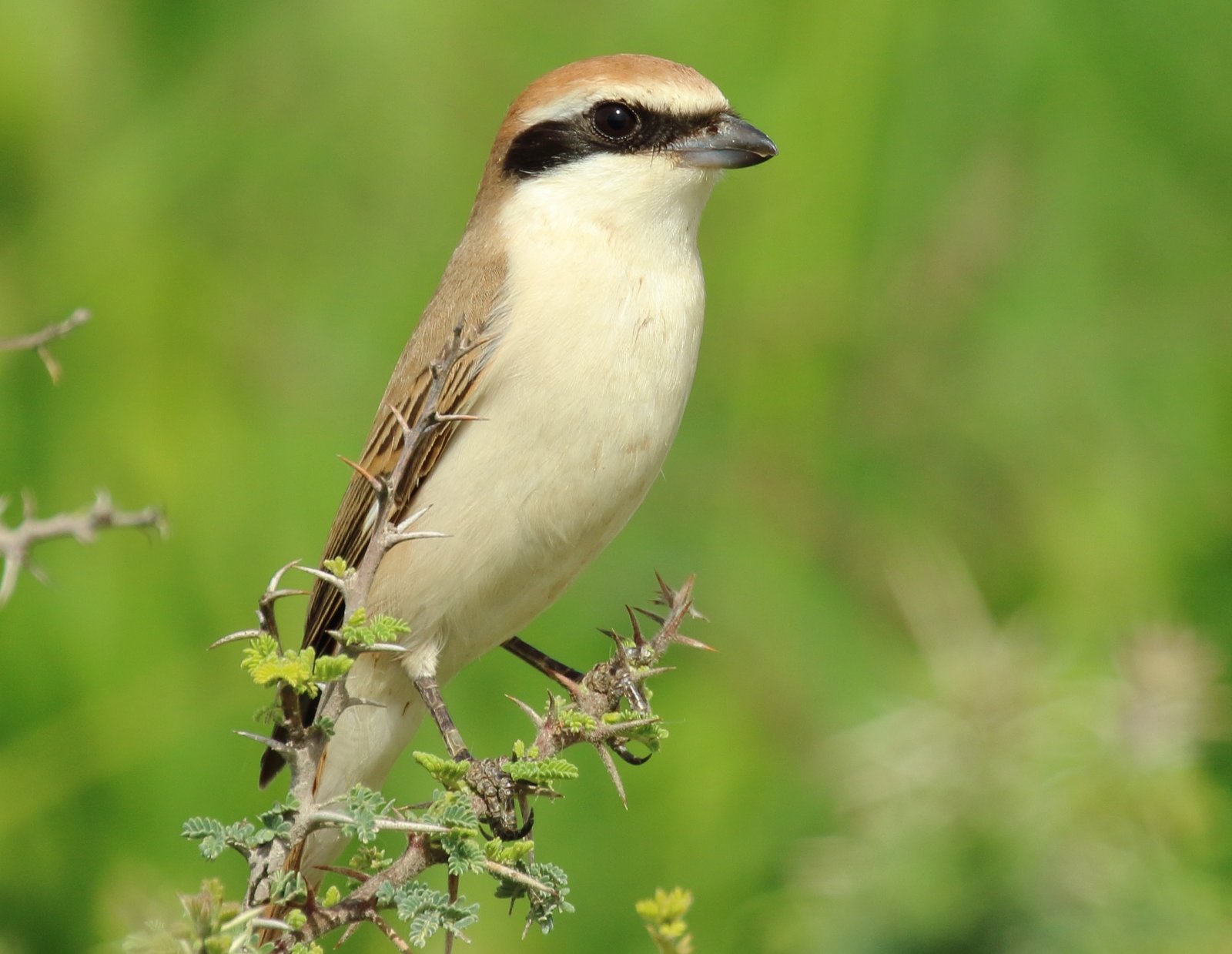
17–18 cm. Sandy-brown to grey-brown above, with a warmer rufous-brown crown that contrasts with the back. A black mask runs from the bill through the eye, with a narrow white supercilium above it. The rump and tail are bright rufous. The underparts are white with a pale sandy wash on the flanks. The male often shows a small white patch at the base of the primaries. The female is duller, with a browner mask and fine scaling on the sides of the breast. First-winter birds are scaled on the crown and flanks and have a pale mask.
Confusion species
Female and young Red-Backed Shrikes Lanius collurio, which are common in the same habitats, are darker and warmer brown above, more heavily scaled below and have a brown, not rufous, tail. Isabelline Shrike Lanius isabellinus, which must also be considered as a rarity, is more uniformly pale sandy with a crown the same colour as the back and a less sharply defined mask; the two are very similar and separating them needs good photographs.
Habitat
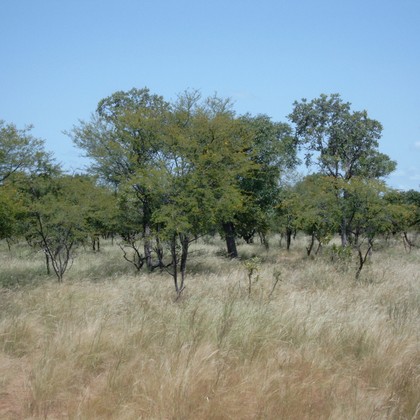
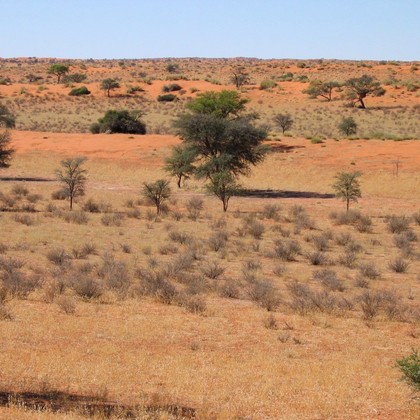
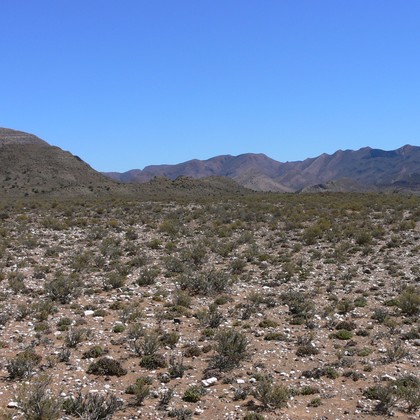
Dry, open country with low bushes: acacia thornveld, Kalahari thornveld and bushy parts of the Karoo, and on the breeding grounds steppe and semi-desert with scrub. Like other shrikes it hunts large insects from a low perch.
Where the bird is most at home, classified by the vegetation units of southern Africa.
Range and movements
In the region only as a vagrant: there are a few reports of rufous-tailed shrikes from, among others, Zambia, Botswana, Namibia, Zimbabwe and South Africa, some of which have been attributed to this species. It breeds from Iran and Afghanistan to Kazakhstan and western China, and winters in Arabia, southern Iran and Pakistan and north-eastern Africa south to Kenya and northern Tanzania.
How and when to look
A lucky find, most likely from November to March among Red-Backed Shrikes in dry thornveld. Photograph the bird from the side and from behind, paying attention to crown, mask, tail and primaries, and report the sighting to the national rarities committee.
Conservation status
Not threatened. The species has a large breeding range and the population is considered stable. Locally, loss of scrubby steppe to overgrazing and agriculture plays a part.
Scientific name
Lanius phoenicuroides | (Schalow, 1875)
Schalow described the species in 1875 as Otomela phoenicuroides; because it was later moved to another genus, the author and year stand in brackets. The genus Lanius was introduced in 1758 by Linnaeus. Lanius is Latin for 'butcher', from shrikes' habit of impaling prey on thorns and barbed wire. phoenicuroides means 'resembling a redstart', after the genus Phoenicurus, from Greek phoinix 'red' and -ouros 'tailed', in reference to the rufous tail. The specimen the first description was based on came from Shymkent, Kazakhstan.