All species › Passerines › Indigobirds and whydahs › Shaft-Tailed Whydah
Shaft-Tailed Whydah | Vidua regia
Koningswida | Viuda Real
The Shaft-Tailed Whydah is the whydah of the arid west of southern Africa and almost endemic to the region. The breeding male is black and golden-buff, with a red bill and four long tail feathers with bare shafts and a small vane at the tip. It parasitises the Violet-Eared Waxbill.
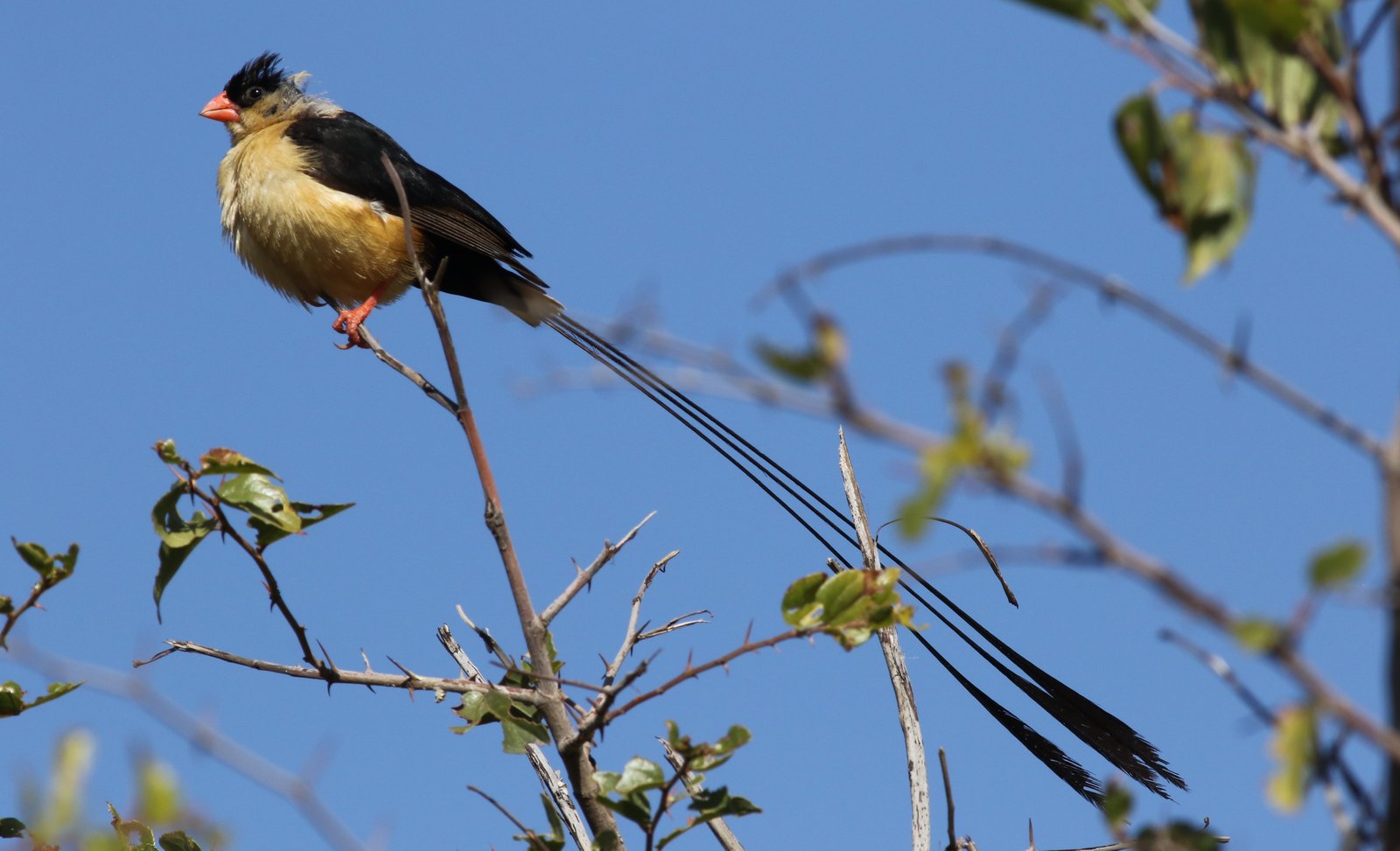
Click a thumbnail to switch the photo above.
Voice
The male sings a lively mixture of its own squeaky notes and imitations of the Violet-Eared Waxbill, including a whistled choo-weet and thin, falling tseee notes. The call is a dry chip or chik.
Recording: Tony Archer — CC BY-NC-SA 4.0 · converted to mono · xeno-canto
Identification
12–34 cm; the body measures 12–13 cm, and the breeding male adds four central tail feathers up to about 20 cm, bare-shafted for most of their length and ending in a narrow black vane. Crown, back, wings and tail are black; face, nape and underparts warm golden-buff. Bill and legs are red. The female is streaked brown above and pale buff below, with a rather plain, rufous-brown head with a dark crown stripe and a faint eye-stripe; bill and legs are pink to red. The non-breeding male resembles the female, with a more sharply marked head. Juveniles are plain grey-brown.
Confusion species
The breeding male is unmistakable: Pin-Tailed Whydah (Vidua macroura) is black and white with ordinary narrow tail feathers, and Long-Tailed Paradise Whydah (Vidua paradisaea) has a broad black tail and a chestnut breast. The female Pin-Tailed Whydah has sharper black-and-buff head stripes; females of the paradise whydahs have a dark grey bill and a contrasting black-and-white head.
Habitat
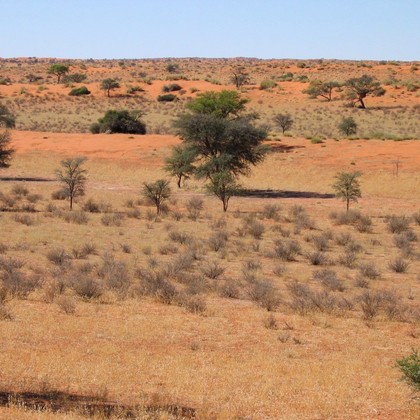
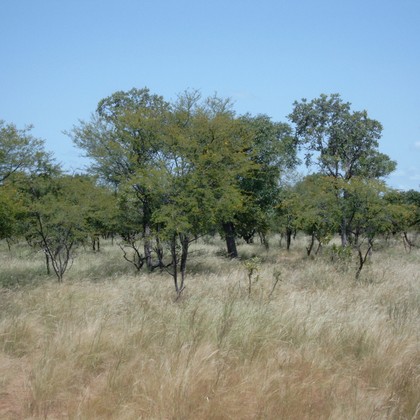
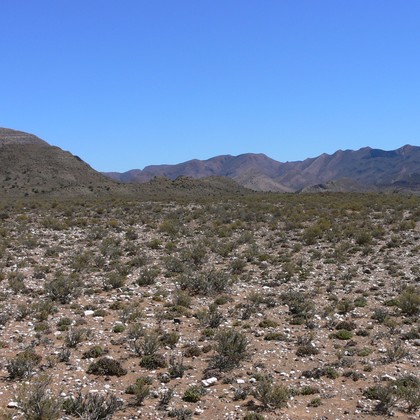
Dry thornveld, Kalahari thornveld, acacia savanna with bare ground and the transition to Nama Karoo, often at waterholes and around farmsteads. It eats grass seeds from the ground. It lays its eggs mainly in the nests of Violet-Eared Waxbill (Granatina granatina), less often with Black-Faced Waxbill (Brunhilda erythronotos).
Where the bird is most at home, classified by the vegetation units of southern Africa.
Range and movements
Almost endemic to the region: Namibia (except the Namib), Botswana, the Northern Cape, North West, Limpopo, the western Free State and Gauteng, western and southern Zimbabwe and southern Mozambique, as well as southern Angola. Hardly any further.
- Resident
- Summer visitor (c. Oct–Mar)
- Winter visitor (c. Apr–Sep)
- dark = core range, pale = thinly spread
How and when to look
In the Kgalagadi, Pilanesberg or Etosha at waterholes, from December to April. The male sings and displays from a high twig and dances above the female with a spread tail. Where Violet-Eared Waxbills come in to drink, the whydahs often follow in their wake.
Conservation status
Not threatened and common in the arid west. No major threats are known.
Scientific name
Vidua regia | (Linnaeus, 1766)
Linnaeus described the species in 1766 as Emberiza regia; because it was later moved to another genus, the author and year stand in brackets. The genus Vidua was introduced in 1816 by Cuvier, GLCFD. Vidua is the Latin word for 'widow'. regia is Latin for 'royal' — for the male's handsome black-and-buff plumage and long tail shafts. The specimen the first description was based on came from Africa (unspecified; southern Angola later suggested).