All species › Passerines › White-eyes › Southern Yellow White-Eye
Southern Yellow White-Eye | Zosterops anderssoni
Zuidelijke Afrikaanse brilvogel | Anteojitos del Zambeze
The Southern Yellow White-Eye is the bright yellow white-eye of the savanna belt in the north and east of the region, from Angola to Mozambique and north-eastern South Africa. Until recently it was included in the African Yellow White-eye and appears under that name in older books.
Voice
The contact call is a soft, plaintive tsiu or tswee, repeated constantly by a party. The song is a fast, varied, rippling series of high, sweet whistles and chirps, slightly higher and thinner than that of Cape White-Eye.
Recording: Stein Ø. Nilsen — CC BY-NC-SA 4.0 · converted to mono · xeno-canto
Identification
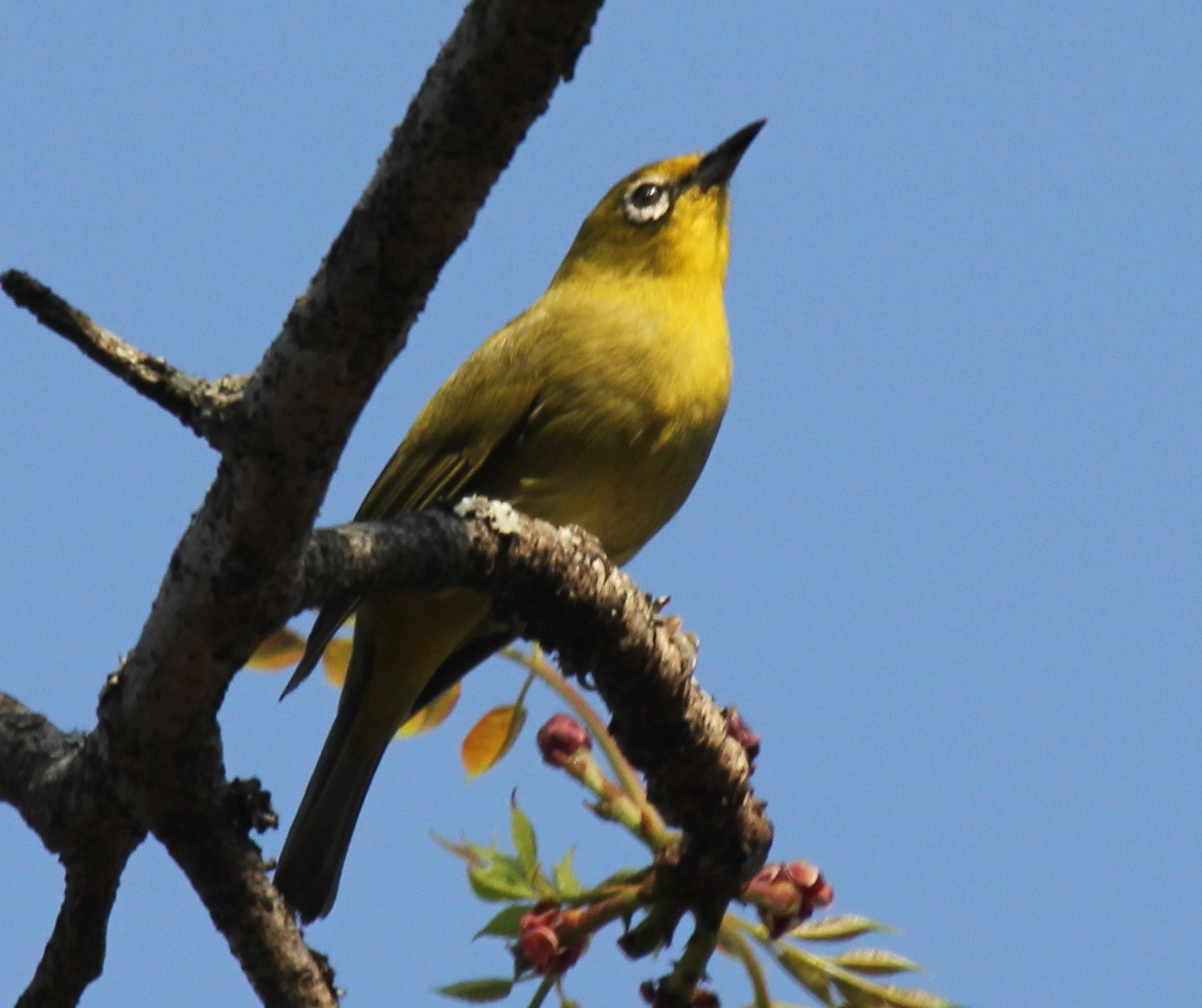
10–11 cm, the smallest white-eye in the region. The upperparts are yellowish green, the forehead and lores bright yellow. The broad white eye-ring is very conspicuous and is broken in front of the eye by a narrow black line. The underparts are wholly bright lemon-yellow from throat to undertail, without a grey belly or buff flanks. The bill is thin, pointed and dark, the legs blue-grey. The sexes are alike; juveniles are duller, with a narrower eye-ring. The race in north-eastern South Africa and southern Mozambique is slightly greener above. It moves through the foliage in small, active parties and often joins mixed flocks.
Confusion species
Cape White-Eye Zosterops virens is larger, darker green above and has a grey or greenish-grey belly with only the throat and vent yellow; the two overlap in Limpopo, Mpumalanga and northern KwaZulu-Natal, where Cape White-Eye tends to occur in moister forest and gardens. Orange River White-Eye Zosterops pallidus has buff flanks and a white belly. Northern Yellow White-Eye Zosterops senegalensis of northern and central Angola is barely separable in the field. Yellow-Bellied Eremomela Eremomela icteropygialis has a grey head and back and only a yellow belly, with no white eye-ring.
Habitat
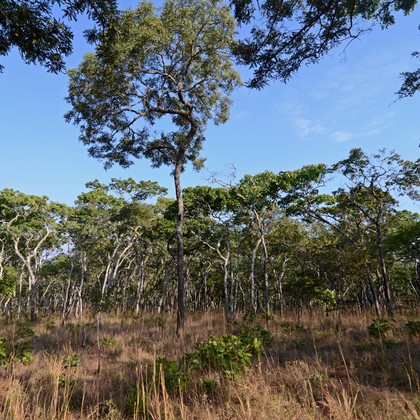
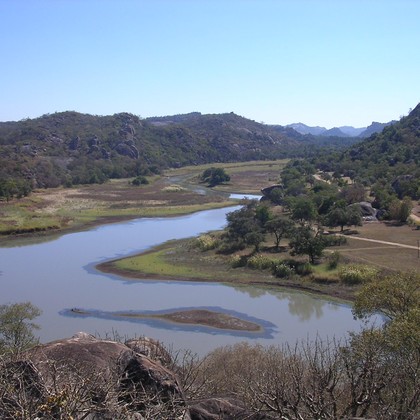
Miombo, mixed broadleaf woodland, tall mopane woodland, gallery and riverine forest, and forest edges; also gardens, parks and orchards. It forages in the canopy for small insects, nectar and soft fruit.
Where the bird is most at home, classified by the vegetation units of southern Africa.

Range and movements
In Angola in the south and east; in northern Namibia (Kavango and the Zambezi Region, and locally in the north-central part); in northern and eastern Botswana; across almost all of Zambia, Malawi, Zimbabwe and Mozambique; in South Africa in Limpopo, the Mpumalanga lowveld and northern KwaZulu-Natal; scarce in the lowveld of Eswatini. Beyond the region it occurs in southern DR Congo and southern and south-western Tanzania.
- Resident
- Summer visitor (c. Oct–Mar)
- Winter visitor (c. Apr–Sep)
- Passage (Mar–Apr, Oct–Nov)
- dark = core range, pale = thinly spread
How and when to look
All year; in woodland and along rivers listen for the plaintive tsiu of a roving party, for example in Kruger National Park, the Chobe area or along the Zambezi. In the overlap zone with Cape White-Eye the wholly yellow belly is the deciding feature.
Conservation status
Not assessed separately by the IUCN; it is included in African Yellow White-eye in the broad sense (Zosterops senegalensis, Least Concern). Common and widespread, with stable numbers; the species also uses planted trees and gardens.
Scientific name
Zosterops anderssoni | Shelley, 1892
Shelley described the species in 1892 and placed it straight away in the genus where it still stands. The genus Zosterops was introduced in 1827 by Vigors & Horsfield. Zosterops comes from the Greek zōstēr, 'belt, girdle', and ōps, 'eye' — for the white eye-ring shown by most white-eyes. anderssoni honours the Swedish explorer and hunter Charles John Andersson (1827–1867), who collected birds in present-day Namibia and Botswana. The specimen the first description was based on came from Elephant Vley, Damaraland, Namibia.