All species › Passerines › Wagtails and pipits › Western Yellow Wagtail
Western Yellow Wagtail | Motacilla flava
Gele kwikstaart | Lavandera Boyera
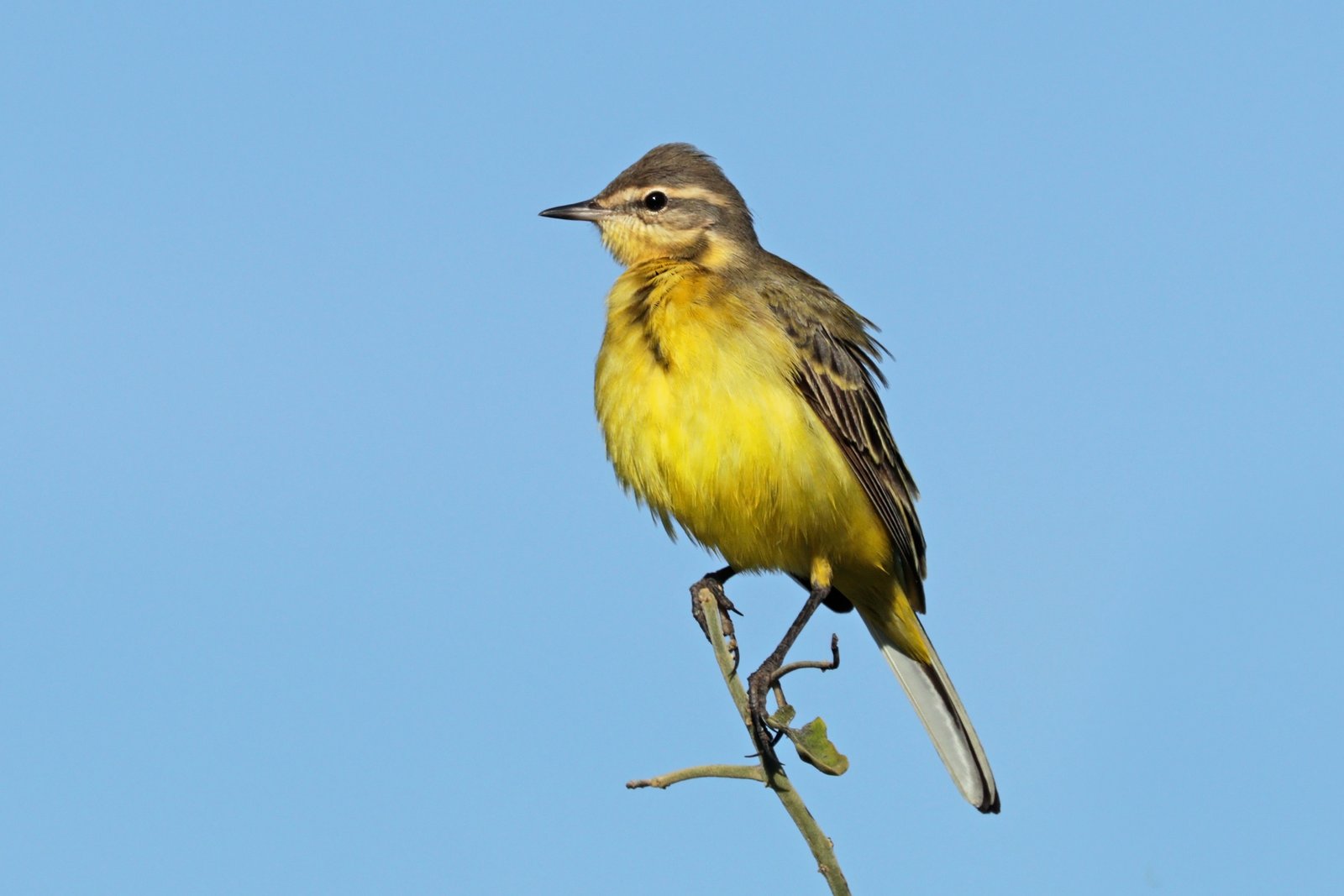
The Western Yellow Wagtail is a Palearctic migrant that spends the southern summer in flocks on wet grassland, shores and pastures, often among the legs of grazing cattle. Of the many races wintering here, males can often be identified by head colour at the end of summer, when they moult into breeding plumage.
Voice
A thin, drawn-out tsweep or pseeu, often in flight and when flocks take off; overflying birds give themselves away by it. The song, sometimes heard in March, is a simple scratchy tsree-tsrip.
Recording: Stanislas Wroza — CC BY-NC-SA 4.0 · converted to mono · xeno-canto
Identification
16 to 18 cm, with a shorter tail than the other wagtails. Back olive-green, underparts yellow, legs black, two narrow pale wing bars. From November to February many birds are in dull plumage: olive-brown above, dull white to pale yellow below; first-years may lack yellow almost entirely and show a dark necklace of spots. From February–March males moult into breeding plumage, with a different head in each race: blue-grey with a white supercilium (flava), dark slate without a supercilium (thunbergi), yellow-green (lutea) or black (feldegg). Females are duller, with a pale supercilium.
Confusion species
Citrine Wagtail (Motacilla citreola), an extremely rare vagrant, has a grey back, broad white wing bars and in every plumage a pale surround to the ear coverts. Grey Wagtail (Motacilla cinerea) has a grey back, a much longer tail and flesh-coloured legs and lives along streams. Young Cape Wagtails (Motacilla capensis) with a yellowish wash have a browner back and the hint of a breast band. Yellow-Throated Longclaw (Macronyx croceus) is much larger and heavier, with a streaked back and a black breast band.
Habitat
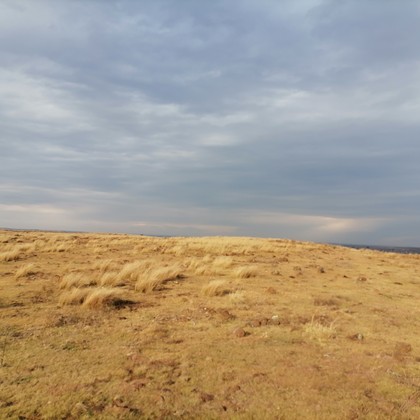
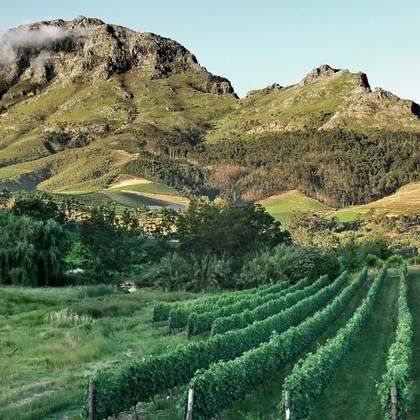
Short wet grassland, vleis, flooded pastures, margins of dams and pans, sports fields and irrigated fields. It follows grazing cattle and catches the insects they flush. It roosts in flocks in reed and papyrus beds.
Where the bird is most at home, classified by the vegetation units of southern Africa.

Range and movements
Most numerous in the north: Zambia, Malawi, Angola, the Okavango and Chobe in Botswana, the Zambezi Region of Namibia, Zimbabwe and Mozambique. Scarcer further south; in South Africa mainly in the north and east (Limpopo, Mpumalanga, Gauteng and KwaZulu-Natal) and locally to the Cape. Breeds in Europe, North Africa and western Asia to western Siberia and winters in sub-Saharan Africa.
- Resident
- Summer visitor (c. Oct–Mar)
- Winter visitor (c. Apr–Sep)
- Passage (Mar–Apr, Oct–Nov)
- dark = core range, pale = thinly spread
How and when to look
Check flocks especially in March, when males come into breeding plumage and the races can be told apart. Search among cattle on wet pastures and at sewage works. Grey first-years deserve a second look: a Citrine Wagtail may be hiding among them.
Conservation status
Not threatened. Locally much reduced in Europe by agricultural intensification and the loss of wet grassland, but the species as a whole is numerous.
Scientific name
Motacilla flava | Linnaeus, 1758
Linnaeus described the species in 1758 and placed it straight away in the genus where it still stands. He introduced the genus Motacilla in that same work. Motacilla was the Roman name for the wagtail; it is really a diminutive of motare 'to move about', but from medieval times -cilla was wrongly taken to mean 'tail'. flava is Latin for 'golden-yellow', after the yellow underparts. The specimen the first description was based on came from southern Sweden.