All species › Passerines › Weavers › White-Browed Sparrow-Weaver
White-Browed Sparrow-Weaver | Plocepasser mahali
Mahaliwever | Tejedor-gorrión Cejiblanco
The White-Browed Sparrow-Weaver is a large, noisy sparrow-weaver of dry savanna, recognised by its broad white supercilium and the bright white rump in flight. Groups live together year-round and build numerous untidy straw nests on the leeward side of acacias.
Voice
A loud, liquid and varied whistled song, chee-oop-pree-oo-chop, often before dawn and sung by the group in chorus. The alarm is a harsh, rasping chik-chik.
Recording: Filippo Ceccolini — CC BY-NC-SA 4.0 · converted to mono · xeno-canto
Identification
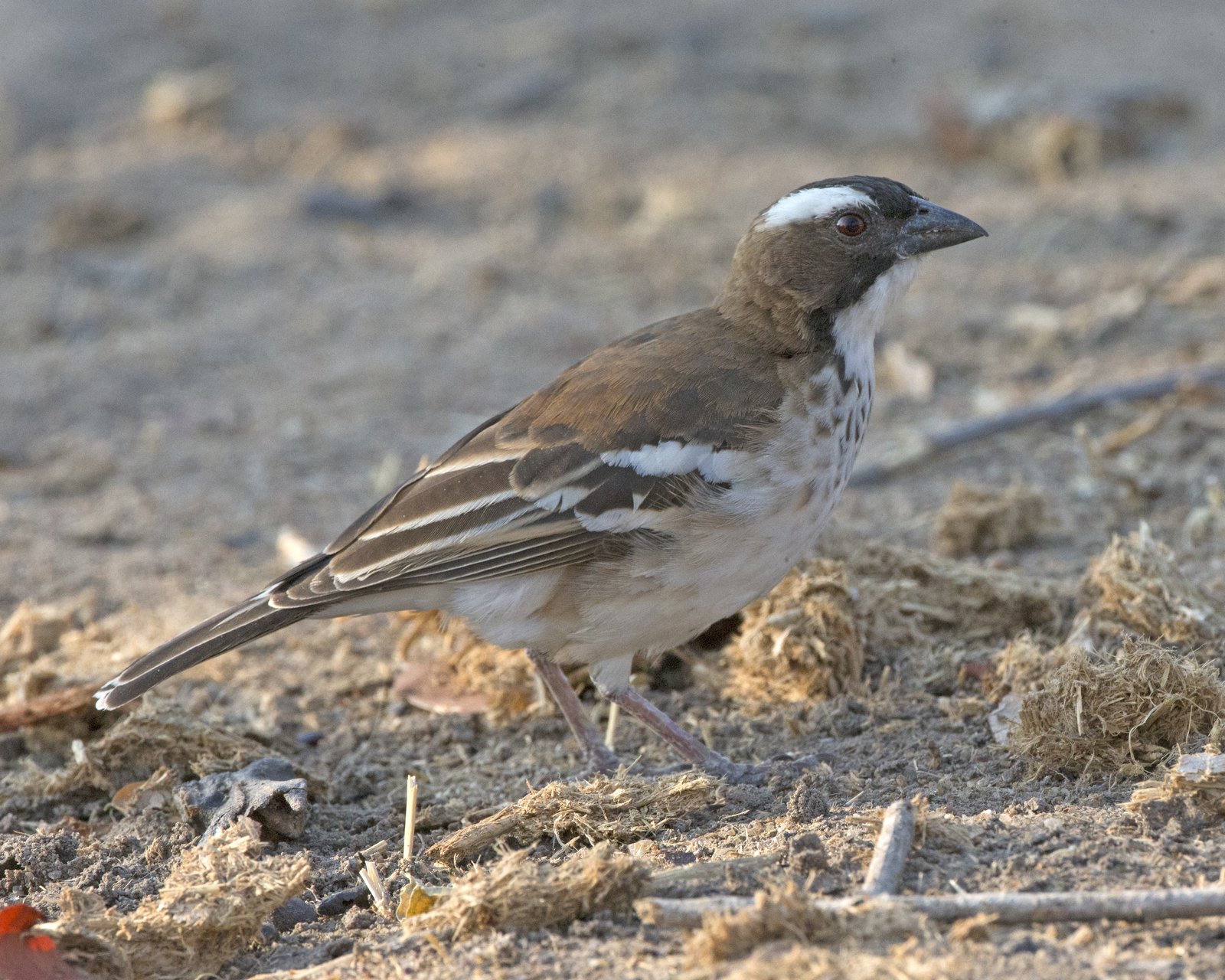
16 to 19 cm, bulky and sparrow-like, with a heavy conical bill. The crown is dark brown, bordered by a broad white supercilium; below that a dark eye-stripe and a narrow black moustachial stripe. Back and wings are brown with two white wing bars; the rump is pure white and very conspicuous in flight. The underparts are white. The bill is black in the male and horn-coloured in the female. In Zambia birds often show a band of fine brown spots across the breast.
Confusion species
Chestnut-Backed Sparrow-Weaver (Plocepasser rufoscapulatus) of miombo in Angola, northern and central Zambia and northern Malawi has a warm chestnut mantle and back; its head is boldly patterned, with a dark crown and dark stripes through the eye and along the throat on a pale ground. Southern Grey-Headed Sparrow (Passer diffusus) has a grey head without a white supercilium and no white rump. Sociable Weaver (Philetairus socius) is smaller, with a black throat patch and scaled flanks. The combination of white supercilium, white wing bars and white rump rules out every other species.
Habitat
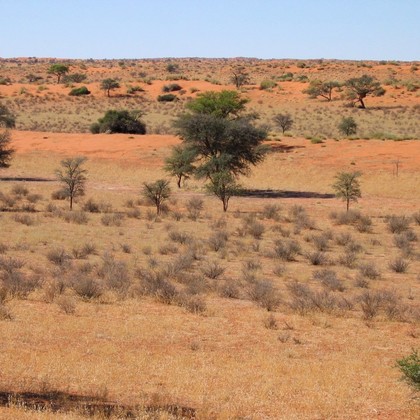
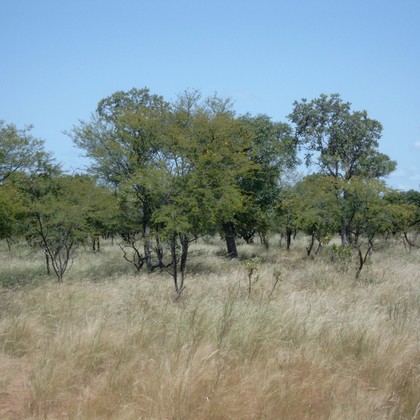
Dry acacia savanna, Kalahari thornveld, mopane woodland, dry riverbeds and farmyards, camps and village edges. It forages in groups on the ground for insects and seeds. It builds straw nests with two entrances as roosts and with one entrance for breeding, often dozens in one tree, on the western side, away from the prevailing wind.
Where the bird is most at home, classified by the vegetation units of southern Africa.

Range and movements
Within the region almost all of Namibia except the Namib, all of Botswana, southern and western Zimbabwe, northern South Africa (Northern Cape, North West, Limpopo, Gauteng and the Free State), southern Angola, south-western and southern Zambia and marginally south-western Mozambique. Beyond the region in East Africa, from Tanzania and Kenya to Somalia, Ethiopia and South Sudan.
- Resident
- Summer visitor (c. Oct–Mar)
- Winter visitor (c. Apr–Sep)
- Passage (Mar–Apr, Oct–Nov)
- dark = core range, pale = thinly spread
How and when to look
One of the easiest species of dry savanna: in the rest camps of Etosha, Kgalagadi and the Kalahari it is tame and loud. The breeding system is cooperative: a dominant pair breeds while younger group members help to feed. Look at the nests; their placement on one side of the tree reveals the prevailing wind direction.
Conservation status
Not threatened. Common and widespread in dry savanna, with no evidence of decline. It benefits from farmyards and camps, where trees and food are available.
Scientific name
Plocepasser mahali | Smith, 1836
Smith described the species in 1836 and placed it straight away in the genus where it still stands. He introduced the genus Plocepasser in that same work. Plocepasser combines Ploceus (weavers, from the Greek plokeus, 'plaiter') with Passer, 'sparrow' — a sparrow-like weaver. mahali derives from the Tswana name Moğale or Mùxálí, 'bold person, brave warrior', for this bird; Smith (1836) deliberately adopted native names. The name probably refers to the bird's scolding call. The specimen the first description was based on came from Modder River near its confluence with the Riet, Free State (South Africa).