All species › Carnivores › Dogs, wolves and foxes › Arctic Fox
Arctic Fox | Vulpes lagopus
Poolvos | Zorro Ártico
The arctic fox is the canid of the arctic and alpine tundra and has a circumpolar distribution. Within the area of this guide it lives on the fells of Norway, Sweden and Finland, in Iceland and on Svalbard. The population on the Scandinavian mainland had fallen to an estimated 40 to 60 adults by around 2000 and has grown again since then through captive breeding, releases, supplementary feeding and the culling of red foxes.

Tracks
The den is usually on raised ground — a ridge, an esker, a river bank or a mound — above the permafrost, at a site where little snow accumulates and often facing south. Large dens have dozens of entrances, up to 150 in North America, and are used for generations; for dens in the Canadian tundra an average lifespan of 330 years has been estimated. Droppings, urine and prey remains make the vegetation on and around an old den denser and greener than its surroundings, so that the den can be recognised from a distance. Around an occupied den lie remains of lemmings, feathers of ptarmigan and other birds, and eggshells. The furred soles blur the toe and sole pads in the tracks; in soft snow often only the outline and the claw tips are visible. The arctic fox caches food: single prey items or several together, including lemmings and goose eggs, in small pits. Territories are scent-marked with urine.
A colour morph

Identification
A small fox with a compact body, short legs, a short muzzle, small, rounded ears and a long, densely furred tail. The soles of the feet are also furred. There are two genetically determined colour morphs, both of which change colour with the season. The white morph is almost entirely white in winter, with a few dark hairs along the spine and at the tail tip; in summer it is brown above and pale grey to white below. The blue morph is chocolate brown in summer and paler brown with a blue-grey sheen in winter. White is recessive. On the Scandinavian mainland 25 to 30% of animals belong to the blue morph, in Iceland 65 to 70%, on the mainland of Asia and North America less than 1%. The winter coat is thick, with dense underfur and long guard hairs, and makes the animal look rounder and larger than it is; after the spring moult it looks slender and long-legged. Males are slightly larger than females.
Similar species
The red fox is larger and longer in the leg, with a longer muzzle, large pointed ears with black backs, black fronts to the legs and a white tail tip. An arctic fox in summer coat has smaller, rounder ears, a shorter muzzle, a dark or grey-brown tail without a white tip and a pale belly; a red fox in winter coat is never entirely white or uniformly blue-grey. The two species overlap on the fells. Farmed blue foxes from fur farms belong to the same species; escaped animals cannot be told from wild blue-morph arctic foxes in the field, and hybridisation with wild animals has been described as a threat. Small spitz-type dogs are longer in the leg and carry the tail curled over the back.
Habitat
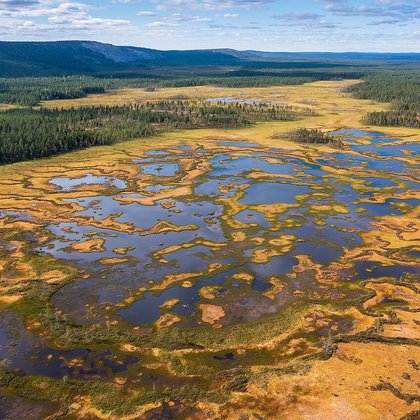
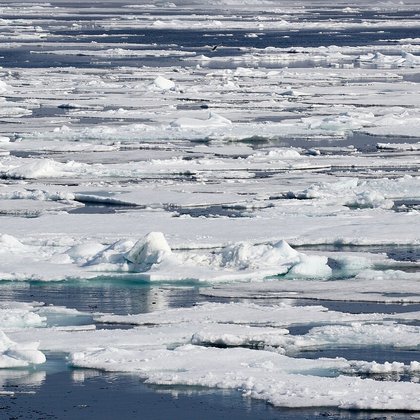
Arctic and alpine tundra; in Scandinavia the treeless fell above the birch zone, with grassland, dwarf scrub, boulder fields and palsa mires. In Iceland and on Svalbard also the coast, with bird cliffs, beaches and sea ice. Arctic foxes travel long distances over sea ice between islands and continents. On the coast the food supply is more stable than inland, because seabirds, stranded marine mammals, fish and invertebrates are available there as well as rodents.
Where the animal is most at home, classified with EUNIS — the European standard for habitats.



Distribution
Circumpolar: the tundra zone of Eurasia and North America with most of the Arctic islands, Greenland, Iceland and Svalbard. Within the area of this guide the Scandinavian mountain chain from southern Norway to Finnmark, with adjacent parts of Sweden and Finland, and further Iceland and, in the northern inset, Svalbard and Bear Island. In Iceland the arctic fox is the only land mammal species that occurred there before human settlement. By far the most records within the window come from Norway, followed by Iceland; few come from Sweden and Finland. Isolated records further south almost always concern escaped or captive animals.
- Native
- dark = core range, pale = thinly spread
Way of life
Active throughout the year, without hibernation or winter torpor. The species is mainly nocturnal but adjusts its activity to that of its main prey. Fat reserves are built up in autumn and locomotor activity is reduced in winter. Inland the arctic fox depends on lemmings and voles, whose numbers fluctuate in cycles of three to five years; in Fennoscandia the Norway lemming was found in 85% of summer scats, birds in 34% and reindeer (as carrion) in 21%. In winter ptarmigan are taken. Arctic fox numbers follow the prey cycles, and large-scale emigrations have been described after lemming crashes. The social unit is a pair that raises the young together, sometimes helped by a yearling from a previous litter. Home ranges measure 15 to 36 km² inland and 10 to 125 km² on Svalbard. Mating takes place between February and May, and births follow after a gestation of 51 to 54 days between April and July. Birth weight is 80 to 85 g. Litter size depends on food: in years of high lemming numbers litters of more than ten young are not exceptional, and on Wrangel Island up to 19 have been counted. The young are suckled for 8 to 10 weeks and reach sexual maturity at about ten months.
Where and when to look
On the fells arctic foxes are best seen from June to August at a known den with cubs, from a good distance and with a telescope. In Norway, Sweden and Finland the species and its dens are legally protected, and den locations are usually not made public; guided excursions are the usual route. In Iceland the species occurs throughout the country, particularly in the Westfjords and in the Hornstrandir nature reserve, where arctic foxes are not hunted. In winter a white arctic fox against snow is recognised mainly by its movement and by its dark eyes and nose; a trail in fresh snow often leads to a cache or a hole dug in the snow.
Conservation status
Least Concern (LC, 2014). The world population is estimated at several hundred thousand animals, with large numbers in the tundra of Russia, Canada, Alaska and Greenland and in Iceland. The population on the Scandinavian mainland collapsed through hunting for fur in the early twentieth century and did not recover, not even after protection in Sweden (1928), Norway (1930) and Finland (1940). The causes given are the absence of regular lemming peaks, competition with and predation by the red fox, and the small, fragmented subpopulations. A captive-breeding programme started in Norway in 2005; since 2006 more than 450 young animals have been released. Together with supplementary feeding and the culling of red foxes in the release areas, this has led to a fourfold increase in the Norwegian population between 2008 and 2020, to an estimated 452 adults in Norway and Sweden combined. In the national red lists the species was listed in 2009 as Endangered on the Norwegian mainland and in Sweden and as Critically Endangered in Finland. In the European Union the arctic fox is a priority species of the Habitats Directive. In Iceland the species is hunted outside nature reserves.
Scientific name
Vulpes lagopus | (Linnaeus, 1758)
Linnaeus described the species in 1758 as Canis Lagopus; because it was later moved to another genus, the author and year stand in brackets. Vulpes is the Latin word for 'fox'. lagopus is Greek for 'hare-foot', from lagōs, 'hare', and pous, 'foot', after the densely furred soles. The specimen the first description was based on came from Sweden, Lapland.