All species › Rodents › Mice and rats › Fat sand rat
Fat sand rat | Psammomys obesus
Psammomys obesus | Psammomys obesus
The Fat Sand Rat is a large gerbilline of the salt flats of North Africa and the Middle East. Unlike most gerbillines it is mainly active by day and often sits sunning itself on the spoil heap outside its burrow, holding a bitten-off sprig of a salt plant in its forepaws. It eats only the succulent stems and leaves of chenopods, plants that consist of about ninety per cent salt water, and obtains all its water from them. Because of this diet it is widely used as a laboratory animal in diabetes research: on desert plants it stays lean, on ordinary rodent food it becomes fat and develops diabetes.

Tracks
The signs are concentrated around the colony and are numerous. The burrow system is a colony: a network with many entrances, dug beneath the salt bushes, up to a metre deep and with tunnels on several levels, connected to nest and store chambers. A fresh fan of sand lies in front of each entrance; the floor of the nest chambers is covered with a thick layer of plant material. At the surface, bitten-off succulent chenopod stems lie around the entrances — sprigs of Arthrocnemum, Halocnemum, Salsola or saltbush — sometimes as fresh green heaps, sometimes as a layer of withered, gnawed remains. The bushes around the burrow entrances are stripped to the twigs, so that an occupied colony can be seen from a distance as a ring of browsed bushes in otherwise closed salt vegetation. The animal carries its food 10 to 30 m to the burrow, so worn paths run from bush to entrance. The droppings are large for a gerbilline, black and spindle-shaped, 4 to 6 mm, and lie in small heaps at the entrances; it marks its territory with urine and faeces. In damp sebkha clay the prints are sharp: four toes in front, five behind, with dark, heavy claw marks. It makes audible and ultrasonic squeaks and drums with its hind feet.

In its habitat
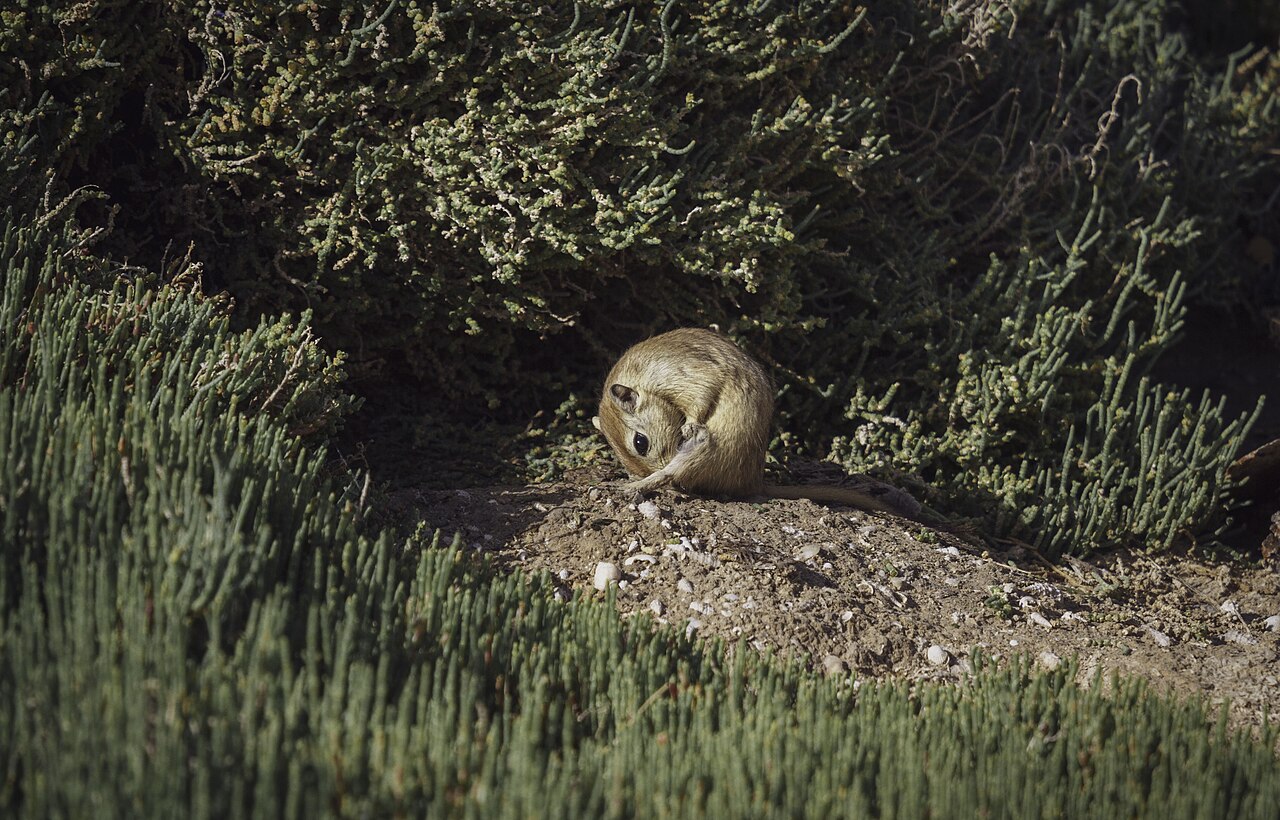
Head close-up
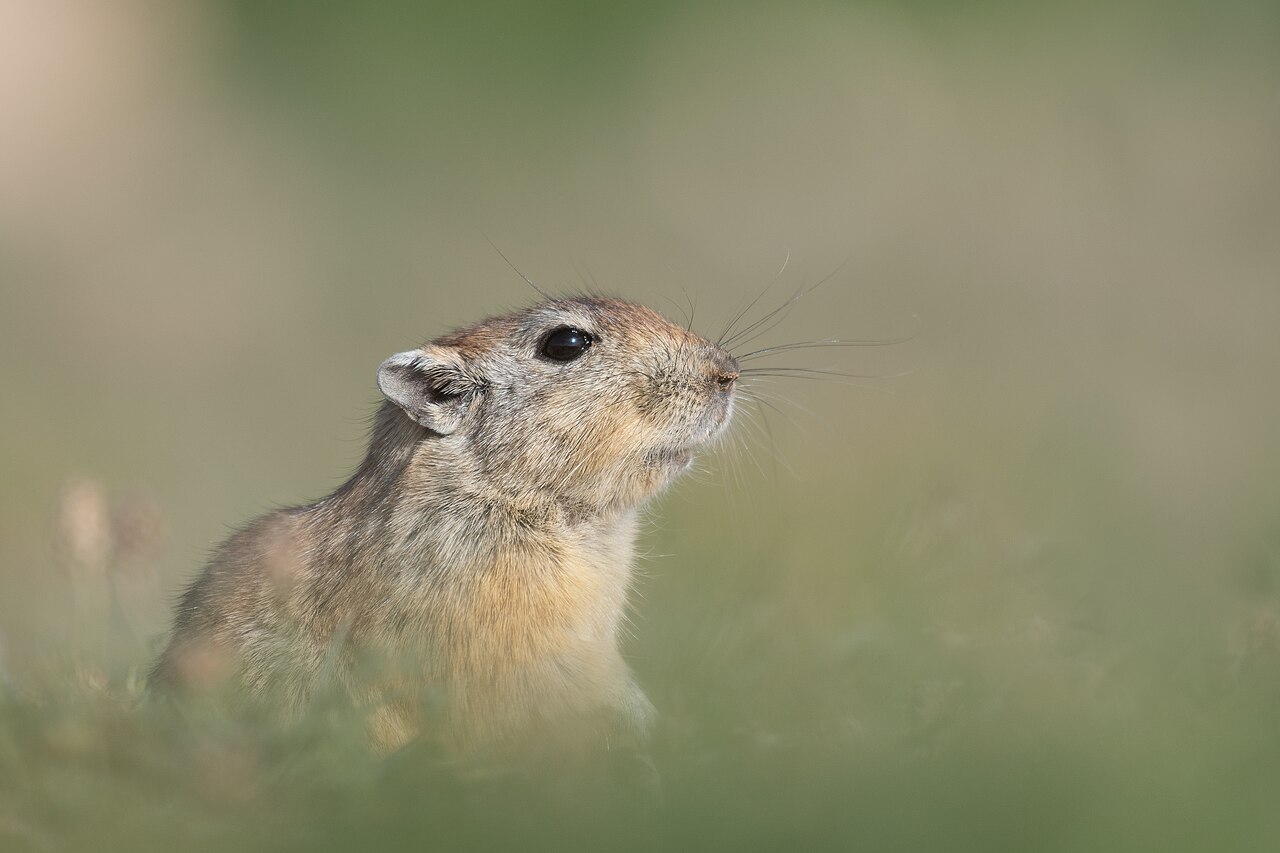
Identification
A large, heavy, thickset gerbilline of 82 to 237 g, with a long ochre to tawny brown coat, paler flanks and a pale ochre belly instead of the pure white belly of the jirds. The tail is short, about 70 per cent of head-body length, and ends in a black tuft. The ears are small (13 to 17 mm) and the muzzle is blunt and broad; there is a small white spot behind each ear. The claws are dark; this is the clearest difference from all jirds, which have white or ivory nails. The soles of the hind feet are partly haired; the hind foot measures 32 to 36 mm. The upper incisors are ungrooved and the skull is massive. Males are slightly larger than females. A round-bodied, short-tailed animal sitting upright on a spoil heap by day in North Africa and the Levant is almost certainly this species.
Similar species
The activity pattern already separates it: it is active by day, whereas jirds and gerbils are nocturnal. Sundevall's Jird (Meriones crassus) is slimmer, greyer, has a much longer tail (as long as head and body), ivory-white claws and a pale tail base. Shaw's Jird (Meriones shawii) also has a longer tail and white claws, and lives in cereal fields rather than on salt flats. Buxton's Jird (Meriones sacramenti) is the other heavy gerbilline in Israel, but it is nocturnal, reddish sandy and has a tail as long as the body with a black tuft. The Thin Sand Rat (Psammomys vexillaris), which occurs alongside it in Tunisia and Libya, is smaller and more slender. A Brown Rat has a naked, scaly tail, large bare ears and a pointed muzzle, and does not sit on salt plants. In North Africa a Barbary Ground Squirrel may resemble it at a distance, but it is striped, has a bushier tail and lives among rocks.
Habitat
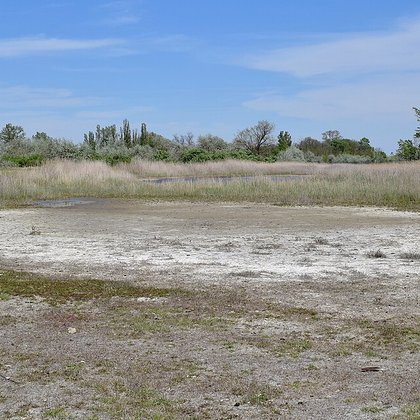
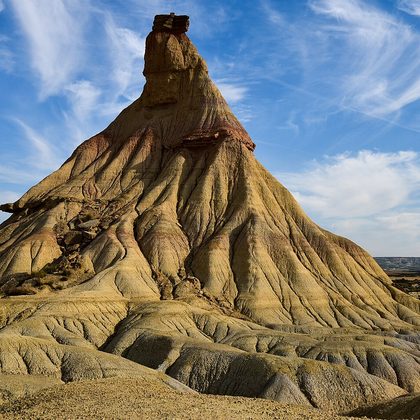
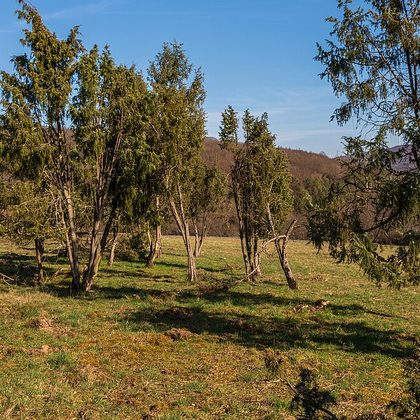
Saline steppe — the dayas, which flood after rain, and the sebkhas, salt flats with a compact, muddy, saline sandy soil — where the succulent chenopods grow on which it depends entirely. The soil at its sites has a salinity of 9 to 30 grams per litre. Where these bushes are absent, so is the species. There are exceptions: in Jordan colonies have been found on rocky ground, and in Sinai it lives on low sand mounds around Anabasis bushes.
Where the animal is most at home, classified with EUNIS — the European standard for habitats.

Distribution
From Morocco, Western Sahara and Mauritania east through North Africa to Egypt, and on through Sinai to Israel, Palestine, Syria and Jordan and south into the central Arabian Peninsula; also a population in north-eastern Sudan. Within the guide area this covers the salt-flat belt of the Maghreb and Egypt and the desert margin of Israel and Jordan. The distribution follows not the desert as a whole but the salt flats: the sites lie on sebkhas and dayas, and the sand seas between them are unoccupied.
- Native
- dark = core range, pale = thinly spread
Way of life
It is active both by day and at night, with the emphasis on the day: in winter the peak lies between nine in the morning and five in the afternoon, in summer activity is limited to early morning and late afternoon. Early in the day it often sunbathes in front of the burrow. It lives in colonies in which females use a smaller area than males — on average about 76 against 160 m — and the range of one male overlaps with those of several females; the animals nevertheless live fairly solitarily, and adult males are aggressive towards young males. The diet consists exclusively of leaves and stems of chenopods: Arthrocnemum, saltbush, Halocnemum, Salsola and Suaeda. These plants consist of about ninety per cent water; kidneys and gut are adapted to processing the salt water and oxalic acid. In October, before the rainy season, it also eats seeds, and in winter — especially February — fruit. During the hot season it aestivates, and its water recycling decreases. Gestation lasts 24 days; a litter holds two to eight young; average litter size varies with the season, from three to six in September to six in winter (January to March). The young weigh 6 to 7 g at birth, are weaned after 15 days, are full-grown at 120 days and sexually mature at three to six months; female fertility depends on rainfall, which can delay breeding by up to a month. It does not hibernate.
Where and when to look
The species can be observed by day and without a lamp. Find a sebkha or daya with glasswort-like bushes, drive or walk along its edge and look for rings of stripped bushes with spoil heaps between them. In winter any hour between nine and five is suitable, in summer only the first and last hour of the day. Sit twenty metres away and wait: the animals return along their paths and sit on the spoil heap to eat, holding the sprig upright in their forepaws. Well-known sites are the salt flats of southern Tunisia, the chotts of Algeria and the area around Sde Boker and the Arava in Israel. Binoculars are sufficient; with a long lens move slowly, because on an open flat the animals notice every movement.
Conservation status
Least Concern (LC, 2016). Locally it can be very numerous, with up to 42 animals per hectare, but numbers fluctuate strongly with the weather: in one year a flat may be densely populated and in the next almost empty. It is regarded as harmful in two ways. It stores large quantities of barley in its burrows and feeds on crops, and together with Shaw's Jird it is one of the main reservoir hosts of Leishmania major, the parasite that causes the desert form of cutaneous leishmaniasis; natural infections have been confirmed in Libya, Algeria and Tunisia. In North Africa it is therefore more often the subject of control programmes than of protection. Because it develops diabetes on ordinary rodent food, it is also widely used as a laboratory animal.
Scientific name
Psammomys obesus | Cretzschmar, 1828
Cretzschmar described the species in 1828 and placed it straight away in the genus where it still stands. Psammomys is Greek, from psammos, 'sand', and mys, 'mouse': the sand mouse. obesus is Latin for 'fat, stout', after the animal's heavy build. The specimen the first description was based on came from Egypt, Alexandria.