All species › Carnivores › True seals › Harp seal
Harp seal | Pagophilus groenlandicus
Zadelrob | Foca pía
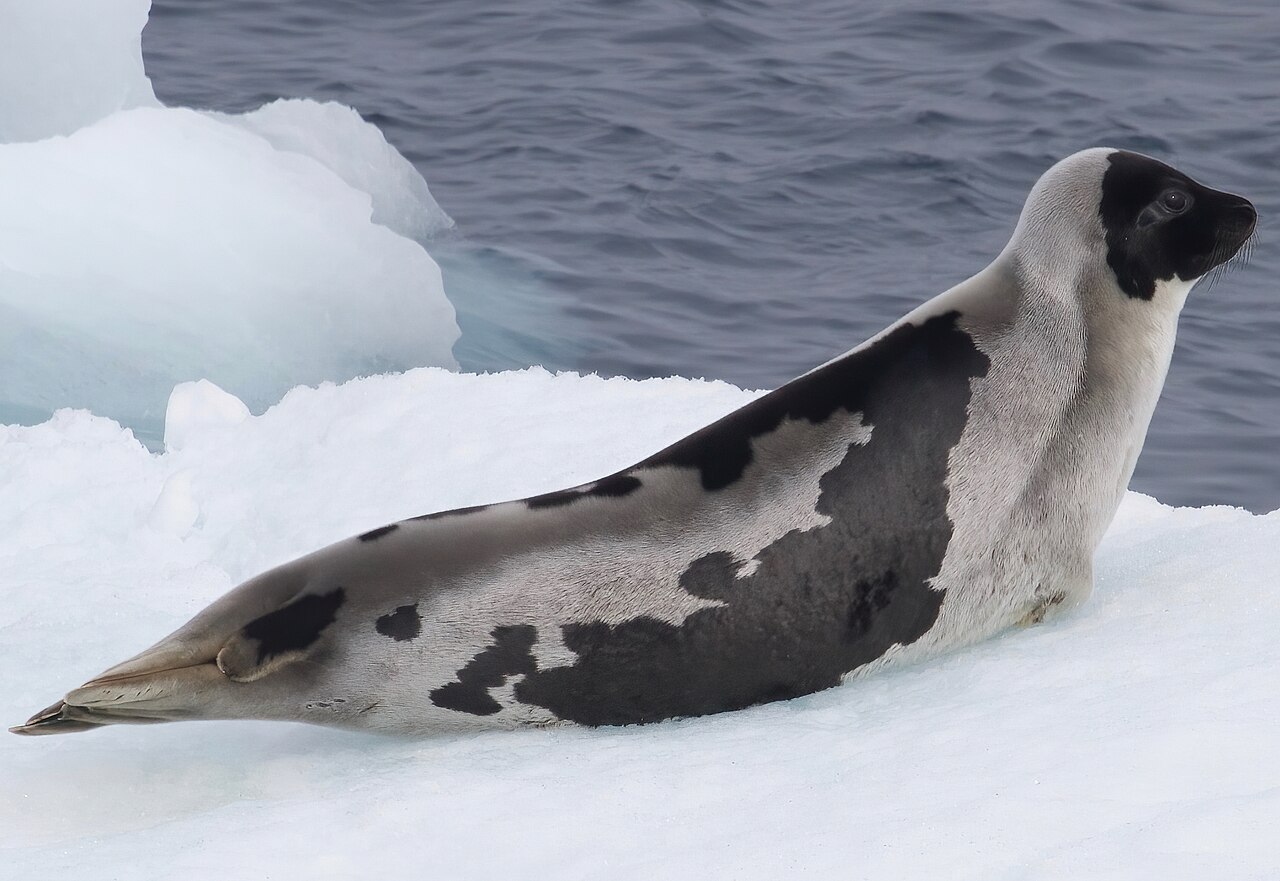
The Harp Seal is the commonest seal of the northern Atlantic. The adult is silver-grey, with a black head and a black band over back and flanks that is horseshoe-shaped in profile and harp-shaped from above. Every spring millions of animals give birth in three or four dense concentrations on the drift ice, and the white pups have become the symbol of the debate over sealing.
Tracks
In most of Europe the Harp Seal is found mainly as a stranded animal: a young animal on a beach in late winter or early spring, at the end of a broad drag groove from the tide line. Such animals are often thin, dehydrated and weak and should not be approached. On the ice itself, in the West Ice off Jan Mayen, a whelping patch leaves clear signs: hundreds to thousands of trampled, yellow-brown stained hollows in the snow, each beside a lead or a crack, joined by a web of drag grooves, with the tufts of white lanugo left on the ice after weaning blowing about among them. The sound of such a patch carries for kilometres: a continuous mournful bleating of pups over one another, by which sealers used to find a whelping patch again in fog. Under water Harp Seals are very vocal, with a repertoire of croaks, trills and clicks.
The young
Identification
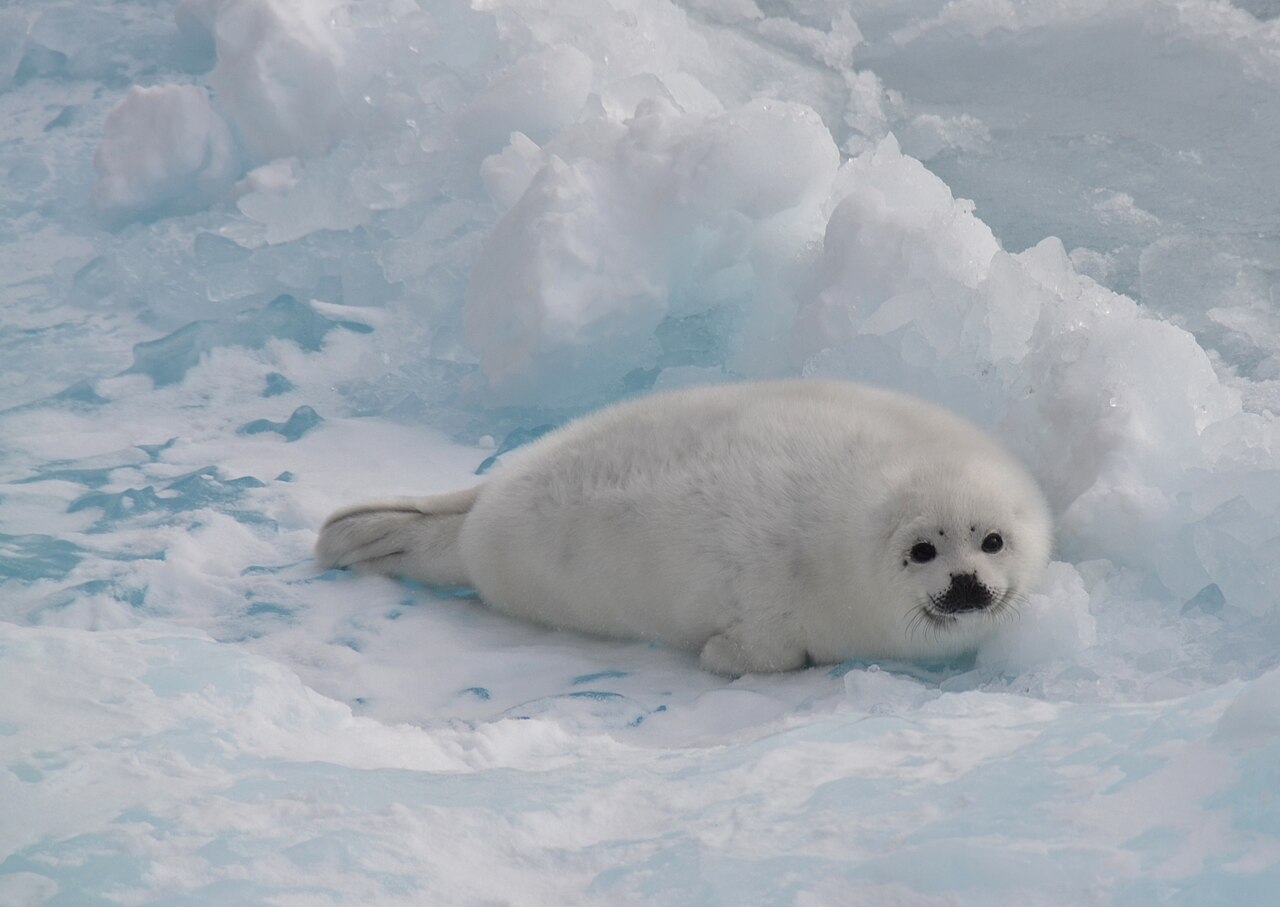
A slim, streamlined seal with a fairly narrow head and a short, pointed muzzle. The adult is unmistakable: silver-grey to cream body, jet-black head to behind the eyes, and a broad black band running back from the shoulders over both flanks, forming a horseshoe in profile and a harp or wishbone from above. The pattern is sharpest in the male; in the female it is often vaguer and broken into blotches. Young animals are silver-grey with scattered dark spots and lack the band; the change to the adult coat takes several years, and the intermediate stages are called beater, bedlamer and spotted harp. The eyes are large and black and stand out against the black head. The newborn is the famous whitecoat: entirely white and woolly, with a black nose and black eyes.
Similar species
An adult Harp Seal cannot be confused. The difficulty lies with the young animals, which are the ones that strand most often in western Europe. A spotted young Harp Seal resembles a Harbour Seal but is slimmer, with a shorter and more pointed muzzle, larger and darker eyes, and spots that are larger, sharper-edged and darker than the Harbour Seal's fine speckling; the head is usually already darker than the rest. It is separated from the Ringed Seal because that species has pale rings on a dark back rather than dark spots on a pale one. A young Hooded Seal in the blueback stage is two-toned with a sharp dividing line, and later far larger and heavier with a broad domed head. A whitecoat can only be confused with a young Grey Seal, which is creamier, dumpier, on a beach rather than on ice, and with a longer, straighter muzzle.
Habitat
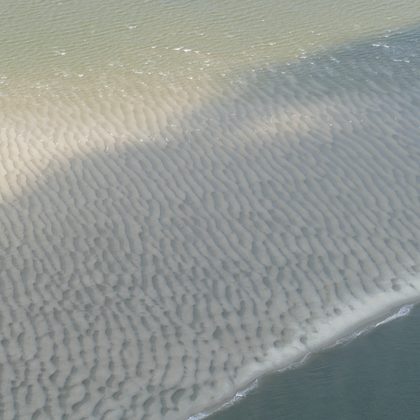
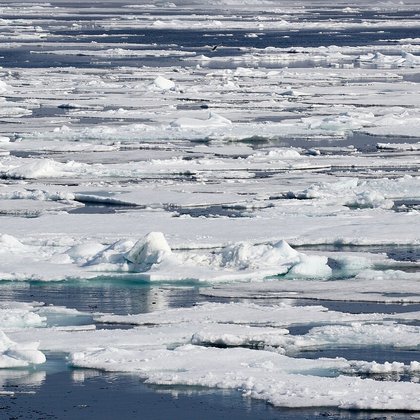
The Harp Seal lives on drift ice and in the open sea. It gives birth and moults on flat, young drift ice over the continental shelf and spends the rest of the year moving through the open North Atlantic and the adjoining polar seas, diving to hundreds of metres. It eats polar cod, capelin, herring, gadoids and shrimp-like crustaceans. As a vagrant it appears on sandy beaches, in harbours and in river mouths.
Where the animal is most at home, classified with EUNIS — the European standard for habitats.



Distribution
The Harp Seal lives in the northern Atlantic in three large populations: the western one off Newfoundland and in the Gulf of St Lawrence, that of the West Ice off Jan Mayen and east Greenland, and that of the East Ice in the White Sea. Only the latter two lie in or near Europe. Outside the whelping season the animals wander into the Barents Sea and along the coasts of Svalbard, and in some years large numbers move far south. Most European records come from Iceland, Norway and Russia; young animals strand regularly along the North Sea coasts, in the Netherlands among others on the Wadden islands and the coasts of Zeeland and Holland. In Britain and Ireland the species is a scarce vagrant, mostly recorded from Shetland, Orkney and the east coast; in the Iberian Peninsula it is an exceptional vagrant, with very few records in Galicia and along the Cantabrian coast. In some winters, most notably 1987 and 1995, dozens of animals appear at once along the North Sea coasts, probably as a result of food shortage in the north.
- Native
- dark = core range, pale = thinly spread
Way of life
Outside the whelping season the Harp Seal covers thousands of kilometres a year, in loose groups that hunt shoaling fish together in the water. In February and March the animals gather on the ice in very high densities. The pup is born in a yellow lanugo coat that bleaches white within days, weighs eleven kilos and suckles twelve days, in which it quadruples its weight to over forty kilos; it is then left and lives for weeks off its blubber while it moults and learns to swim. The adults mate in the water as soon as whelping is over and then move north to moult. The Harp Seal lives about thirty years.
Where and when to look
In western Europe the Harp Seal is found mainly on beaches: in February and March, after a north-westerly gale, along the tide line. The diagnostic picture is a slim grey animal with large black eyes and spots larger and sharper than in a Harbour Seal. The correct course is to keep a distance and alert a seal rescue service. At sea the chances are greatest off Iceland, northern Norway and Svalbard, where wandering animals lie among the floes. The whelping patches in the West Ice can only be reached by expedition ship in March.
Conservation status
Near Threatened (NT, 2025). The species still numbers millions worldwide and is the commonest seal of the northern Atlantic; even so the IUCN moved it to Near Threatened in 2025, because its whole reproduction depends on flat, young drift ice in the right place at the right time. In ice-poor years the whelping ice breaks up early and whole year classes of pups drown, as has happened repeatedly in the Gulf of St Lawrence. Commercial hunting, which continues in Canada and has all but stopped in the West Ice, is no longer the deciding factor. In Europe there are besides that bycatch in nets and the risk of conflict with fisheries as the seals follow their prey north.
Scientific name
Pagophilus groenlandicus | (Erxleben, 1777)
Erxleben described the species in 1777 as Phoca groenlandica; because it was later moved to another genus, the author and year stand in brackets. Pagophilus is Greek, from pagos, 'ice, frost', and philos, 'loving': the ice-lover, after the seal that pups on the drift ice. groenlandicus means 'of Greenland', after the waters in which the seal was best known to the whalers. The specimen the first description was based on came from Greenland and Newfoundland.