All species › Hedgehogs, shrews and moles › Shrews › Iberian White-toothed Shrew
Iberian White-toothed Shrew | Crocidura iculisma
Crocidura iculisma | Crocidura iculisma
Crocidura iculisma is the white-toothed shrew of Europe's Atlantic fringe: northern and western Iberia, south-western France, the Breton islands and the Isles of Scilly, where it is the only shrew of this group in British waters. The species has been split from the Lesser White-toothed Shrew and is named after Iculisma, the Roman name of Angoulême; Mottaz described it in 1908 from the Charente. Its distribution has been strongly shaped by competition with the Greater White-toothed Shrew, which has displaced it from large parts of its range.
No photograph of a living wild animal of this species with a suitable Creative Commons licence exists. Do you have one that meets the rules? Send it in.
Tracks
The signs are those of the genus, with one local exception. On the Isles of Scilly the species forages on the beach, among stranded wrack banks, and lives there almost entirely on amphipods; for a European shrew this is an exceptional way of life, and the feeding patches and runs in the strandline are the best sign there. Elsewhere: droppings two to four millimetres long, dark, pointed and glossy with chitin, under a stone, plank or sheet of corrugated iron; runs half a centimetre to one and a half centimetres wide through the litter layer and under the turf; a print of barely a centimetre with five toes, visible only in very fine silt; and high, shrill, rapidly repeated squeaks. Pellets of Barn and Little Owls are the main source of distribution data, with the same limitation as for the rest of this group: the species cannot be determined from the remains within the suaveolens group, and on the Iberian Peninsula only genetic analysis or careful examination of the tooth row can establish which of the two small white-toothed shrews was in a pellet.
Identification
A small white-toothed shrew with the characters of the genus: pure white teeth without red-brown tips, a long, pointed, constantly moving snout, very small eyes, ears projecting above the fur and a tail with long, projecting tactile hairs among the short hair. The back is brown to dark greyish brown, the belly grey, with a gradual transition and no dividing line. According to the Spanish atlas it differs from the Greater White-toothed Shrew in a proportionally longer tail and dark ears, sometimes with a darker snout; these are tendencies, not identification characters. No field measurements of its own have been published for this species; the measurement series in the handbooks belong to the Lesser White-toothed Shrew or to Crocidura gueldenstaedtii in the broad sense and not to these animals. For the Scilly population it is known that skull and tooth measurements lie between those of the Channel Islands; this is an indication, not a measurement series.
Similar species
The main identification problem is the distinction from the Greater White-toothed Shrew (Crocidura russula). The Greater White-toothed Shrew is larger on average and has a proportionally shorter tail, but the series overlap, and for one animal in the hand this is not conclusive. Distribution gives more to go on: on the Iberian Peninsula the two species largely exclude each other, and where the Greater White-toothed Shrew is common this species is absent. From locality and landscape (mountain woodland and dense scrub against arable land and village edges) it can therefore often be inferred which species is likely, but that is a probability, not an identification. The Bicolored Shrew (Crocidura leucodon) can be excluded on distribution: it does not occur south of the Loire or on the Iberian Peninsula. The Iberian red-toothed shrews (Sorex) can be distinguished by the red-brown tooth tips, the three-toned coat with a separate flank band and the ears lying in the fur; Savi's Pygmy Shrew (Suncus etruscus), at two grams, is clearly smaller. On the Isles of Scilly this is the only shrew. Outside Scilly the rule for the whole group applies: in the field identification to Crocidura is possible, and further identification requires examination of tooth row, skull and DNA.
Habitat
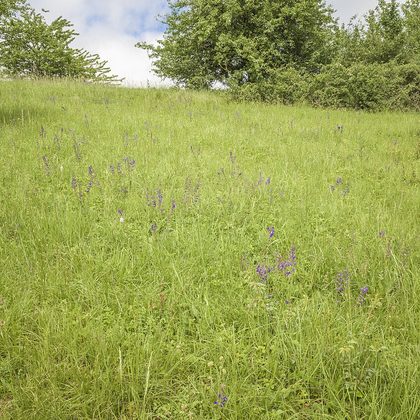
The species lives in two very different environments. In northern and central Iberia it occurs in mountainous terrain with woodland and dense scrub and in small-scale farmland (campiña): damp, cool, well-vegetated places with a thick litter layer. On the Gulf of Cádiz, by contrast, it lives in saltmarshes, an environment rarely mentioned for a land shrew in Europe. On the Atlantic coast of France and on the islands dunes and beach are added, down to the strandline. What these have in common is not a vegetation type but moisture and cover all year round, and the absence of the Greater White-toothed Shrew.
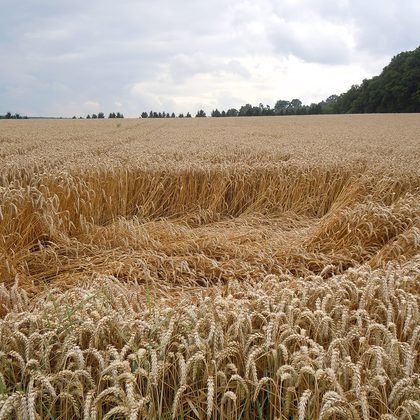
Where the animal is most at home, classified with EUNIS — the European standard for habitats.




Distribution
Northern and western Iberia, south-western and western France, north-western Italy, and the islands: Sark in the Channel Islands and the Isles of Scilly off Cornwall, and in addition the Breton and Vendée islands, whose populations were each given a name of their own: Ouessant (uxantisi), Sein (enezsizunensis) and Île d'Yeu (oyaensis). The Scilly animals carry the name cassiteridum, after the Cassiterides, the tin islands of classical geography; they have been present since the Bronze Age, and whether they were introduced or arrived naturally was long debated; the most recent assessment regards them as native. On the Iberian Peninsula the range is strongly fragmented: eastern Cantabria, the north-west of the peninsula, the Serra de l'Albera, the Sistema Central and the marshes of the Gulf of Cádiz. Phylogeographic research shows that the Greater White-toothed Shrew has pushed this species back on the Iberian Peninsula to places where the Greater White-toothed Shrew itself does less well. A small white-toothed shrew also lives on Jersey; whether these animals belong to this species in the current arrangement is not explicitly recorded, but in view of Sark and the Breton islands it is likely. Almost all records have been made under the name Crocidura suaveolens.
Way of life
Little has been studied specifically on the way of life of this species; the Spanish atlas summarises the diet as invertebrates, and other data apply to the small white-toothed shrews of the group. They are active in short bouts throughout the twenty-four hours, with the emphasis on night and twilight, and cannot go long without food: each day an animal eats roughly its own weight in insects, spiders, woodlice, centipedes, worms and small snails. On Scilly the diet consists of amphipods from the strandline, and activity is linked to the tide rather than to night. There is no hibernation, because the animals are too small for it; they remain active in winter. The shrinking of the skull known in the red-toothed shrews (Sorex) as Dehnel's phenomenon has not been established in white-toothed shrews; in this genus energy is saved through short torpor and shared nests. Caravanning by the young is common in related species. A Crocidura seldom lives longer than eighteen months.
Where and when to look
The Isles of Scilly are the best place to see this species. Walk a beach with thick wrack banks at low water (Tresco, St Martin's, Bryher) and watch the edges of the strandline: the animals forage there by day and are used to people. Sit still and wait. On the mainland the species is harder to find; chances are offered by a damp woodland edge or dense scrub in northern Iberia after dark with a torch, or a saltmarsh edge on the Gulf of Cádiz. Elsewhere pellets remain the main method. Always record the locality precisely: on the Iberian Peninsula the locality, combined with the distribution of the Greater White-toothed Shrew, is currently the most important identification datum.
Conservation status
Not Evaluated on the global list (NE), because the IUCN follows the broad species concept in which these animals fall under the Lesser White-toothed Shrew. There are national assessments: in Spain the species is listed as Least Concern, in Portugal as Endangered (EN, 2023), for the same species on either side of the same border. The limitation in Iberia is partly biological: the species has been displaced by the Greater White-toothed Shrew and now occurs in mountain fringes, cool woodland edges and saltmarshes, small and separate areas. In addition there is the loss of damp scrub edges and litter-rich understorey, fire, drainage of marshland and, on the islands, cats. The Scilly population moreover lives on a few small islands and depends entirely on the wrack banks on the beach; clearing the strandline removes its food source. First, basic data are needed: measurements, a distribution map that separates this species from the Greater White-toothed Shrew, and an assessment under the current name.
Scientific name
Crocidura iculisma | Mottaz, 1908
Mottaz described the species in 1908 and placed it straight away in the genus where it still stands. Crocidura is Greek, from krokys, genitive krokydos, 'flock of wool, nap', and oura, 'tail', after the long loose hairs standing out among the short ones on the tail. iculisma is Iculisma, the Gallo-Roman name of Angoulême, the chief town of the Charente, from where Mottaz described the animal. It stands as an indeclinable noun in apposition to the genus name. The specimen the first description was based on came from France, Charente.