All species › Hedgehogs, shrews and moles › Shrews › Güldenstädt's White-toothed Shrew
Güldenstädt's White-toothed Shrew | Crocidura gueldenstaedtii
Crocidura gueldenstaedtii | Crocidura gueldenstaedtii
Crocidura gueldenstaedtii is the white-toothed shrew of the Caucasus, Anatolia and the Levant. Crocidura fimbriata, C. iculisma and C. cypria were until recently all included under this name, and this name in turn fell under the Lesser White-toothed Shrew. In the current concept it is a large, long-tailed species which in the marshy Colchis lowland on the eastern coast of the Black Sea is the most numerous small mammal species.
No photograph of a living wild animal of this species with a suitable Creative Commons licence exists. Do you have one that meets the rules? Send it in.
Tracks
Two characteristic indications are known for this species, both above ground. The nest lies on the ground in a tall, dense tussock, is lined with dry grass, fine hair and other soft material, and can easily be mistaken for a bird's nest; in the mesophilic habitats of Colchis this is the usual nest form, and whether the species builds such nests elsewhere in its range is not known. The second indication is behaviour: caravanning, in which each young grips with its teeth the tail base or hindquarters of the one in front and the first holds on to the mother. This has been explicitly described for this species: a line of five shrews crossing a garden one behind the other. Otherwise the usual signs of the genus: droppings two to four millimetres long, dark, pointed and glossy with chitin, under stones and planks; runs half a centimetre to one and a half centimetres wide through the litter; prints of barely a centimetre in very fine silt; and high, shrill, rapidly repeated squeaks. For distribution data pellets of Barn and Little Owls are the main source.
Identification
The largest species of the suaveolens group, but lightly built. The back is smoky grey, brownish grey or brown, the belly light grey, and the transition is indistinct, without the dividing line of the Bicolored Shrew. The teeth are pure white, the snout long and mobile, the ears project above the fur and the tail has the long, projecting tactile hairs of the genus among the short hair. The tail is long, 65 to 90 per cent of head-body length, and more often uniform than bicoloured; this is the most useful external character of the species. Head-body length 7.7 to 8.6 cm in adults and 5.5 to 7.4 cm in immatures, tail 4.1 to 5.6 cm, weight 8.5 to 13.3 grams, immatures 6.3 to 8 grams and pregnant females up to 17.5 grams. A young animal of this species therefore falls entirely within the measurement range of the Lesser White-toothed Shrew. The karyotype is usually 2n = 40 with FN = 50, with B-chromosomes that can increase the number.
Similar species
Whether the species can be distinguished depends on the region. In the Caucasus it can be separated from the Lesser White-toothed Shrew (Crocidura suaveolens): it is clearly larger and the tail measures two-thirds to nine-tenths of head-body length, whereas that of the Lesser White-toothed Shrew seldom reaches half. This applies, however, to adults and to series; a half-grown animal cannot be identified. From the Bicolored Shrew (Crocidura leucodon), which lives alongside it in Turkey and the Caucasus, it is easily distinguished: the Bicolored Shrew has a sharp boundary between dark back and white belly, this species never. West of the Caucasus external distinction is no longer possible. Where the range meets that of Crocidura fimbriata (the Balkans, Greece) there is no external character, nor on Crete, Corsica and Minorca, where the animals are assigned to this species. There identification rests on locality and DNA. The genetic arrangement is also unresolved: six mitochondrial forms can be distinguished within this species, two of them unnamed, and the Israeli form portali may be a separate species. For a white-toothed shrew in the hand in Anatolia or the Levant only the genus can be recorded.
Habitat
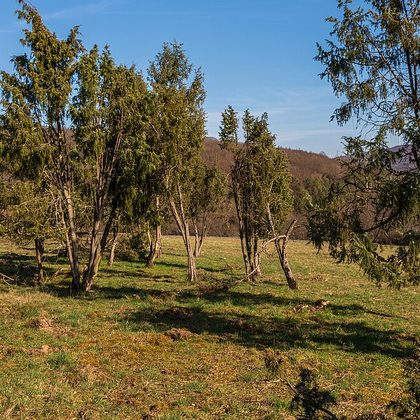
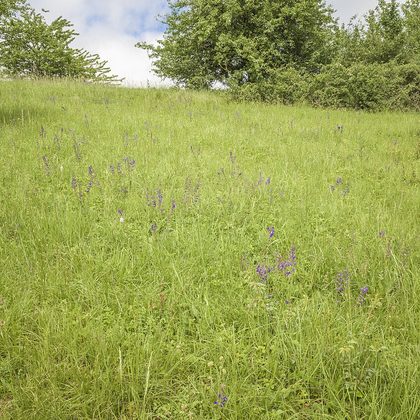
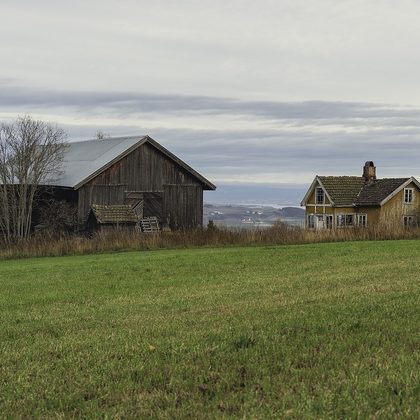
Scrub with a well-developed sward that has not been grazed bare. Under heavy grazing the species disappears; in the Mediterranean and the Caucasus it therefore occurs mainly in ungrazed or extensively used places. In arid regions it is tied to water: banks of rivers, streams and lakes, and irrigated farmland, where there is enough moisture and enough insects all year. The species occurs in small settlements and regularly enters houses. The highest densities are reached in the Colchis lowland in Georgia, a warm, wet, subtropical coastal strip where it is the most numerous small mammal species; in arid and wooded regions it is rare.
Where the animal is most at home, classified with EUNIS — the European standard for habitats.



Distribution
From the western Caucasus in southern Russia through Georgia, Armenia and Azerbaijan to Turkey and western Iran, and south through Syria, Iraq, Lebanon, Israel and Jordan to Sinai in Egypt. In addition the animals of several Mediterranean islands are assigned to this species: Crete, Corsica and Minorca. These islands lie far outside the continuous range; the island populations were brought by people from the Middle East in the Holocene, six to eight thousand years ago, with the first farmers and later with seafarers. In this the species differs from Crocidura cypria of Cyprus, which until recently was treated as a subspecies under this name and is an ice-age relict, isolated for one and a half million years. All older records from this region under Crocidura suaveolens belong to this species, and the names balearica (Minorca), cyrnensis and corsicana (Corsica), ariadne and caneae (Crete), portali (Israel) and monacha are synonyms. The shrew of Minorca, once described as Crocidura balearica, is thus assigned to this species and not to the species of the Iberian Peninsula.
- Native
- dark = core range, pale = thinly spread
Way of life
Active in short bouts throughout the twenty-four hours, with peaks at night and dusk; trap catches are also highest at those times. The diet consists of insects and their larvae, gastropods, woodlice and myriapods, supplemented by plant material; animals in houses also eat from food stores, including meat and fruit, and cases are known of feeding on carcasses of mammals and birds. Breeding runs in Georgia from April to October, and in subtropical Colchis it can continue in winter. There are one to ten embryos, on average five and a half; in Turkey twenty-one pregnant females carried two to seven embryos, on average almost five. Animals born in spring breed in the same year. Of four overwintered adults caught in September, all four were females; this suggests that males die earlier at the end of the breeding season. There is no hibernation. The shrinking of the skull known in the red-toothed shrews (Sorex) as Dehnel's phenomenon has not been established in white-toothed shrews; in this genus energy is saved through short torpor and shared nests.
Where and when to look
The most suitable area is the Colchis lowland along the Georgian Black Sea coast, where it is the commonest small mammal species. An evening walk with a torch along a ditch, reed fringe or irrigation channel offers chances there; the shrill squeaking of two animals in conflict is often heard before the animals are seen. Elsewhere in Anatolia and the Levant irrigated farmland is the best place and the summer months the least suitable. In spring watch for caravans: a mother with a line of young is one of the best chances of a sighting. A white-toothed shrew on Crete, Corsica or Minorca almost certainly belongs to this species; a photograph, a measurement and a locality from there are valuable, because few data are recorded. As far as is known, no freely licensed photograph of this species exists; a sharp picture of a live animal, in profile and with the tail visible, is therefore valuable.
Conservation status
Least Concern (LC, 2023). In large parts of its range the species is nevertheless rare, especially in arid and wooded regions; only in the Colchis lowland is it numerous, and there it dominates the small-mammal community. The main factors are grazing, where a short-grazed sward removes the cover and with it the species, and water: in arid regions the species depends on riverbanks and irrigation, and every drier season reduces the suitable habitat. The greatest uncertainty concerns the taxonomic arrangement. Six genetic forms are distinguished within this species, several of which may merit a name of their own, and the Israeli form portali is still assigned to this species only for lack of nuclear DNA data. As long as this remains unresolved, the assessment covers a composite group of populations and says little about the populations at the edges, in particular those of Crete, Corsica and Minorca, each of which is small and isolated and has never been counted.
Scientific name
Crocidura gueldenstaedtii | (Pallas, 1811) (GBIF: Crocidura suaveolens)
Pallas described the species in 1811 as Sorex Güldenstaedtii; because it was later moved to another genus, the author and year stand in brackets. Crocidura is Greek, from krokys, genitive krokydos, 'flock of wool, nap', and oura, 'tail', after the long loose hairs standing out among the short ones on the tail. gueldenstaedtii honours Johann Anton Güldenstädt (1745–1781), the Baltic German explorer in Russian service who first described the Caucasus systematically; Pallas published his travels after his death. The specimen the first description was based on came from Georgia.