All species › Rodents › Voles and hamsters › Italian Water Vole
Italian Water Vole | Arvicola destructor
Arvicola destructor | Arvicola destructor
Arvicola destructor is the Italian water vole, split from the Eurasian Water Vole in 2017. The species has no vernacular name in Dutch, English or Spanish and cannot be distinguished in the field from its northern sister species. Assignment of a record is based on locality.
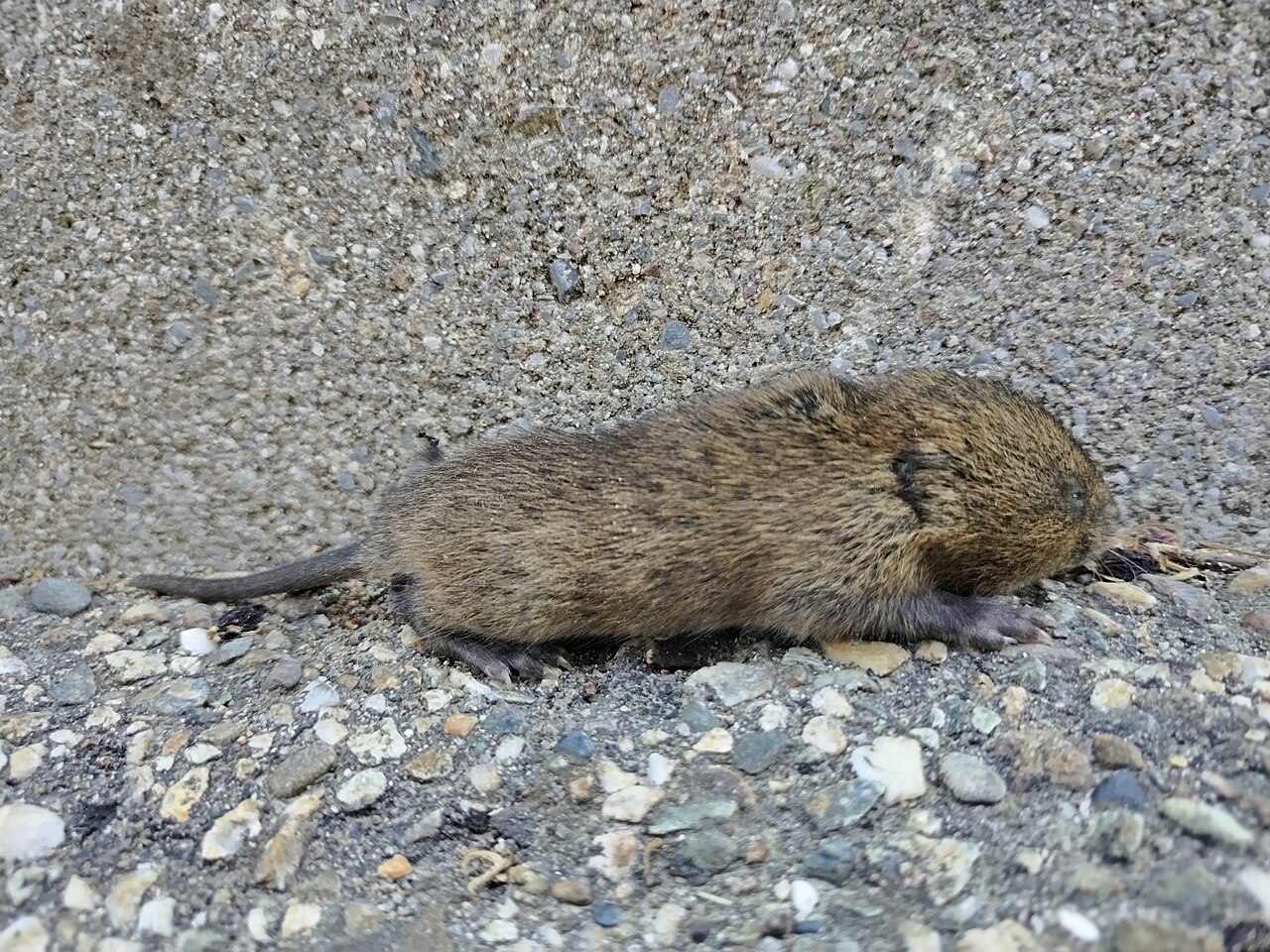
Tracks
The signs are the same as those of the Eurasian Water Vole and cannot be distinguished from them. Along ditches, canals, rice fields and marshes lie the burrow entrances in the bank, oval and wider than high, some below the waterline, surrounded by a close-grazed patch half a metre across. From there runs lead through the bankside vegetation to feeding stations with piles of reed, reedmace and sedge stems in pieces of five to ten centimetres, cut at an angle of about 45 degrees. The droppings are 8 to 12 mm long and 4 to 5 mm thick, cylindrical with blunt ends, buff to green-brown and odourless, and lie in fixed latrines on a raised spot near a burrow. Where the species moves away from water onto land it throws up earth heaps with the soil pushed out sideways and an oval opening at the edge, unlike the closed, conical heap of the mole, of which three species occur in Italy. These signs point to the genus Arvicola; the species follows from the locality.
Identification
A large vole of 16 to 19 cm with a blunt muzzle, small ears sunk in the fur, small dark eyes and a furred tail about half the head-body length. The back is lighter and warmer brown than in the Eurasian Water Vole, the flanks buff and the belly slate grey. There are no stripes, patches or other characters usable in the field. A large, blunt-nosed vole swimming along a ditch in Tuscany, the Po plain or Ticino can be assigned to this species on the basis of locality.
Similar species
The species cannot be distinguished in the field from the Eurasian Water Vole (Arvicola amphibius). The differences on which the split is based are molecular (mitochondrial DNA and nuclear markers); in addition the coat is slightly lighter and warmer and some skull measurements differ, which can only be taken with the animal in the hand and with callipers. No character is visible through binoculars. The two species are, however, geographically separated: A. destructor occupies the Italian peninsula, Slovenia and Swiss Ticino, A. amphibius the area north and east of these; in the Alps the ranges lie close together and the boundary has not been precisely established. The Brown Rat is the species most often confused with water voles; it has a pointed muzzle, large naked ears and a hairless, scaly tail. The Muskrat, naturalised in northern Italy, is much larger and has a laterally flattened tail. Savi's Pine Vole and other small voles are less than half as long.
Habitat
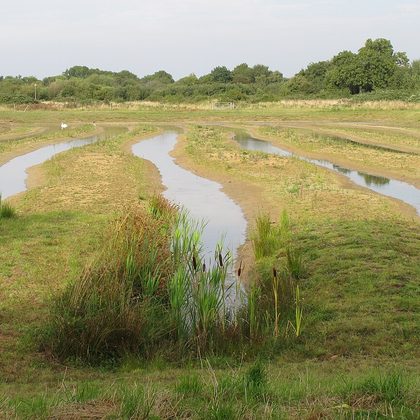
Low-lying, humid plains and valley floors with densely vegetated banks: rivers, canals, irrigation ditches, ponds, marshes, reedbeds and the margins of rice fields. Brackish water is also used, as far as the Venetian Lagoon. In north-eastern Italy the species stays almost entirely below 300 metres; in Calabria it occurs up to about 1600 metres. Unlike the Eurasian Water Vole in central Europe it is almost always tied to water and much less often burrows in dry grassland.
Where the animal is most at home, classified with EUNIS — the European standard for habitats.
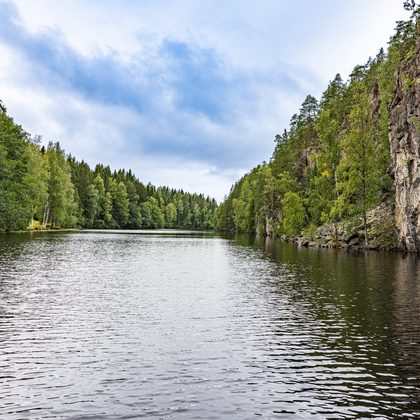
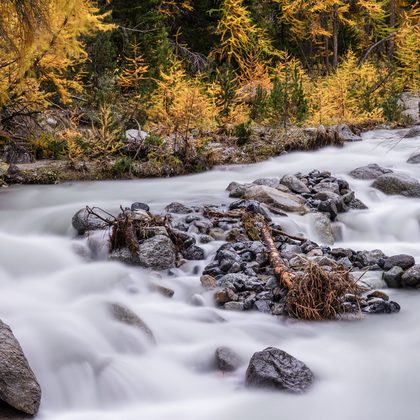

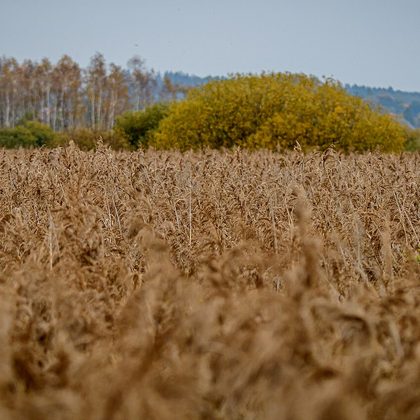
Distribution
Endemic to Italy, with an extension into Slovenia and Swiss Ticino. The species occupies the Po plain, the Venetian lowlands, Tuscany and the peninsula south to Calabria; it is absent from Sicily and Sardinia. It is the only Arvicola of the Italian peninsula: north of the Alps the Eurasian Water Vole occurs, and in France also the Southwestern Water Vole. A water vole along an Italian irrigation ditch belongs to this species.
Way of life
Predominantly diurnal, which makes the species easier to see than many related species; it swims and dives well. In summer it lives in and beside the water, in winter more on land, and in spring it returns to the bank. The diet consists mainly of aquatic and bankside plants; near Pisa and Livorno irises make up a large part of it in spring, along with grasses, herbs, roots and tubers, supplemented with insects, snails, freshwater shrimps and frogs. The proportion of animal food is higher than in most voles. The species digs burrows in the bank, with chambers and storage spaces. The young suckle for about two weeks, leave the nest and swim from fifteen or sixteen days, and are weaned at about twenty-one days. There is no hibernation.
Where and when to look
Search in the middle of the day along an irrigation ditch or the edge of a rice field in the Po plain; the species is diurnal and therefore easier to see than its northern sister species. In spring, near Pisa or in the Maremma, look for grazed iris leaves at the water's edge and follow the run to the burrow. Walk along the water: the animal swims a short distance and disappears into the bank vegetation, while the feeding stations with obliquely cut stems remain visible all day. Locality is the only basis for determining which Arvicola species is present.
Conservation status
On the IUCN Red List the species is listed as Near Threatened (NT), under the name Arvicola italicus; there is no assessment under the name Arvicola destructor: the species was split from A. amphibius only in 2017 and until recently was not listed separately on the Red List. The available data indicate decline. Since the 1970s and 1980s the species has declined in Italy through the straightening, concreting and annual clearing of irrigation ditches and river banks, the loss of marshes and changes in rice cultivation. It has no national protection; it is included on the regional red lists of Veneto and Umbria. For a species that occurs only in this area, protection is limited, and owing to a lack of research it is unknown for most Italian valleys whether the species is still present.
Scientific name
Arvicola destructor | Savi, 1838 (GBIF: Arvicola amphibius)
Savi described the species in 1838 and placed it straight away in the genus where it still stands. Arvicola is Latin, from arvum, 'ploughed land', and colere, 'to inhabit': the dweller in the fields. destructor is Latin for 'destroyer', from destruere, 'to pull down', after the damage the animal does to banks and crops. The specimen the first description was based on came from Italy, Tuscany.