All species › Carnivores › Cats › Jungle cat
Jungle cat | Felis chaus
Moeraskat | Gato de la Jungla
The jungle cat is a medium-sized, long-legged cat of reedbeds, marshes and dense riverside vegetation, from Egypt and the Levant through the Caucasus and Central Asia to south and south-east Asia. Within the guide area it lives in the Nile Delta, Israel, Lebanon, Syria and south-east Turkey. In much of its range it is the commonest cat, and it does well in farmland.
Tracks
Little has been recorded on jungle cat signs in the guide area. Young are born in burrows, hollow trees, reedbeds and dense thorn bushes. In Tajikistan and Uzbekistan snow tracking indicated nightly movements of 3 to 6 km.
Identification
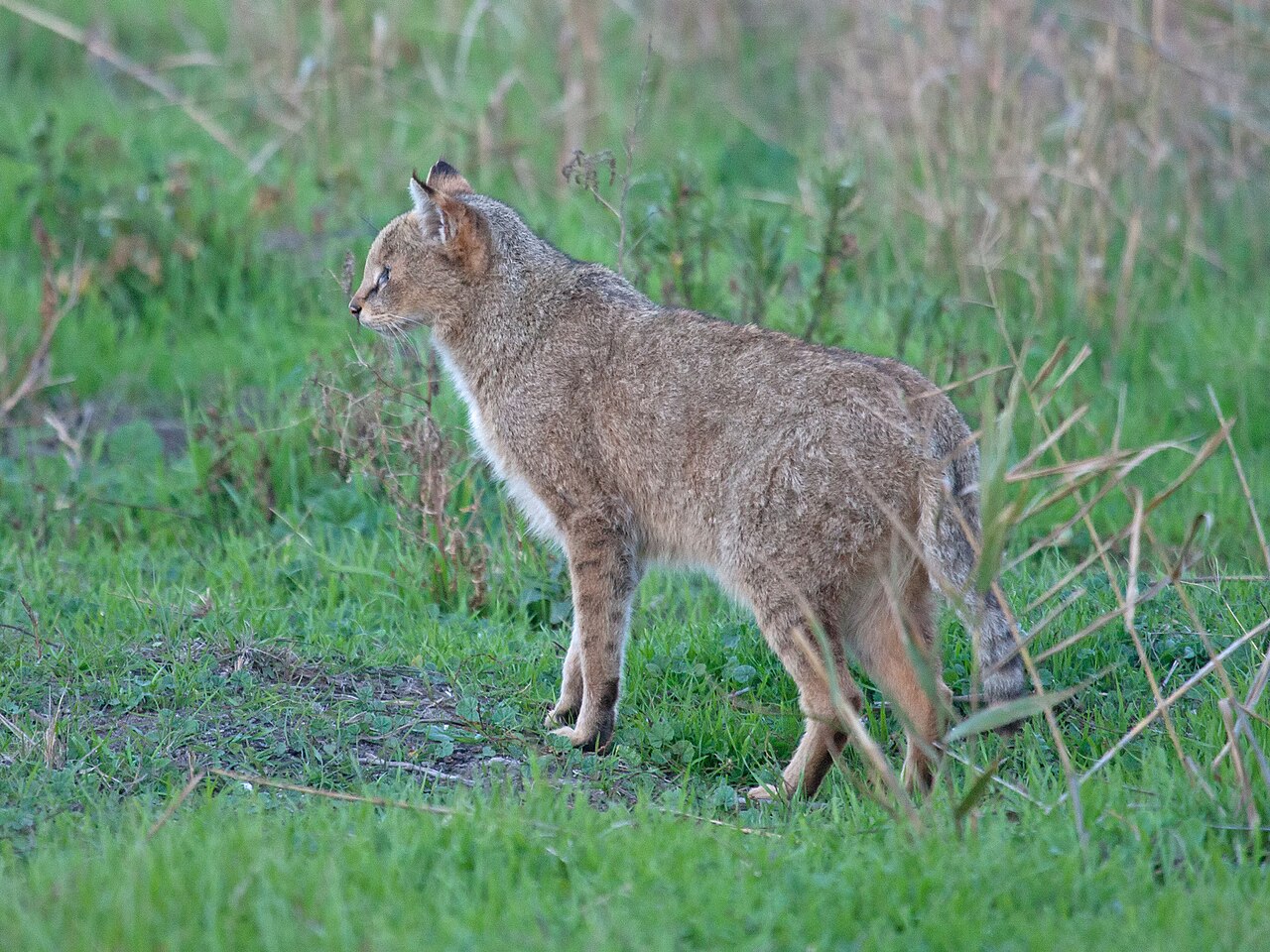
A large, long-legged cat with a plain, unspotted coat, reddish, sandy brown or tawny grey; black tips to the guard hairs give a slightly speckled look. The head is long and narrow with a white muzzle and white lines above and below the eyes. The ears are long and rounded and set close together, with a short tuft of black hair at the tip; the backs of the ears are reddish brown. The tail is relatively short and has a black tip. Males weigh 5.7 to 12 kg, females 2.6 to 9 kg; northern subspecies are larger and heavier than southern ones.
Similar species
The caracal has larger ears with black backs and much longer black tufts, and a tail that reaches only the hocks. The African wildcat is smaller and slighter, with a long, thin tail with dark rings and often stripes on the legs, and at most short, dark ear tufts. A large, plain domestic cat can look similar at a distance; the long legs, tufted long ears and short black-tipped tail make the difference.
Habitat
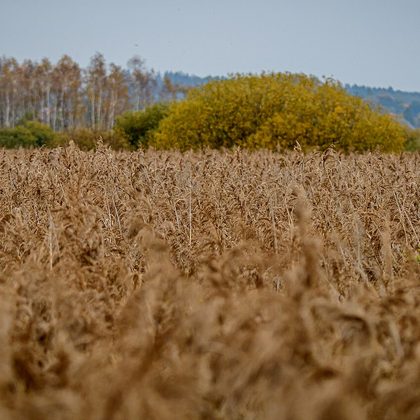
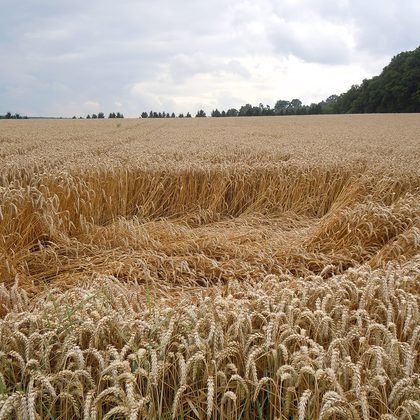
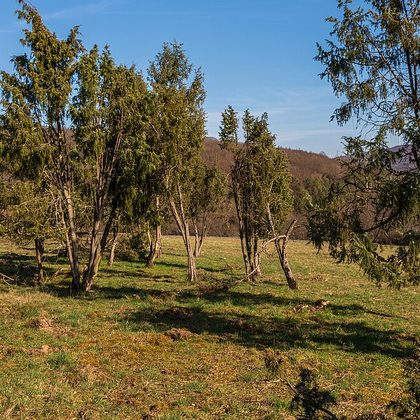
Tall grass, dense bush, riverine swamps and reedbeds. Sometimes at fish ponds, reservoirs and sprinkler-irrigated farmland. It also lives in drier, open forests and even in sandhill desert and steppe, but rarely above 1000 m.
Where the animal is most at home, classified with EUNIS — the European standard for habitats.


Distribution
From Egypt (subspecies F. c. nilotica) and the Levant through south-east Turkey, Jordan, Israel, Lebanon, Iraq, Syria and Iran to the Caucasus, around the Caspian and Aral Seas to western China, and on through Pakistan, India, Sri Lanka and the Himalayan region to Myanmar, Thailand, Laos, Cambodia and Vietnam. Within the guide area by far most recent records come from Israel, with a few from Turkey, Lebanon and Syria.
- Native
- dark = core range, pale = thinly spread
Way of life
Nocturnal, but regularly hunts at dawn and dusk. Food is mainly mammals: voles, gerbils, jerboas, ground squirrels, muskrats, hares and coypu. Birds rank second, with ducks, coots, pheasants, partridges, passerines and poultry; also frogs, lizards, snakes, turtles, insects and fish. It hunts by stalking and ambush, catches most prey on the ground, but climbs and leaps well. Mating and births vary with latitude and temperature; most young are born from December to June after a gestation of 63 to 66 days. A litter usually has three kittens, independent at nine months.
Where and when to look
In the guide area Israel is the best place. Jungle cats hunt at dusk along reed fringes, fish ponds and irrigation channels and are regularly seen there in farmland.
Conservation status
Least Concern (LC, 2021). It is listed on CITES Appendix II. In much of its range it is the commonest cat and it thrives in agricultural landscapes. In some parts of its range it has been heavily exploited for its fur.
Scientific name
Felis chaus | von Schreber, 1777
Von Schreber described the species in 1777 and placed it straight away in the genus where it still stands. Felis is the Latin word for 'cat'; the Romans also used it of martens and polecats. chaus was taken over by Schreber from Güldenstädt, who described the cat from the Caucasus under that name in 1776. The word goes back to a reading chaum in manuscripts of Pliny, now generally read as chama, the name of a lynx-like animal; its further origin is obscure. The specimen the first description was based on came from Russia.