All species › Bats › Vesper bats › Leisler's bat
Leisler's bat | Nyctalus leisleri
Bosvleermuis | Nóctulo Pequeño
Leisler's Bat is the smallest of the three Nyctalus species in the guide area: forearm 35 to 46 mm, weight 8 to 20 grams. Kuhl described it in 1817 as Vespertilio leisleri from Hanau in Hesse. It roosts mainly in tree holes and hunts fast above and along the canopy and over river valleys. Populations in central and eastern Europe migrate over hundreds to more than a thousand kilometres; the longest known movement is 1567 km, by a female from Germany to Spain.
No photograph of a living wild animal of this species with a suitable Creative Commons licence exists. Do you have one that meets the rules? Send it in.
Tracks
Maternity roosts are mainly in tree holes, often rot holes caused by damage or deformation of the tree, in oak, ash, beech, Scots Pine and Norway Spruce; also in rock crevices, buildings and bat boxes. At night the animals rest between the two foraging bouts in temporary night roosts, often in buildings. In the mating season males are territorial and hold a mating roost with a harem of up to nine females. Winter roosts are mainly in tree holes, sometimes in bat boxes, behind wooden fascias, in tunnels or in animal burrows. At emergence the animals can be counted at the entrance of a tree hole.
Identification
A medium-sized bat with narrow, pointed wings and golden-brown upperparts whose hairs are dark brown at the base, becoming golden brown towards the tip; the underparts are paler, yellowish, with blackish-brown hairs with brown tips. Face, ears and membranes are dark brown. The muzzle is short, with large glands between nostrils and eyes. The ears are short and triangular with four or five folds on the outer edge, and the tragus is very short and mushroom-shaped, as in the other Nyctalus species. The wings attach at the ankle; the tail projects a few millimetres beyond the tail membrane. Search calls are of two types: a quasi-constant-frequency type (QCF) starting at 22 to 26 kHz and lasting 15 to 25 ms, and a shallow frequency-modulated type falling from 26–30 kHz to 25–26 kHz, with the peak at 25 to 26 kHz and a duration of 7 to 15 ms. In Britain the peak averages around 29 kHz.
Similar species
The Noctule (Nyctalus noctula) is larger (forearm 47 to 60 mm) and has unicoloured reddish-brown hairs without a dark base; a forearm under 47 mm points to Leisler's. The Greater Noctule (N. lasiopterus, forearm 59 to 70 mm) is much larger. The Particoloured Bat (Vespertilio murinus, forearm 41 to 50 mm) has a similar short, broad tragus and a similar flight, but a dark back with silvery-white hair tips and sharply demarcated white underparts. The Serotine (Cnephaeus serotinus) has broader wings and a slower flight. On a bat detector the calls overlap strongly with those of Serotine and Noctule, and also with Particoloured and Northern Bat; without analysis of the recording part of the records remain at group level. On the Azores lives the closely related Nyctalus azoreum, which differs little genetically but is distinct in morphology and ecology.
Habitat
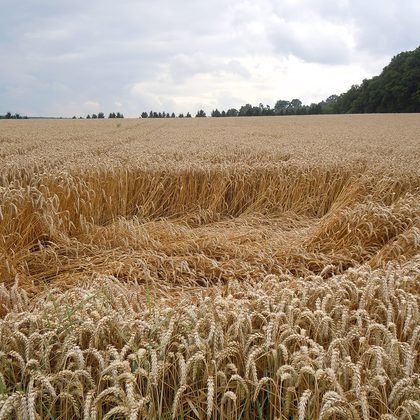
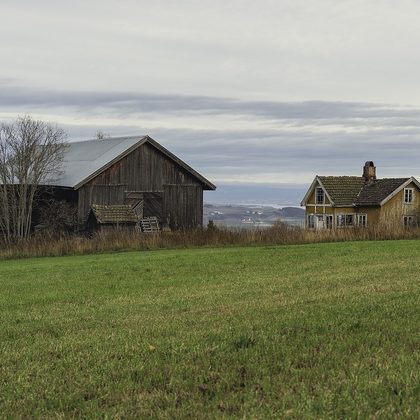
Temperate deciduous and coniferous woodland, farmland and river valleys. It hunts above and along the canopy, along tall vegetation and over river valleys and other open ground. In North Africa it lives mainly in oak forest and juniper-cypress forest at 400 to 900 m. Across the range it has been found from sea level to about 2400 m. The average foraging area is about 7.4 km², up to about 18.4 km² in southern England.
Where the animal is most at home, classified with EUNIS — the European standard for habitats.





Distribution
From Ireland, Great Britain and the Iberian Peninsula east to south-western Russia, the Caucasus, Turkey and northern Iran, with an isolated population in southern Sweden; also on Corsica, Cyprus, western and northern Crete (possibly migrating vagrants), Tenerife and La Palma in the Canary Islands, northern Morocco and northern Algeria, with one record from north-eastern Libya. Outside the guide area it lives in north-eastern Afghanistan, northern Pakistan and north-western India. Madeira holds the subspecies N. l. verrucosus, sometimes treated as a separate species. A record from Rhodes probably concerns a vagrant from the mainland. Ireland has large colonies of up to about 1000 animals.
- Native
- dark = core range, pale = thinly spread
Way of life
Nocturnal. Leisler's Bat emerges early, sometimes shortly before sunset, hunts in two bouts, after dusk and before dawn, and returns about half an hour before sunrise. It is a fast aerial hawker of medium-sized flying insects, mainly moths and flies, also caddisflies, lacewings, beetles, mayflies and hymenopterans. Maternity colonies usually hold 10 to 50 females with young; males and immatures roost alone or in small groups. Mating takes place in late August and September, and fertilisation is delayed until after hibernation. Young are born in June and July, one or two per litter, usually two; the first flying young appear in July, in Morocco already in June. Hibernation ends in March or April; in Morocco it is shorter. Populations in central and eastern Europe are migratory: bats ringed in Germany moved mainly south-west, and migration takes place in spring (March to May) and in late summer and early autumn (August to early October). Island and southern populations are mostly sedentary, although movements within and between Ireland and Great Britain are known. The greatest known age is nine years. Predators include Peregrine, Hobby and Kestrel.
Where and when to look
A bat detector at 25 to 30 kHz picks up the calls; they sound like those of the Noctule, and a certain identification needs a recording and analysis. The best chance of a sighting is in early dusk along woodland edges, over river valleys and over clearings in old deciduous woodland, where the animals hunt fast and high. The species is common in Ireland. A roost in a tree hole can be counted at emergence.
Conservation status
Least Concern (2016). The species is widespread and common in parts of its range, especially Ireland, but is considered rare in many regions and is locally extinct in parts of central European Russia. The handbook lists destruction of roosts in trees and buildings and loss of habitat as threats. In Italy an introduced Rose-ringed Parakeet has been seen killing a roosting Leisler's Bat. Like all bats in the European Union, Leisler's Bat is listed in Annex IV of the Habitats Directive and is covered by the EUROBATS Agreement.
Scientific name
Nyctalus leisleri | (Kuhl, 1817)
Kuhl described the species in 1817 as Vespertilio Leisleri; because it was later moved to another genus, the author and year stand in brackets. Nyctalus belongs with Greek nyx, genitive nyktos, 'night'; Bowdich gave no explanation, and just which Greek word he was reaching for is not settled. leisleri honours the German physician and naturalist Johann Philipp Achilles Leisler (1771–1813), who worked at Hanau, Kuhl's own town. The specimen the first description was based on came from Germany, Hesse.