All species › Rodents › Blind mole-rats › Limnos Blind Mole-rat
Limnos Blind Mole-rat | Nannospalax insularis
Nannospalax insularis | Nannospalax insularis
Nannospalax insularis, the Limnos Blind Mole-rat, is the only European blind mole-rat confined to a single island and therefore has the smallest range of the European blind mole-rats: Limnos in the northern Aegean, a bare, windswept, almost treeless island of less than five hundred square kilometres. Oldfield Thomas described the taxon in 1917 as a subspecies of Spalax monticola, from material from west of Moudros; in those years Moudros Bay was an Allied naval base and British personnel collected on the island. Since 2024 the Mammal Diversity Database has treated it as a species.
No photograph of a living wild animal of this species with a suitable Creative Commons licence exists. Do you have one that meets the rules? Send it in.
Tracks
As everywhere in this group, earth mounds are the only sign to be expected; on a bare, low island like Limnos they are easily visible. They are broad, low mounds of coarse clods without a visible tunnel opening, in a meandering line twenty to thirty metres apart across a cereal field, fallow plot or sheep pasture; the line follows the main tunnel. The tunnels are five to seven centimetres wide; the feeding tunnels are shallow, the grass-lined nest chamber and store chambers deeper. Because there is little mole activity on Limnos and much open, closely grazed ground, large, broad mounds in lines are almost certainly of this species there. There are also gnawed bulbs and rhizomes in opened tunnels, and pellets of Barn Owl and Little Owl, which provide most data on the Aegean islands; pellets under a church tower or a derelict windmill give a result here more quickly than searching in the field.
Identification
A typical blind mole-rat: cylindrical, neckless and heavily built in front, with a broad, flat, wedge-shaped head, a large bare triangular nose pad and a bristly pale fringe running back from the nose. The fur is velvety and lies in any direction, brownish grey with a yellow or rufous tinge. The yellow to orange incisors protrude in front of the lips. There are no ear pinnae, no visible eyes and no external tail. No head-body lengths, tail lengths or weights specific to this species were found; those of the Lesser Blind Mole-rat are not adopted. No chromosome number has been published either: whereas the related species were distinguished on karyological data, N. insularis rests on Thomas's original description and on DNA work by Németh and colleagues in 2024. Within this group that is exceptional and means that the species boundary here is less well supported than in the other species.
Similar species
No second blind mole-rat occurs on Limnos, so in practice confusion with another blind mole-rat does not arise there; this rests on locality, not on a character. Externally it cannot be seen to which European blind mole-rat species an animal belongs: the forms are alike in fur, size, head shape, bristle fringe and tooth colour, and the differences fall within the variation of each population. On the neighbouring islands only the assignment changes: Samothrace has the blind mole-rat of the Thracian mainland, Lesbos has N. xanthodon. On Limnos the mole, which is smaller, with spade-shaped forefeet and a short tail, and the local rats, with ears, eyes and a long tail, can be excluded. A record is entered as 'blind mole-rat, Limnos'; the locality determines the species name.
Habitat
Dry and moderately moist grassland and arable land on deep, loose soil: cereal fields and fallow in the lowland, sheep and goat pastures, old terraces and grassy field margins. Limnos is flat to gently rolling, almost treeless and largely cultivated; the species is therefore more dependent on farmland than the mountain species of the mainland. Rock, coastal dunes and waterlogged ground are unsuitable, and where ploughing is deep and frequent the species cannot persist, because the feeding tunnels lie at ploughing depth.
Where the animal is most at home, classified with EUNIS — the European standard for habitats.
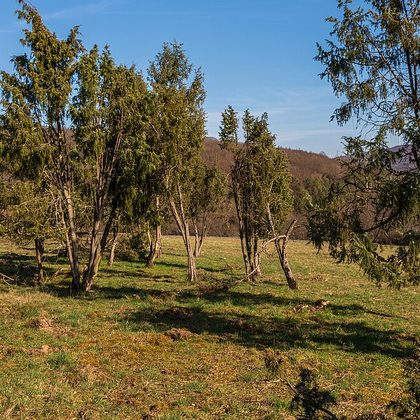
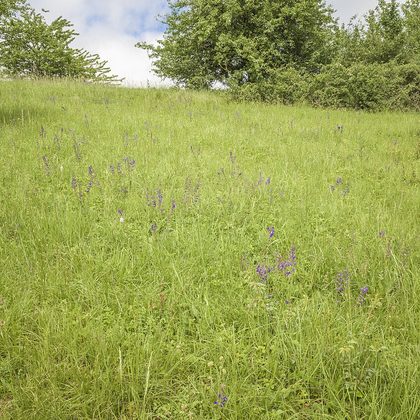

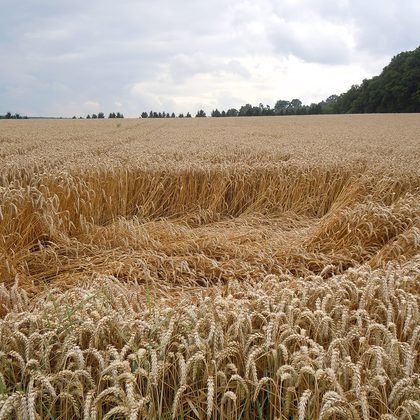
Distribution
The island of Limnos only, in the northern Aegean, with the type locality west of Moudros. The range is thus among the smallest of any mammal in the guide area, comparable to that of an island-endemic shrew. How much of the island is actually occupied, at how many sites, and whether numbers are increasing or decreasing, has not been published. Neighbouring Samothrace also has a blind mole-rat, but it is assigned to a mainland species. Blind mole-rats are absent from western and northern Europe and from the Iberian Peninsula.
Way of life
Hardly any observations of this species itself have been described; the following applies to the complex, within which the way of life varies little. The animals live solitarily and almost entirely underground, are active around the clock with most digging at the beginning and end of the day, and do not hibernate. The diet consists of bulbs, tubers, rhizomes and thick roots, supplemented in spring with green plant material. In the Mediterranean climate summer, when the soil dries out and hardens, is probably the most difficult period; digging activity then declines strongly. One burrow system is the territory of one animal, which tolerates no conspecifics outside the mating season at the end of winter. Gestation is about thirty days; two to four young are born, and females first breed in their second year. Because foxes and martens are absent from the island, owls, feral cats and dogs are probably the main predators.
Where and when to look
The best period on Limnos is March or April, when the cereals are still short, the pastures green and the ground soft after the winter rains; most digging takes place then. Search field margins, fallow and pastures for a string of broad, low mounds meandering through grass or stubble. Pellets under perches of Barn Owl and Little Owl are the quickest way to confirm presence on a small island. The animal itself is almost never seen; digging is pointless, and with a population found only here restraint is called for.
Conservation status
Not evaluated by the IUCN. A species living on a single island of less than five hundred square kilometres qualifies on range size for a threatened category, but no assessment has taken place. The Red List recognises only the collective species Nannospalax leucodon, assessed as Least Concern; that assessment does not apply on Limnos. No counts, trend data, known management measures or protected sites have been published. The risks are those of any island species: agricultural intensification and deep ploughing, coastal building and tourism, road construction and occasional control as an agricultural pest, on an area without alternatives. The main gap is basic research on distribution and numbers.
Scientific name
Nannospalax insularis | (O. Thomas, 1917)
O. Thomas described the species in 1917 as Spalax monticola insularis; because it was later moved to another genus, the author and year stand in brackets. Nannospalax joins Greek nannos, 'dwarf', to Spalax: the small blind mole-rat. insularis is Latin for 'of the island', from insula, 'island'; the island is Lemnos, from which Thomas described the animal. The specimen the first description was based on came from Greece, Limnos.