All species › Hedgehogs, shrews and moles › Moles and desmans › Martinos' Mole
Martinos' Mole | Talpa martinorum
Talpa martinorum | Talpa martinorum
Talpa martinorum is the most recently described mole of the guide area; the description dates from 2018 and is based on animals from the Strandzha mountains in the far south-east of Bulgaria. The species lives only in Thrace, between Burgas and Istanbul, and thus has one of the smallest ranges of any European mole. Until 2018 these animals were placed with the Blind Mole or the Levant Mole; genetically, however, they are closer to the moles of western Europe than to the moles of the Balkans.
No photograph of a living wild animal of this species with a suitable Creative Commons licence exists. Do you have one that meets the rules? Send it in.
Tracks
The species digs tunnels and leaves molehills. These cannot be distinguished from the hills of other moles, but because no other mole lives within the range, a molehill in the Strandzha or Istranca mountains is in practice a sign of this species. No other signs have been described.
Identification
A medium-sized mole, equal in build and proportions to the Common Mole but slightly smaller: head-body 12.4 to 13.4 cm, weight 52.5 to 65 grams. The tail is short, 2.4 to 3.2 cm, about a fifth to a quarter of head-body length, and densely set with black, bristly hairs. The fur is dense and silky, black above and slightly paler below with a slate-grey sheen; some animals have an irregular yellowish-brown stripe on the rear of the belly. Around the eye the hairs are shorter and paler, and the eyelid slit is covered by a translucent skin. The snout is flesh-coloured, with a triangular naked strip of skin behind the rhinarium, its point directed backwards. The skull has a sturdy rostrum; the first upper molar lacks the parastyle, a small accessory cusp present in almost all other Talpa species.
Similar species
Within the range the chance of confusion in the field is small, because no other mole occurs there: the Common Mole (Talpa europaea) lives further west, in the lowlands of Bulgaria, and the Levant Mole (Talpa levantis) across the Bosporus, in Anatolia. Compared with the Common Mole, the smaller size and the skin-covered eye are the distinguishing characters; compared with the Levant Mole, above all the absent parastyle on the first upper molar, a skull character. The species is not closely related to the Balkan Mole (Talpa stankovici), and the ranges lie hundreds of kilometres apart. In Thrace the blind mole-rats (Nannospalax) also throw up soil: rodents without mole-type digging forefeet, with broader, lower heaps of coarse clods.
Habitat
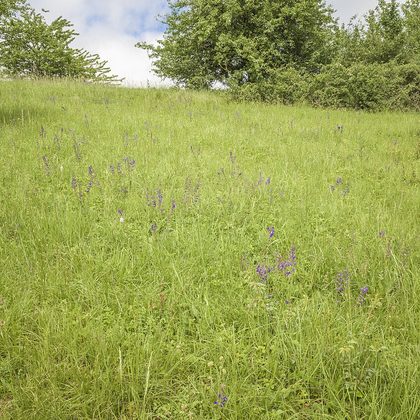
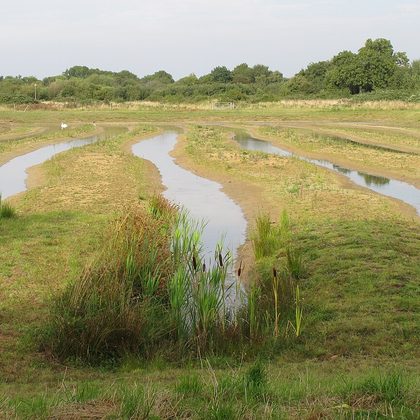
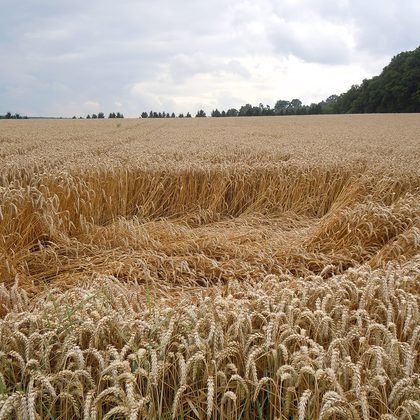
Chiefly moderately damp grassland and orchards on red, well-drained soils in the hills, and also arable land on dark soils, flat floodplains, oak woodland and riverine forest. The species is known from sea level to about 445 m.
Where the animal is most at home, classified with EUNIS — the European standard for habitats.

Distribution
Endemic to Thrace, along the south-western coast of the Black Sea: from the Strandzha mountains near Burgas in Bulgaria south to the Istranca mountains near Istanbul in European Turkey. In Bulgaria its known occurrence lies in Strandzha Nature Park; the type locality is a meadow near Zvezdets. West of the range lives the Common Mole, in Anatolia the Levant Mole.
Way of life
Almost nothing specific is known about its way of life; it is assumed to correspond to that of the other Eurasian moles: solitary in a self-dug tunnel system, feeding on earthworms and soil insects. The holotype, a young adult female, was caught on a meadow in April 2017. Genetically the species belongs to the western branch of the genus, close to the Aquitanian Mole, the Iberian Mole and the Common Mole; it probably arose from an isolated peripheral population of the ancestors of that group.
Where and when to look
Molehills of this species can be found in Strandzha Nature Park in south-eastern Bulgaria and in the Istranca mountains in European Turkey. Meadows and orchards on the red hill soils and the river valleys are the first places to search. A dead animal provides the most information: record the locality, measure and weigh the animal, and check with a lens whether the eye lies beneath a translucent skin.
Conservation status
Least Concern (LC, 2024). The range is small, confined to the Strandzha and Istranca mountains and the adjacent lowlands. In Bulgaria the species occurs in Strandzha Nature Park. No specific threats have been described; data on population size are lacking.
Scientific name
Talpa martinorum | Kryštufek, Nedyalkov, J. J. Astrin, & Hutterer, 2018
Kryštufek, Nedyalkov, J. J. Astrin, & Hutterer described the species in 2018 and placed it straight away in the genus where it still stands. Talpa is the Latin word for 'mole'. martinorum is the genitive plural of Martinus, 'of the Martinos': the name honours the Russian-Serbian couple Vladimir and Evgeniya Martino, authorities on the mammals of the Balkans and the describers of Talpa stankovici. The specimen the first description was based on came from Bulgaria.