All species › Hedgehogs, shrews and moles › Moles and desmans › Common Mole
Common Mole | Talpa europaea
Europese mol | Topo Europeo
The Common Mole is a subterranean insectivore of most of Europe north of the Pyrenees. The animal itself is rarely seen; the species is almost always recorded from molehills and tunnels. These signs occur wherever the soil is deep, damp and rich in earthworms.
Tracks
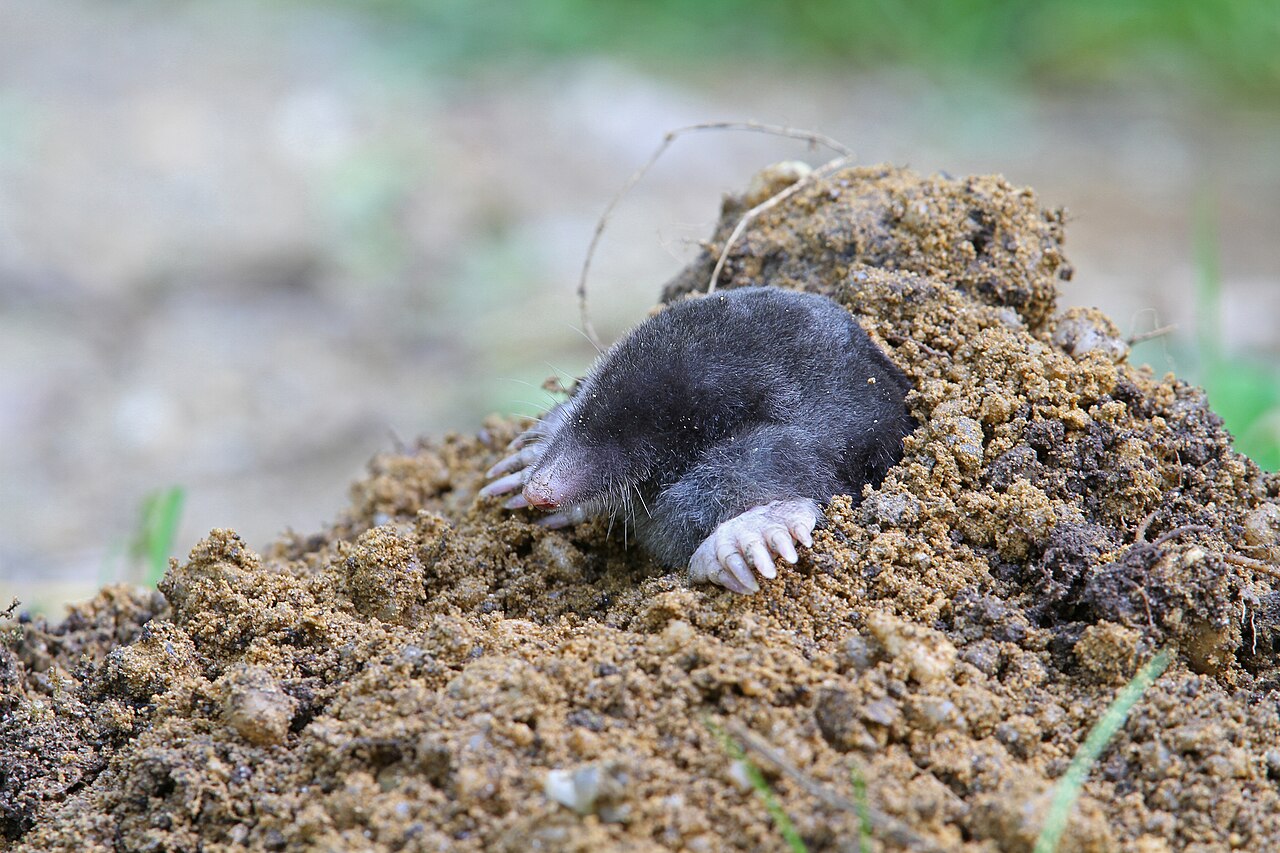
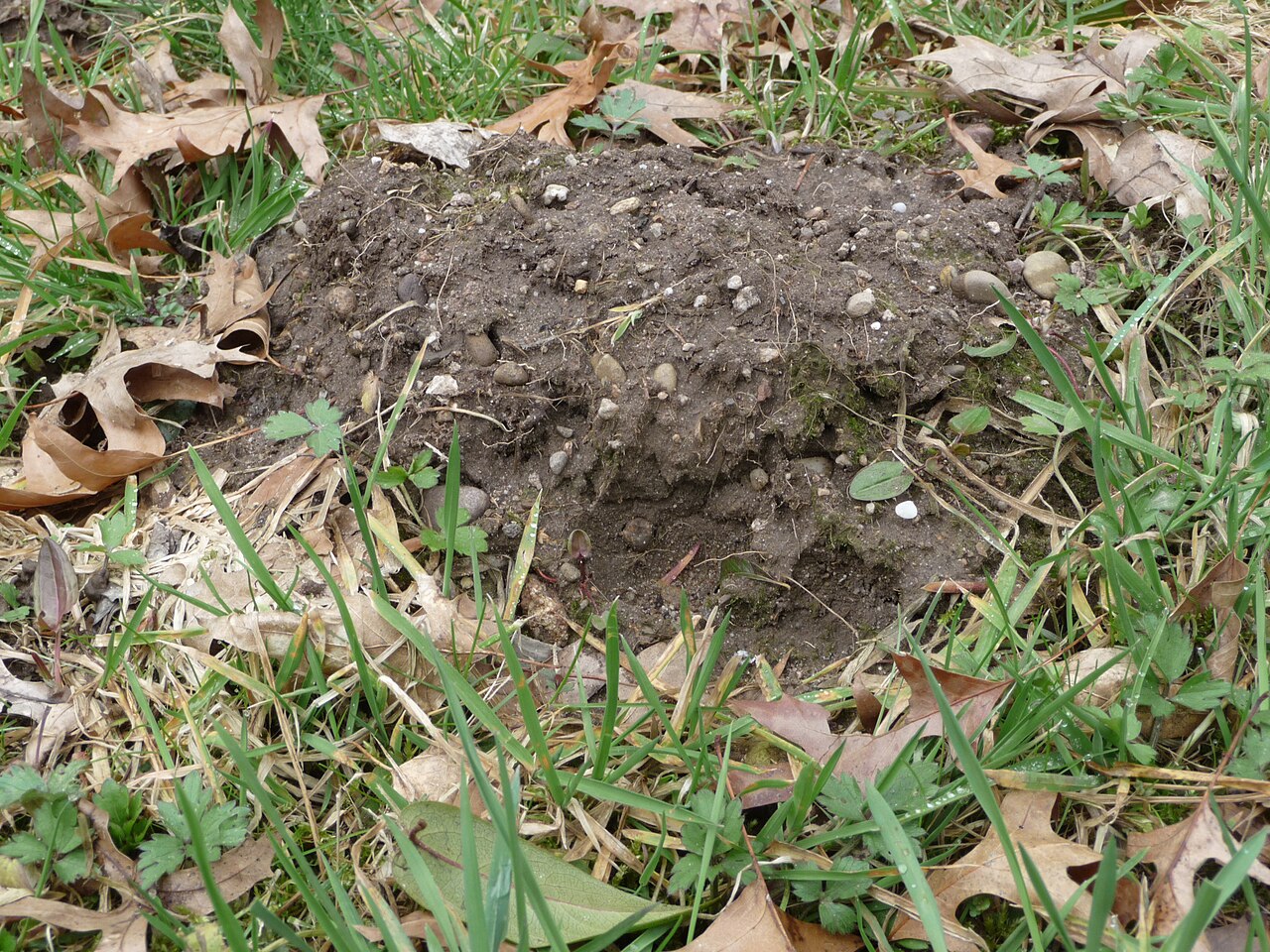
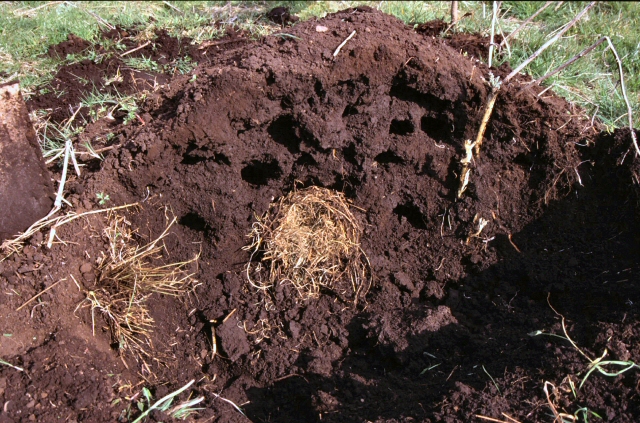
The molehill is the best-known mammal sign in Europe and at the same time often misattributed. It consists of loose, crumbly soil pushed up from below through a vertical shaft and therefore has no visible opening: the soil lies conically around a plugged centre, is dark and damp when fresh and breaks into crumbs. Height 10 to 30 cm, diameter 20 to 40 cm; the hills lie in a line or an irregular group along the tunnel. The water vole heap differs: it is flatter and broader, has an oval opening at the side that is often open, and contains plant material, root fragments and grass blades, because the Water Vole digs in the root zone; nearby lie gnawed fruit-tree roots and bitten tubers, and the tunnel is wider than high, whereas that of the mole is higher than wide. There are also surface runs: ridges just under the turf that cross a lawn or pasture and collapse underfoot. On wet ground the mole builds a fortress, a heap sometimes a metre across and half a metre high, containing the grass-lined nest. In winter the soil comes from deeper and the hills are larger and cloddier. When digging, a larder is sometimes found: tens to hundreds of earthworms paralysed by a bite to the front segments and stored alive, so that they neither crawl away nor decay. Prints are rarely seen, almost only in mud along ditches, and are recognisable by the broad, outward-turned forefoot. In June young moles move above ground during dispersal; dead animals are then found on paths and roads, often picked up and dropped again by a Buzzard or heron.

In its habitat
Head close-up

Identification
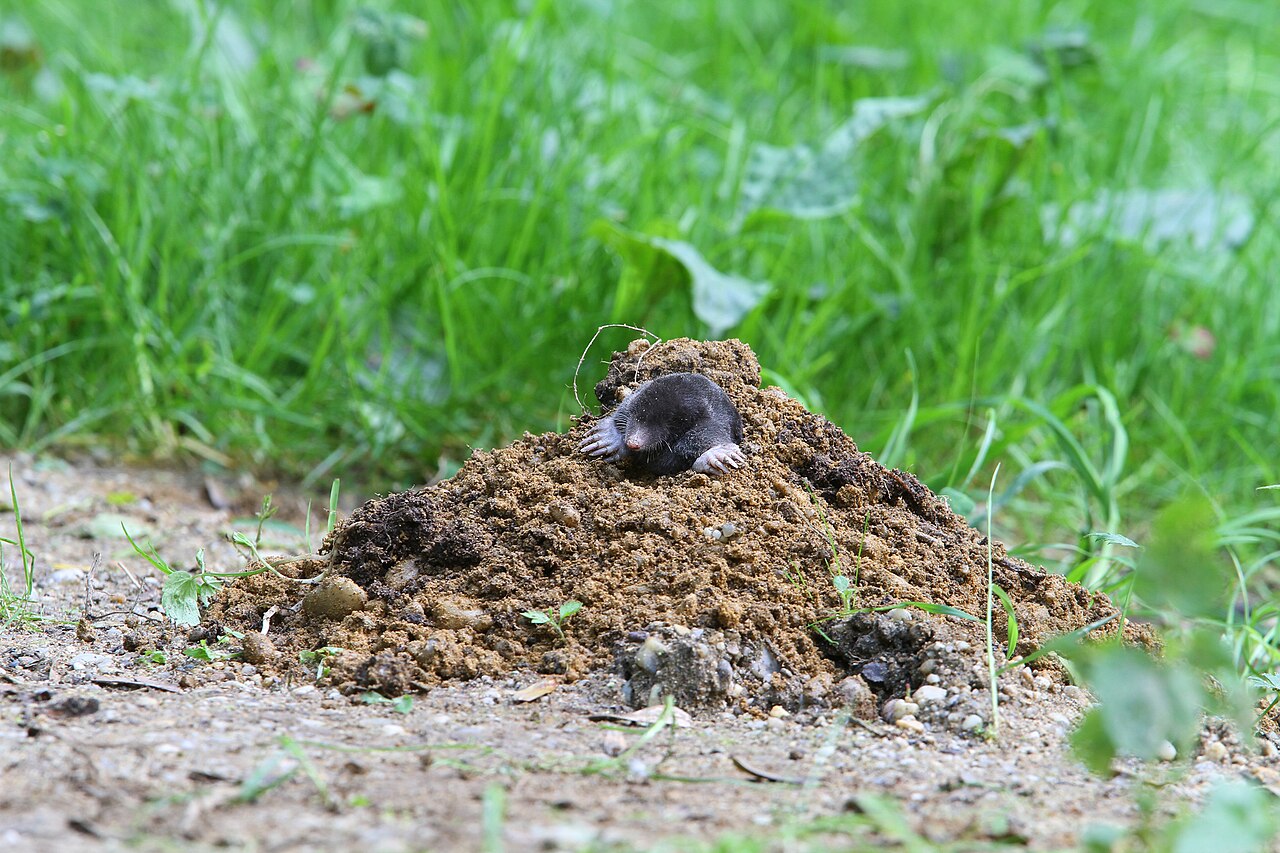
A cylindrical animal with no visible neck and a black, velvety coat whose hairs can lie in any direction; this allows the animal to move backwards through a narrow tunnel as easily as forwards. The forelimbs are broad, outward-turned digging limbs with five heavy claws, set so far forward that no shoulder is visible; the hind legs are small and unspecialised. The snout is pink, naked, pointed and mobile, with the nostrils at the side; the eyes are no larger than a pinhead and hidden in the fur; external ears are absent. The tail is short, thick at the base and held upright while moving, so that it touches the tunnel roof. Buff, grey or white individuals occur relatively often in this species. Males are on average larger and heavier than females.
Similar species
Above ground confusion is hardly possible: no other European mammal has such digging limbs. The difficulty lies among the moles themselves. The Iberian Mole (Talpa occidentalis) occupies most of Spain and Portugal, the Roman Mole (Talpa romana) the Italian peninsula and the Blind Mole (Talpa caeca) the mountains of southern Europe; in the latter the eyes are covered by a membrane, visible with a lens on an animal in the hand but not in the field. Otherwise these species cannot be separated by appearance or size, and locality determines the species. On the Iberian Peninsula this is the normal situation: the Common Mole occurs only in north-eastern Spain, and elsewhere on the peninsula molehills are made by the Iberian Mole. In the field identification concerns mainly the heaps, and here the Water Vole (Arvicola amphibius) is the most frequent source of confusion; see the signs. Voles, rats and mining bees also throw up spoil, but smaller, more granular and with a visible hole.
Habitat
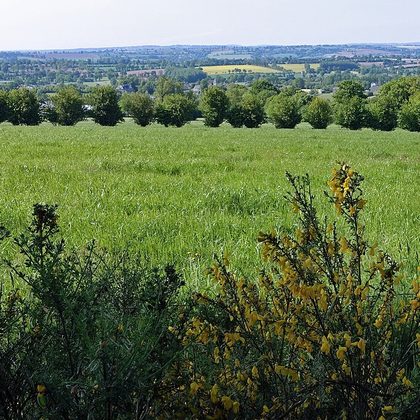
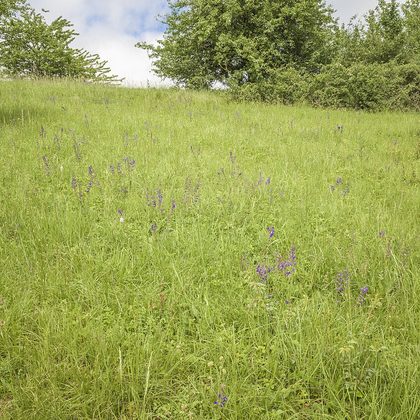
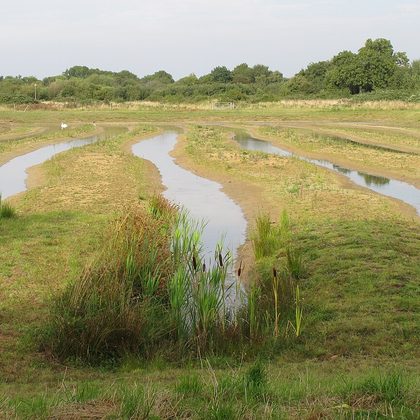
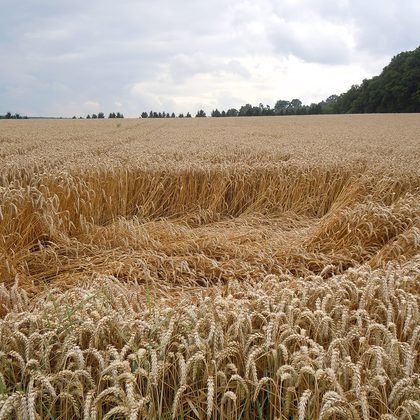
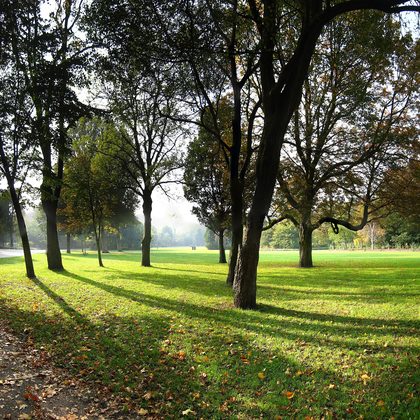
All ground with deep, damp soil rich in earthworms: damp grassland, hay meadow, pasture, arable fields, dykes and banks, hedgerows, broadleaved woodland with a good humus layer, parks, lawns, playing fields, cemeteries and gardens. Strongly acid peat, bare drifting sand, very dry and permanently waterlogged soils are avoided. In the mountains the species occurs up to about the treeline. Density depends on earthworm numbers and thus on soil that retains some moisture throughout the year.
Where the animal is most at home, classified with EUNIS — the European standard for habitats.


Distribution
Almost all of Europe north of the Pyrenees and west of the Urals, from northern Spain and the Alps into central Scandinavia and Russia. In Spain restricted to the Pyrenees and their surroundings, with the Ebro valley, Navarre and northern Catalonia as the main area; in the rest of the Iberian Peninsula the species is replaced by the Iberian Mole, and it is absent from Portugal. In Britain the mole is common on the mainland, into the Scottish Highlands; it is absent from Ireland, which the species never reached, and from the Isle of Man, the Outer Hebrides, Orkney and Shetland. In the Netherlands and Belgium it occurs throughout the mainland, on clay as well as sand, and is absent from the Wadden Islands. The mole is one of the few common farmland mammals whose numbers are not visibly declining.
- Native
- dark = core range, pale = thinly spread
Way of life
Nocturnal, but in practice active around the clock in a fixed rhythm of about four hours of activity and four hours of rest, day and night and in all seasons. There is no hibernation: in frost the mole withdraws to deeper tunnels, and the hills that then appear are larger because the soil comes from deeper. The tunnel system functions as a trap system: earthworms that enter the tunnels are collected during regular rounds. Besides earthworms the mole eats leatherjackets, chafer grubs, beetle larvae, centipedes and slugs; daily food intake is about half of body weight. Outside the breeding season the species is strictly solitary and the tunnel system is defended against conspecifics. In March and April males tunnel towards females; after a gestation of about four weeks three to four naked young are born in the grass-lined nest. In June the young leave the system; this is the only period in which moles move above ground in numbers and many die. In the wild a mole rarely lives longer than three to four years.
Where and when to look
This species is recorded mainly from its signs. Walk a pasture after a mild, wet night and distinguish fresh hills (dark, damp, cloddy soil) from older, rain-washed grey hills; the line of fresh hills shows the direction of the tunnel. In snow, fresh hills on a white field show how many moles are active. The animal itself is best seen in June along ditches, gardens and paths, or by waiting at a freshly thrown hill until the soil moves again; this happens more often in the early morning. A Buzzard watching the ground of a pasture for a long time is waiting for the same movement.
Conservation status
Least Concern (2017) and common throughout the range. The species is not on any list of threatened species, but is controlled on a large scale on farmland, playing fields, lawns and flood banks; this control is the only factor that influences numbers locally. Legal status differs by country: in Britain the mole is not protected and mole catching is a trade; in the Netherlands the species is protected, with a provincial exemption for control; in Belgium the rules differ by region. In Spain the species occurs in only a small part of the country, and control there almost always concerns the Iberian Mole. A greater threat than control is the condition of the soil: compaction, drainage and the loss of earthworms from intensively worked arable land reduce the food supply.
Scientific name
Talpa europaea | Linnaeus, 1758
Linnaeus described the species in 1758 and placed it straight away in the genus where it still stands. Talpa is the Latin word for 'mole'. europaea is Latin for 'European'. The specimen the first description was based on came from Sweden, Kristianstad.