All species › Rodents › Voles and hamsters › Muskrat
Muskrat | Ondatra zibethicus
Muskusrat | Ondatra zibethicus
The Muskrat is a water rodent from North America that is established in Europe as an invasive alien species. In 1905 Prince Colloredo-Mansfeld released two males and three females into the ponds of his castle at Dobříš near Prague; most of the European and part of the Asian population descends from these animals. The species digs tunnels in banks, dykes and embankments and is therefore controlled on a large scale in several countries, above all in the Netherlands.

Tracks
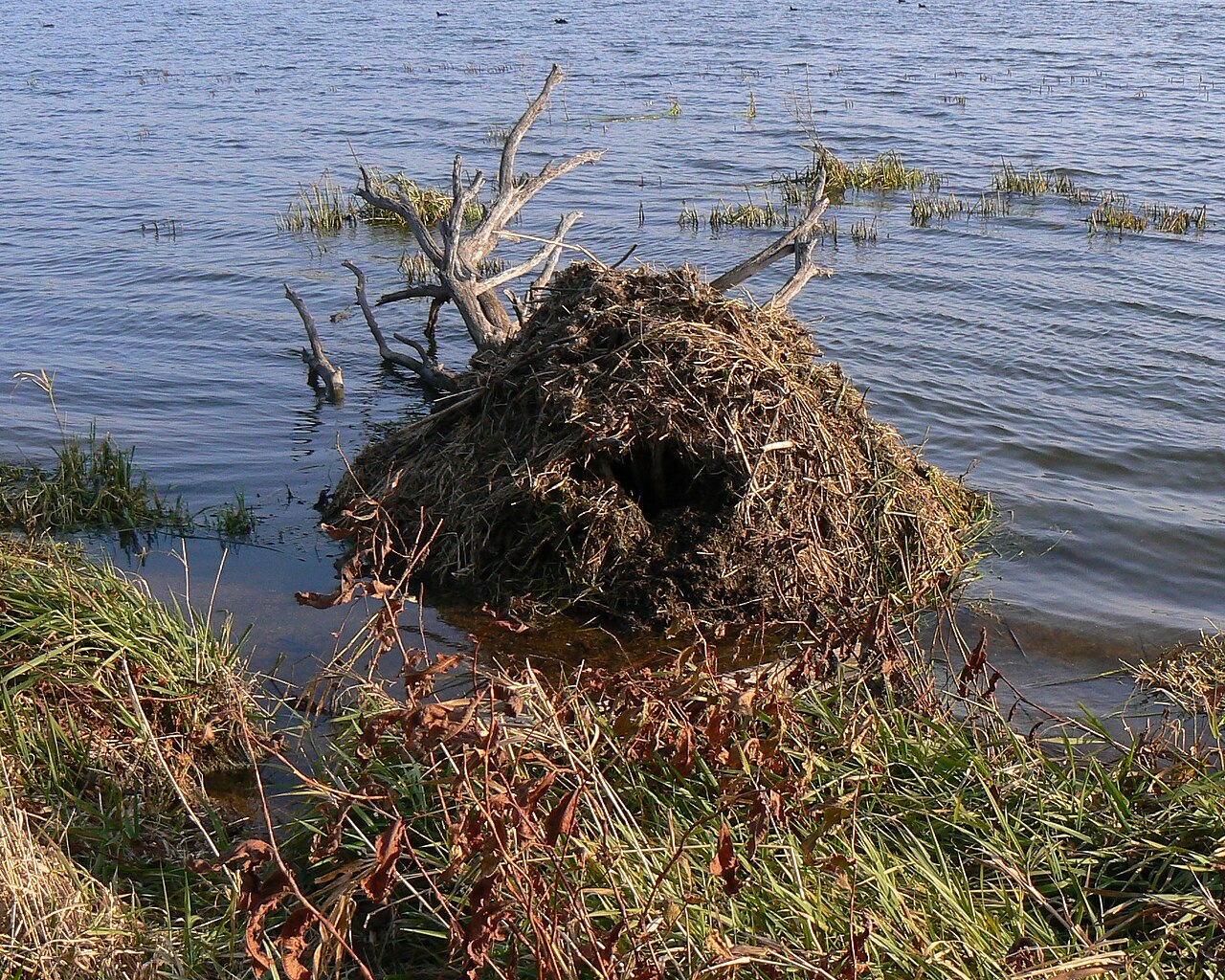
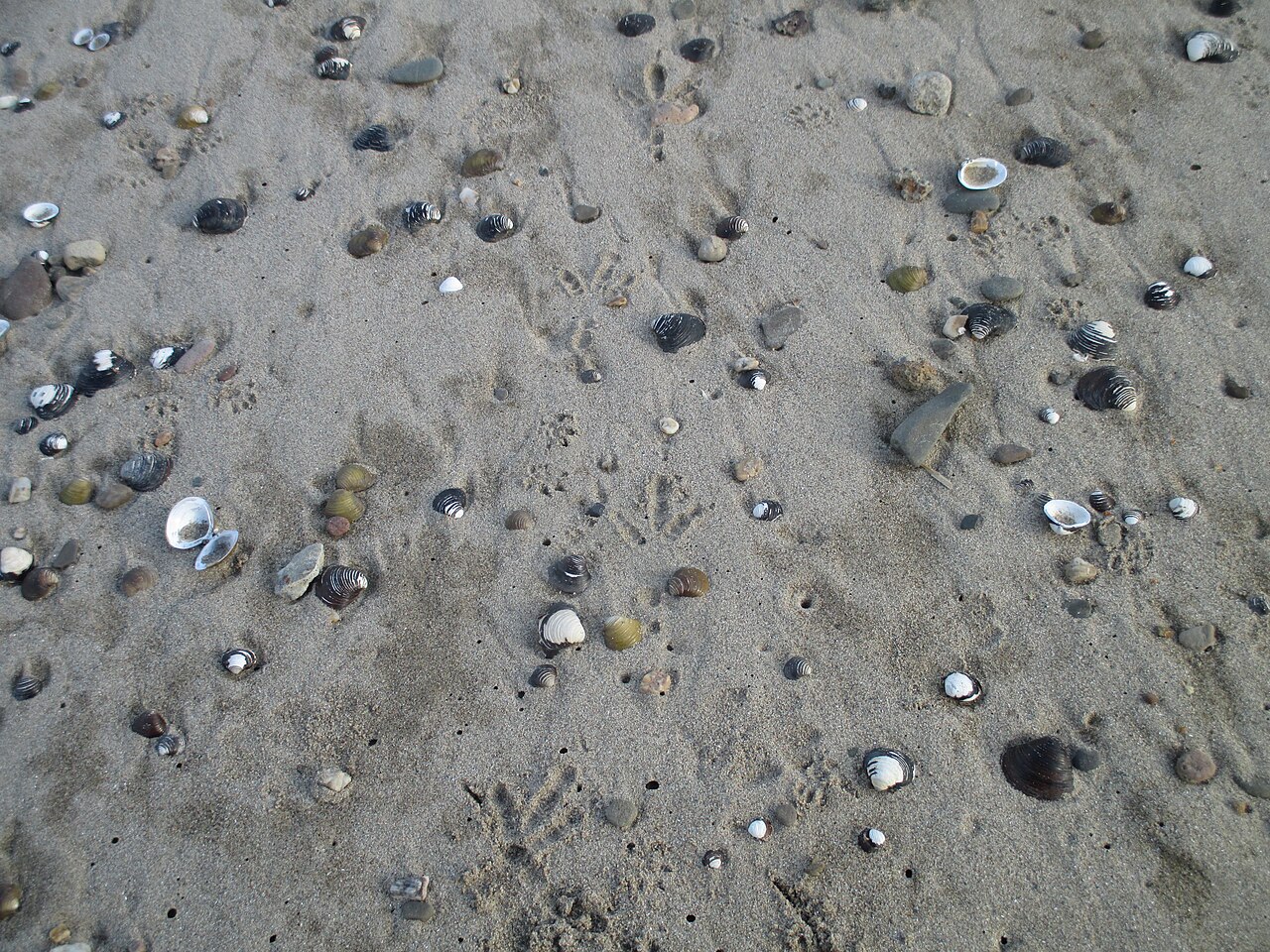
Signs are usually found before the animal. Best known is the lodge: a cone of piled reed, reedmace and sedge stems with mud, up to a metre high and one and a half to two metres across, built in shallow water, with the entrance below water and the nest chamber above. A muskrat lodge is smaller and consists of much more vegetable and much less woody material than a beaver lodge; it is most visible after the first frosts, when the reed lies flat. Where the bank is high enough the species digs a bank burrow: a pipe 10 to 15 cm across that starts under water and runs obliquely upwards to a dry nest chamber, with tunnel systems reaching metres into the bank. Such tunnels weaken dykes, embankments and banks, especially in the river areas of the Netherlands and Germany; above a tunnel the ground can subside into an elongated depression or a hole into which a tractor or a cow can sink. There are also feeding sites and feeding platforms: small floating or half-floating heaps of cut stems on which the Muskrat sits to eat; rhizomes and juicy stem bases are eaten, leaves and tips left. A trail of bitten-off reedmace stems leading into the water is a strong indication. In reedbeds swim channels and fixed runs to the bank are formed. The print is small and star-shaped: the hind foot is 6 to 8 cm long, with five long, spread toes and clear claw marks; the forefoot is smaller and shows four toes. In soft mud or snow a tail drag often runs between the prints. The dropping is dark, smooth and sausage-shaped, about a centimetre long, often in groups on a stone, post, log or floating board along the bank.

In its habitat

Identification
A large, thickset water rodent of 26 to 30 cm head-body length. The fur appears silvery under water and dark reddish brown to almost black above it; the belly is greyer and paler. The head is blunt and broad, with small eyes and small ears sunk in the fur; swimming animals keep head and back just above the surface. The main character is the tail: 20 to 25 cm long, almost naked, scaly and laterally flattened rather than flattened from above; when swimming the tail often moves visibly from side to side. The hind feet are large, with a stiff fringe of swimming hairs along the toes instead of webs; the forefeet are small and hand-shaped and are used to hold plant material. The incisors are orange. Glands at the base of the tail produce a sharp musky odour, which gave the species its name and which is noticeable at lodges and latrines.
Similar species
On the water three species come into consideration, and size is decisive. The Eurasian Beaver is three times as long, has a broad, horizontally flattened tail and creates a much larger bow wave. The Coypu is intermediate in size, browner and shaggier, with white whiskers and a white muzzle patch and a round, rat-like tail. The Water Vole is the most difficult: much smaller (head-body 12 to 22 cm), with a furred, round tail about half the body length, and it floats higher in the water. The Brown Rat also swims and also has a round, naked tail, but is slimmer, with a pointed muzzle and large, free-standing ears. The Otter dives with a rolling movement that shows the back. If only a head with a V-shaped wake is visible, the length of the body behind the head and if possible the tail are decisive.
Habitat
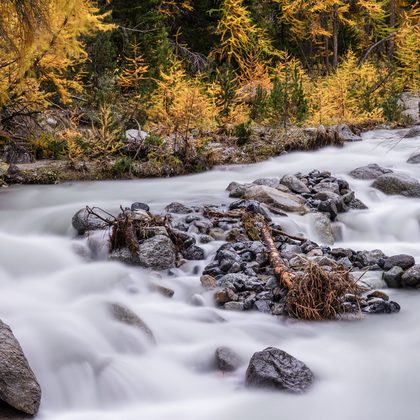
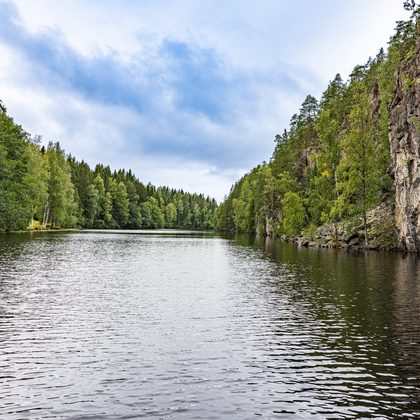
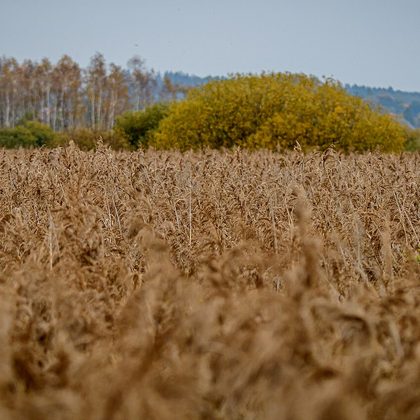
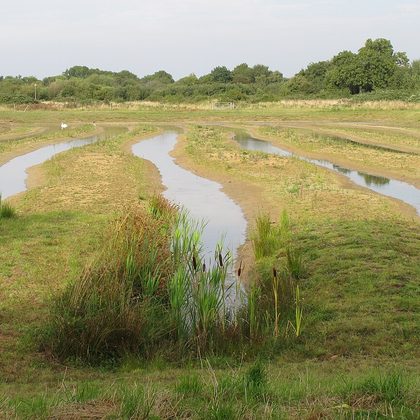
Slow-flowing and standing fresh water with a soft bank and a fringe of water plants: ditches, drains, canals, lakes, pools, peat cuttings, floodplains, reed marshes and wet grassland, and also brackish polders and tidal creeks. Requirements are water that does not freeze to the bottom in winter, a bank in which to dig or shallow water in which to build, and reedmace, reed, bulrush or sedge as food. In the polders of the Netherlands and northern Germany the ditch system itself is the most important habitat. In the mountains the species occurs up to a few hundred metres.
Where the animal is most at home, classified with EUNIS — the European standard for habitats.



Distribution
Native to North America, from Alaska and the Canadian tundra to northern Mexico, wherever there is fresh water. The European populations derive from the release of five animals at Dobříš, south-west of Prague, in 1905, supplemented by later escapes from fur farms in France, Finland, Russia and elsewhere. From this core the species has spread in a century over almost the whole European mainland, from France to beyond the Urals and further to Japan. In the Netherlands the first animal was found in 1941 near Valkenswaard; the country was then colonised from Belgium and Germany, where the species is common. In the British Isles the species is no longer present: the populations that escaped from fur farms in the 1920s were eradicated in the 1930s; this is one of the few successful eradications of an established mammal in Europe. The species is absent from Iceland, most Mediterranean islands and the dry south of Iberia; no established populations are known in Spain, and isolated records there have not led to populations.
- Established introduction
- dark = core range, pale = thinly spread
Way of life
Most active at dusk and by night, in quiet areas also by day. There is no hibernation; in winter the Muskrat swims under the ice between lodge and food. The diet consists mainly of water plants (reedmace, reed, bulrush, sedges, water lily), of which rhizomes and stem bases are eaten, supplemented with grass, crops and, especially in spring, freshwater mussels, crayfish, snails, frogs and fish. The species lives in pairs or small family groups with a defended territory around the lodge. Numbers fluctuate strongly and can change tenfold within a few years. Reproduction is rapid: in Europe two to three litters a year between March and September, after a gestation of thirty days, with on average six to seven young, which are independent after a month and can breed in the same year. Young animals travel kilometres along watercourses in spring and late summer. In the wild Muskrats rarely live longer than three years.
Where and when to look
Wait in the last hour before sunset on a bridge or jetty at a quiet ditch or reed fringe; the chance of an observation is high for this species. In October and November, when the reed lies flat, lodges are easiest to find. A floating heap of freshly cut reedmace stems indicates presence. Where the species is intensively controlled, as in the Netherlands, control determines how many animals can be seen; there the chances are better along the large rivers and in the east than in Holland.
Conservation status
Least Concern globally (2016); this assessment refers to the native range in North America and not to the situation in Europe. In the European Union the Muskrat has been on the list of invasive alien species of Union concern since 2 August 2017 (Regulation 1143/2014): keeping, breeding, transporting and trading are prohibited, and member states must manage established populations. The main reason is flood safety: bank burrows and tunnels undermine dykes, embankments, locks and railway embankments, which matters above all in the Netherlands, where about a third of the country lies below sea level. The species also strips reed fringes and bank vegetation on which marsh birds such as Great Reed Warbler and Bittern depend, and eats freshwater mussels, including protected species. The Netherlands has controlled the Muskrat professionally since the 1940s: early this century 300,000 to 400,000 were caught annually, in 2025 still 84,438. Since 2019 the water boards have aimed at pushing the species back to the national border, with the goal that from 2034 fewer than five hundred animals a year need to be caught inland; the continuing influx from Germany costs over five million euros a year. The feasibility of this goal and animal welfare in trapping are subjects of debate in the Netherlands and Belgium.
Scientific name
Ondatra zibethicus | (Linnaeus, 1766)
Linnaeus described the species in 1766 as Castor zibethicus; because it was later moved to another genus, the author and year stand in brackets. Ondatra was borrowed through French from Huron ondathra, the Wyandot name for the muskrat along the St Lawrence. zibethicus means 'musky', from medieval Latin zibethum, 'civet scent', from Arabic zabād, after the strong smell of the animal's glands. The specimen the first description was based on came from Canada.