All species › Diprotodonts › Kangaroos and wallabies › Red-necked Wallaby
Red-necked Wallaby | Notamacropus rufogriseus
Bennettwallaby | Ualabí de cuello rojo
The Red-necked Wallaby is a marsupial from Tasmania and south-eastern Australia and the only marsupial living free in Europe. The European populations descend from animals that escaped from zoos, wildlife parks and private collections. The largest free-living population in Europe lives on the Isle of Man, in a lowland fen.
Tracks
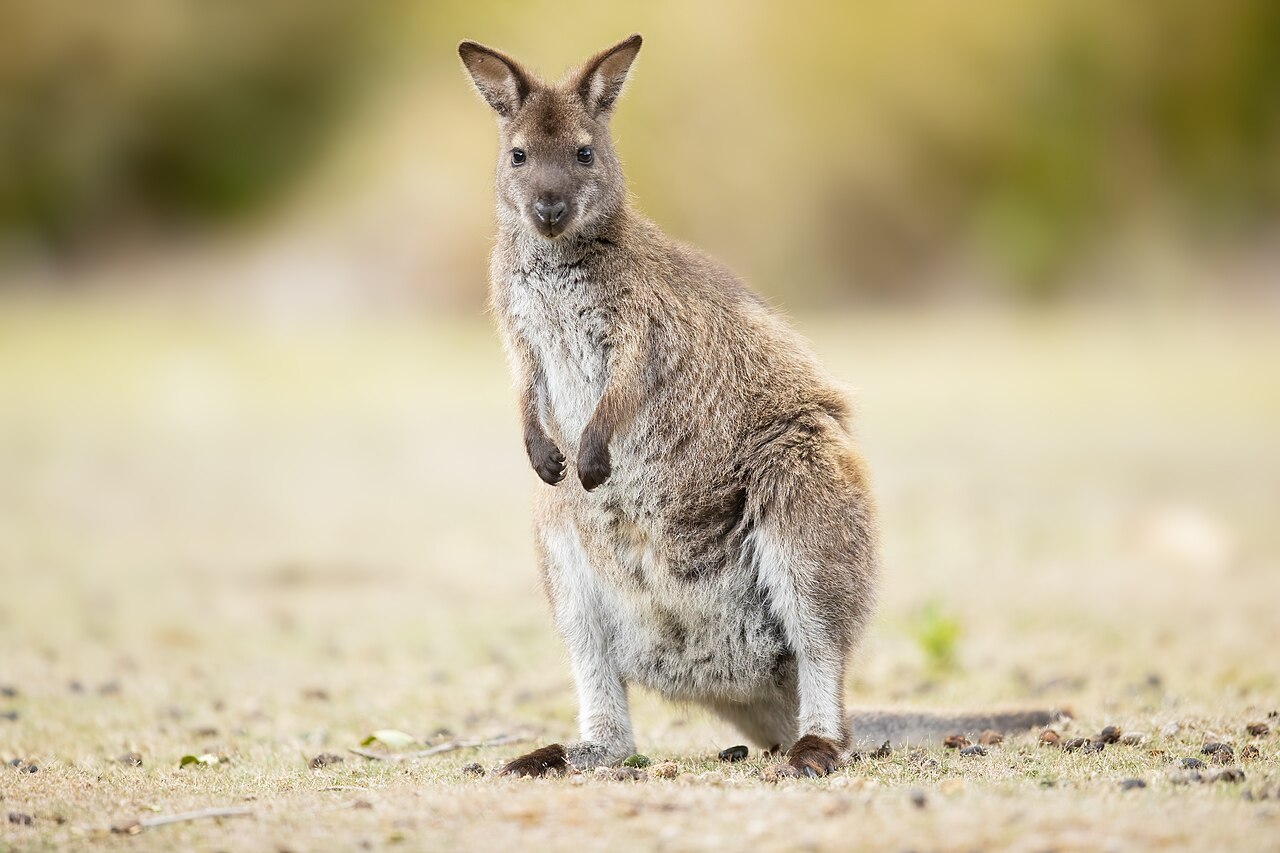
In Europe the signs cannot be confused with those of any other species. The hind-foot print is long and narrow, ten to fifteen centimetres, with a large, powerful fourth toe forming most of the impression and a smaller fifth toe beside it; the two small middle toes are fused and rarely register. The forefeet only register during slow grazing, when the animal moves on four legs and the tail; a tail drag is then visible between the prints beside the forefoot prints. This drag mark is the most characteristic sign. When bounding only the two hind feet land, side by side, at intervals of about a metre in an unhurried animal and several metres in a fleeing one. The droppings are flattened, more or less round to slightly angular pellets of about one and a half to two centimetres, coarse-fibred and rich in grass, lying in small clusters on the grazing areas; they resemble roe deer droppings but are more irregular and broader. There are also the grazing lawns: closely cropped patches in the rough grass of the fen, linked by clear, low-worn runs through willow carr and reed, narrower and lower than a roe deer run, often with nibbled willow twigs along the edges.
In its habitat
The young
Identification
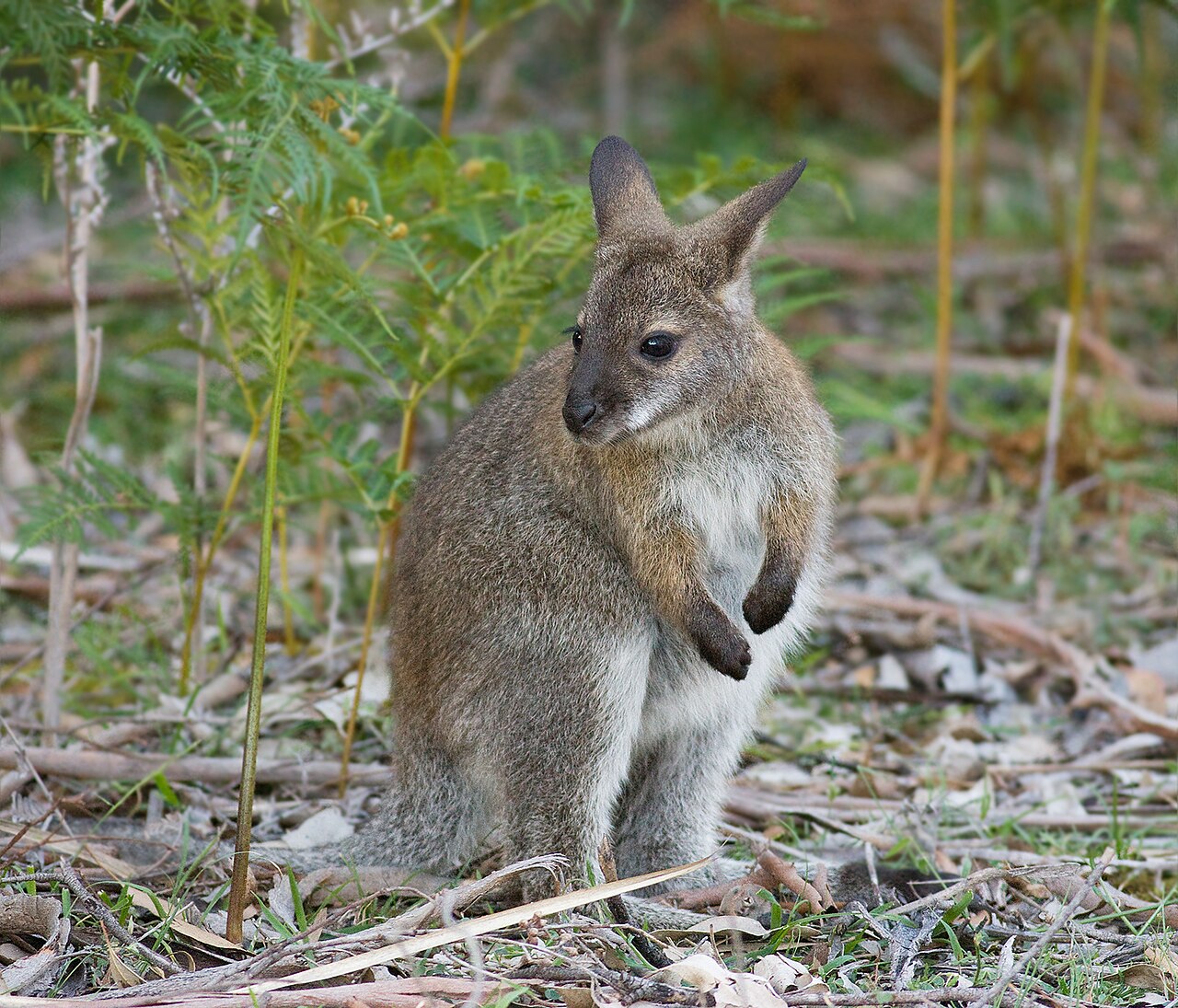
A medium-sized kangaroo: head-body 93 to 105 cm, tail 70 to 75 cm, fourteen to nineteen kilograms, with males distinctly heavier than females. At rest it sits upright on its hind legs with the thick tail as a third support and the short forelimbs held to the chest; it moves by bounding, with the tail held horizontally behind. The coat is greyish brown with a rufous to rust-coloured nape and shoulder, from which the English name derives, with a white stripe on the upper lip, a pale belly and a black nose tip, black ear margins and black hands and feet, characters of the Tasmanian form that occurs in Europe. The ears are long and mobile, the eyes large and dark. A female with a large young has a visibly distended pouch. The silhouette cannot be confused with any other species in Europe: no other European mammal sits upright supported by its tail.
Similar species
No species in Europe resembles the Red-necked Wallaby. At a distance and in poor light it is sometimes taken for a Roe Deer (longer-legged, and a roe deer does not bound away from a sitting position), a hare (much smaller, with a level back), a large fox or a dog. Reports of unknown animals on heathland can often be traced to this species. Posture is decisive: an animal sitting upright with a heavy tail on the ground that moves away in a series of long bounds on two legs is, in Europe, always a wallaby. No other introduced marsupials occur in Europe.
Habitat
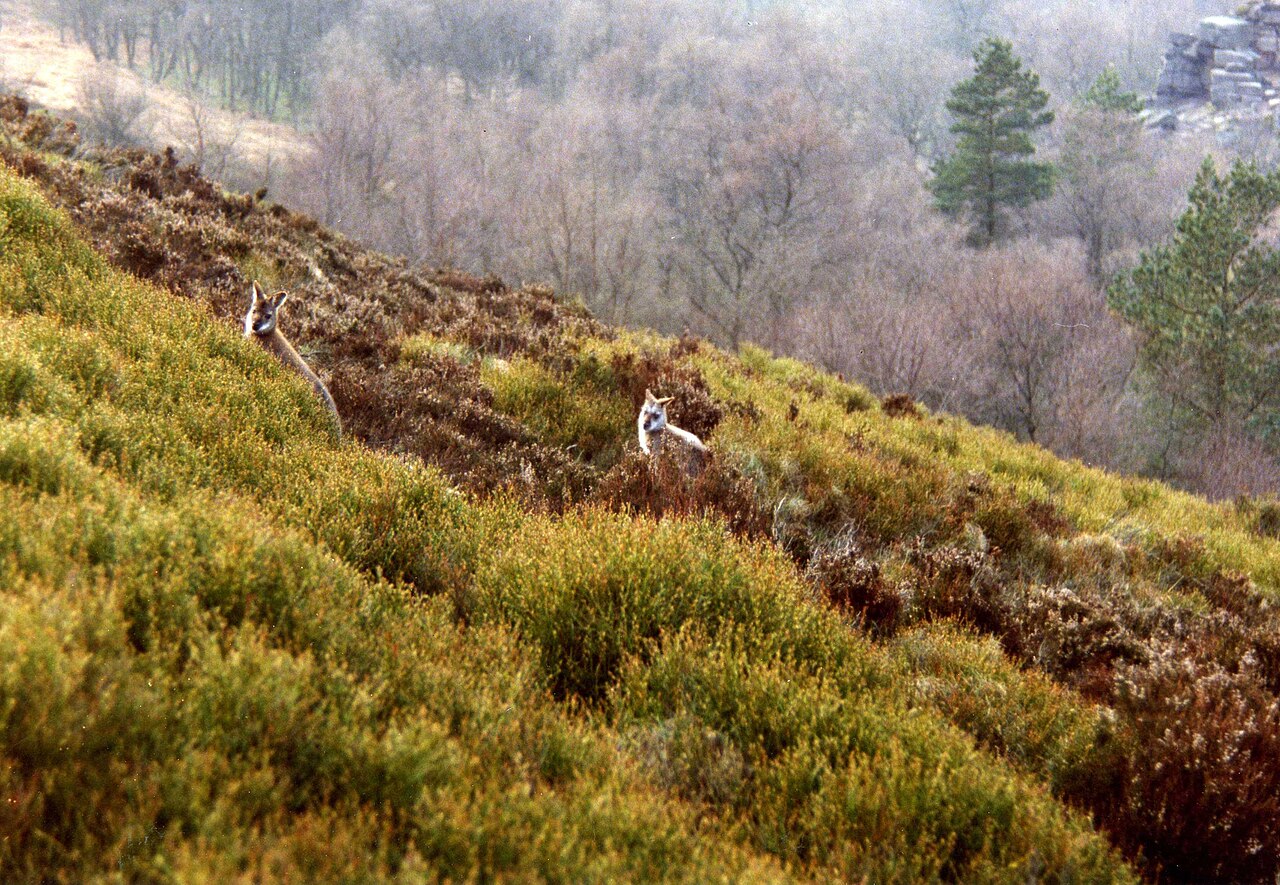
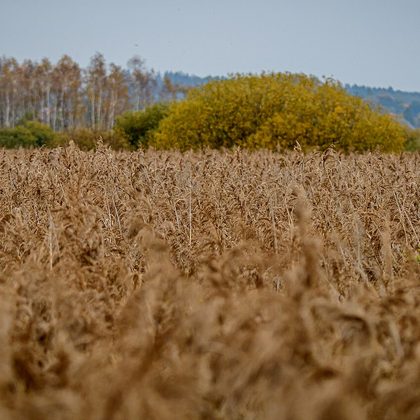
In Europe mainly lowland fen: on the Isle of Man the population lives in the Ballaugh Curragh, a wetland of willow carr, birch woodland, sedge and reed vegetation and rough grassland, surrounded by pasture, arable land and conifer plantation into which the animals spread at night. Elsewhere in Europe the species lives on heathland and in old woodland, such as the moors of the Peak District and the mixed woods of Rambouillet. The species needs cover to spend the day and short grass nearby to graze at night, and winters without prolonged snow cover; in hard, snowy winters numbers decline sharply.
Where the animal is most at home, classified with EUNIS — the European standard for habitats.

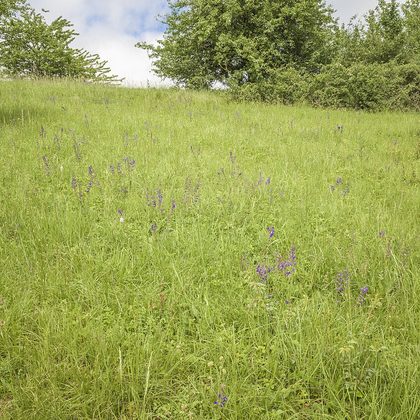


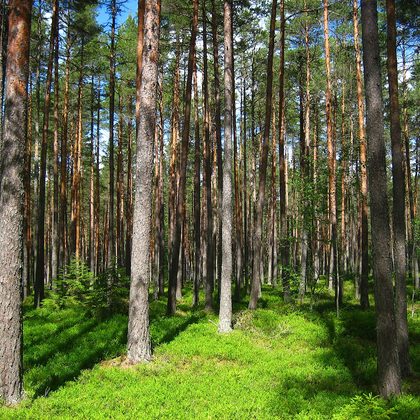
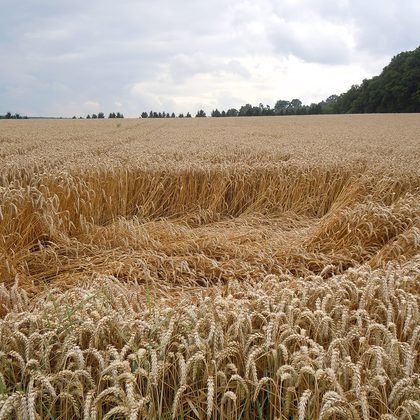
Distribution
Natively Tasmania and the coastal districts of eastern and south-eastern Australia. The European animals descend from escaped zoo animals, almost all of the Tasmanian form. The largest population lives on the Isle of Man: animals that escaped from Curraghs Wildlife Park in the 1960s have occupied the Ballaugh Curragh, and a thermal-camera drone survey in 2023 arrived at about 568 animals over four hundred hectares, a density of about 140 per square kilometre. The species further occurs in England in the Peak District, where a colony lived from 1940 around the Roaches and Lud's Church in Staffordshire, and on the heath of Ashdown Forest in Sussex; in Scotland on the island of Inchconnachan in Loch Lomond, since about 1975; in Ireland on Lambay Island off Dublin, where thirty to fifty animals originating from Dublin Zoo live; in France in the forest of Rambouillet south-west of Paris, where a hundred to a hundred and fifty animals have lived since the 1970s after an escape from a wildlife park at Émancé; and in Germany a small population near Burg Stargard in Mecklenburg. The species is not established in the Low Countries or Spain; records in the Low Countries concern individual escaped animals.
- Established introduction
- dark = core range, pale = thinly spread
Way of life
Crepuscular and nocturnal: by day the animal lies in cover, in willow carr or at the woodland edge, and in the last hours before dark it comes out to graze; in quiet places and in cold weather also by day. The diet consists of grass and herbs, in winter also bark, twigs and willow shoots. The species is largely solitary, but on good grazing loose groups form without fixed bonds. Reproduction follows the kangaroo pattern and contributes to the species' success: after a gestation of about thirty days a single young is born, about the size of a bean, blind, naked and with only the forelimbs developed; it climbs unaided to the pouch and stays there for about nine months. It then leaves the pouch but continues to suckle until an age of twelve to seventeen months. On the Australian mainland breeding occurs all year; in Tasmania, and therefore in the European animals, births fall mainly from February to April. There is no winter rest and the species is also active in snow; in the wild an animal lives about nine years.
Where and when to look
The best time is the last hour of daylight, at the edge of the fen. On the Isle of Man the Ballaugh Curragh is the best site: park at Curraghs Wildlife Park or at the Close Sartfield nature reserve and walk the paths towards sunset, when the animals come out of the willow carr onto the open grassland; at dusk the upright silhouette is easy to recognise. In France the same method works along clearings and firebreaks in the forest of Rambouillet. By day, search for runs and grazing lawns, and above all for the tail drag in mud or sand, which occurs in no other European species. The animals are shy and flee early; they are better observed with binoculars from a distance than by approaching.
Conservation status
Least Concern (LC, 2016). This assessment concerns Australia, where the species is common and locally hunted. In Europe it is an introduced species, and there the discussion concerns whether the populations may remain. On the Isle of Man the population has grown so much that damage to crops, to the wetland reserve and to the vegetation of the Ramsar site is being discussed; culling is also being considered, although the species is popular there. On Inchconnachan in Loch Lomond a cull has been proposed to relieve ground-nesting birds and the woodland. In England the Peak District colony, once a few dozen animals, almost or entirely disappeared after a series of hard winters from the 1990s onwards; recent reports probably concern individual escapes. The European populations persist as long as winters are mild and habitats remain undisturbed; after hard winters they decline sharply.
Scientific name
Notamacropus rufogriseus | (A. G. Desmarest, 1817)
A. G. Desmarest described the species in 1817 as Kangurus rufogriseus; because it was later moved to another genus, the author and year stand in brackets. Notamacropus joins Latin nota, 'stripe, mark', to Macropus, after the pale cheek stripe of these wallabies. rufogriseus means 'red and grey', from Latin rufus, 'reddish', and medieval Latin griseus, 'grey', after the red neck and shoulders set in the grey coat. The specimen the first description was based on came from Australia, Tasmania.