All species › Rodents › Mice and rats › Steppe Field Mouse
Steppe Field Mouse | Apodemus witherbyi
Perzische bosmuis | Ratón de campo de estepa
The Steppe Field Mouse is a wood mouse of dry steppe and shrub steppe, with wormwood, pistachio and wild almond among other plants, from the Crimea to the Zagros Mountains. The scientific name refers to Witherby, who collected the type specimen in the province of Fars in Iran. The names fulvipectus, hermonensis, iconicus and arianus were once used for separate species and are now placed in this species. On the south-eastern edge of Europe it replaces the Wood Mouse in drier areas.
No photograph of a living wild animal of this species with a suitable Creative Commons licence exists. Do you have one that meets the rules? Send it in.
Tracks
The signs are those of a wood mouse and do not allow identification to species. Seeds, acorns and stones are opened with a round hole 5 to 8 mm across with a smooth rim, with incisor grooves across the shell beside it; there are also small caches in cavities under stones and in tunnels, and dark, spindle-shaped droppings 3 to 5 mm long. The runs lie under shrubs and among stones and are seldom visible as tunnels; there are bare round holes 2 to 3 cm across without a spoil heap. In fine dust under a shrub or along a livestock path it leaves the usual bounding trail: four prints in a block, the five-toed hind feet in front of the four-toed forefeet. In Barn Owl pellets in Anatolia and the Levant it is one of the commonest species, and there it can be separated from the Wood Mouse on skull measurements.
Identification
A medium-sized, slender wood mouse: head-body 7.7 to 11 cm, tail 7.5 to 11.8 cm — about equal to or slightly longer than head-body length, on average some 103 per cent — and a weight of 16 to 34 g. The upperparts are yellowish brown to wood brown, usually paler and sandier than in the Wood Mouse, the underparts white with a clear boundary. The tail is bicoloured. There may be a yellowish patch on the chest; it is variable and unreliable, but the old name fulvipectus ('yellow-breasted') refers to it. Eyes and ears are large, as in all wood mice; no external character identifies the species independently of locality.
Similar species
On appearance it cannot be separated from the Wood Mouse, and in the zone where the ranges meet — Anatolia, the Caucasus and the Levant — field characters are not conclusive. In the literature the species are separated on chromosomes, protein and DNA characters and skull measurements. The landscape gives an indication: the Steppe Field Mouse is the species of dry, open steppe and shrub steppe, the Wood Mouse that of humid woodland, and where both occur humidity usually determines which species is present. The Broad-toothed Field Mouse, which lives in the same region, is much larger, grey rather than yellowish brown, with a heavy head and very long whiskers. The Yellow-necked Mouse, which occurs in mountain forests in Turkey and the Levant, is more robust and has a complete yellow chest band. The House Mouse is greyer and duller, lacks a sharp belly line and has a tail dark all round. Without measurements, and in this case often with them, 'Apodemus' is the defensible identification.
Habitat
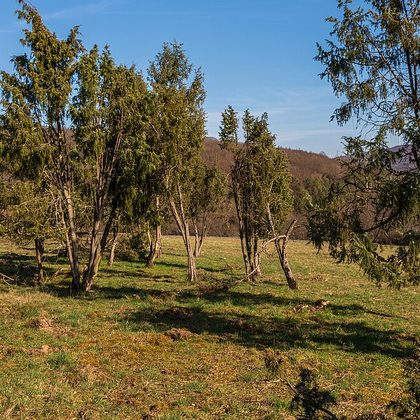
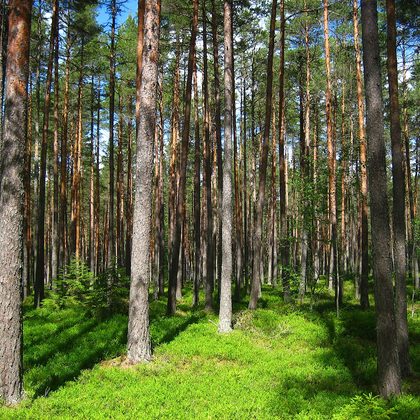
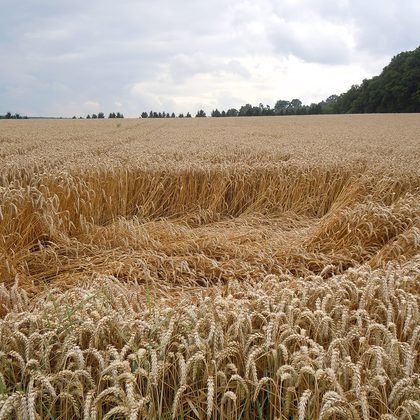
Open, dry country with shrubs. The core is the steppe with wormwood, pistachio and wild almond of Anatolia, the Caucasus and Iran, but it also occurs in cedar forest, degraded woodland, scrub, garrigue and thorny phrygana, arable fields and field margins. It needs shrub cover, and in open grassland also stones to shelter under. It occurs from sea level to 2,800 m.
Where the animal is most at home, classified with EUNIS — the European standard for habitats.



Distribution
South-eastern Ukraine east of the Dnieper, southern Russia, the eastern Aegean islands of Kos and Rhodes, all of Anatolia, Syria, Lebanon, Israel, north-western Jordan, Georgia, Armenia, Azerbaijan, northern Iran and western and southern Turkmenistan. Within Europe it thus occurs in three places: the Ukrainian steppe, the Caucasus and two Greek islands off the Turkish coast. It is absent from western and central Europe. The exact range boundary is uncertain, because populations described in the twentieth century as fulvipectus and hermonensis are now assigned to this species; old distribution maps are therefore not directly usable.
- Native
- dark = core range, pale = thinly spread
Way of life
Nocturnal and ground-dwelling. It is omnivorous but eats mainly seeds and acorns, followed by fruit, flowers, stems, fungi, insects, snails and earthworms. It does not hibernate. Breeding takes place mainly in spring and summer; a litter holds one to seven young, on average four to five. The nest lies in a tunnel under a shrub or among stones. Little is known about social organisation, home range and lifespan. Because the species was recognised as separate only late, part of the research on 'Apodemus sylvaticus' in this region may in retrospect relate to this species.
Where and when to look
In May in Anatolia or the Caucasus, search after dark with a torch along the edge of a wormwood steppe with shrubs, an old terrace or a stone heap in open grassland. A wood mouse seen there is probably this species, but that cannot be proven by sight; state this with the record. On Rhodes and Kos it is the common small mouse of open ground. Reliable identification is possible through owl pellets: Barn Owls in ruins in Turkey and the Levant provide series of skulls from which the species can be determined. Report a sight record as 'Apodemus', with the locality; for this species the locality is more important than the photograph.
Conservation status
Least Concern (LC, 2008). The species is widespread over a large area, is in many places the commonest small mouse of open country and tolerates degraded woodland, scrub and farmland. The assessment predates general acceptance of the species in its present scope, including fulvipectus, hermonensis and iconicus. No serious threats are known; conversion of steppe to irrigated farmland causes local habitat loss, but the species persists along the margins. The main open question concerns its delimitation from the Wood Mouse.
Scientific name
Apodemus witherbyi | (O. Thomas, 1902)
O. Thomas described the species in 1902 as Mus sylvaticus Witherbyi; because it was later moved to another genus, the author and year stand in brackets. Apodemus is Greek, from apodēmos, 'away from home'. witherbyi honours the British ornithologist Harry Forbes Witherby (1873–1943), who collected in Persia. The specimen the first description was based on came from Iran, Fars.