All species › Caryophyllales › Sundew family › Drosera bulbosa
Drosera bulbosa
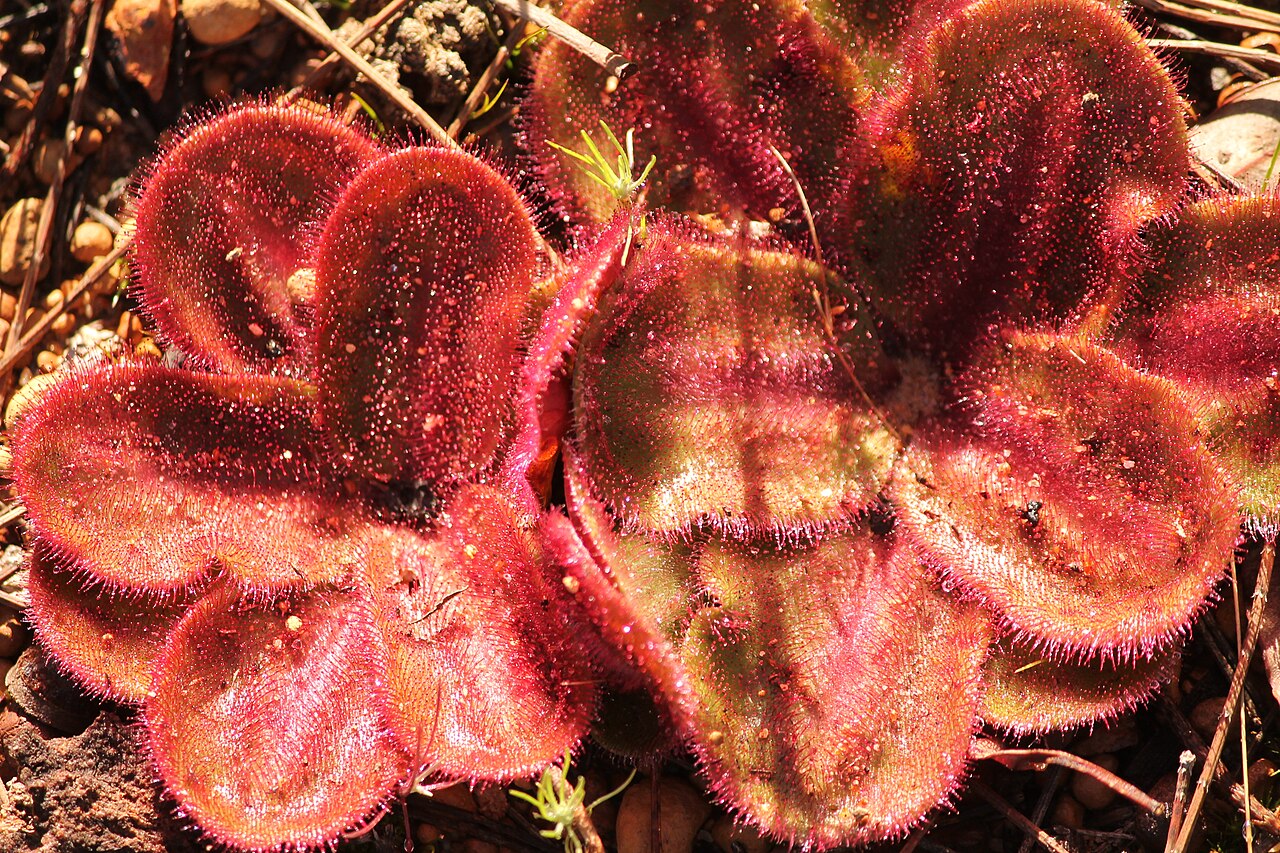
The red-leaved sundew is one of the first sundews to flower after the autumn rains in south-western Australia. William Jackson Hooker described Drosera bulbosa in 1841, and across its wide range the species is still a familiar sight: a flat rosette of golden yellow to red leaves with a ring of pure white flowers just above it.

Identification
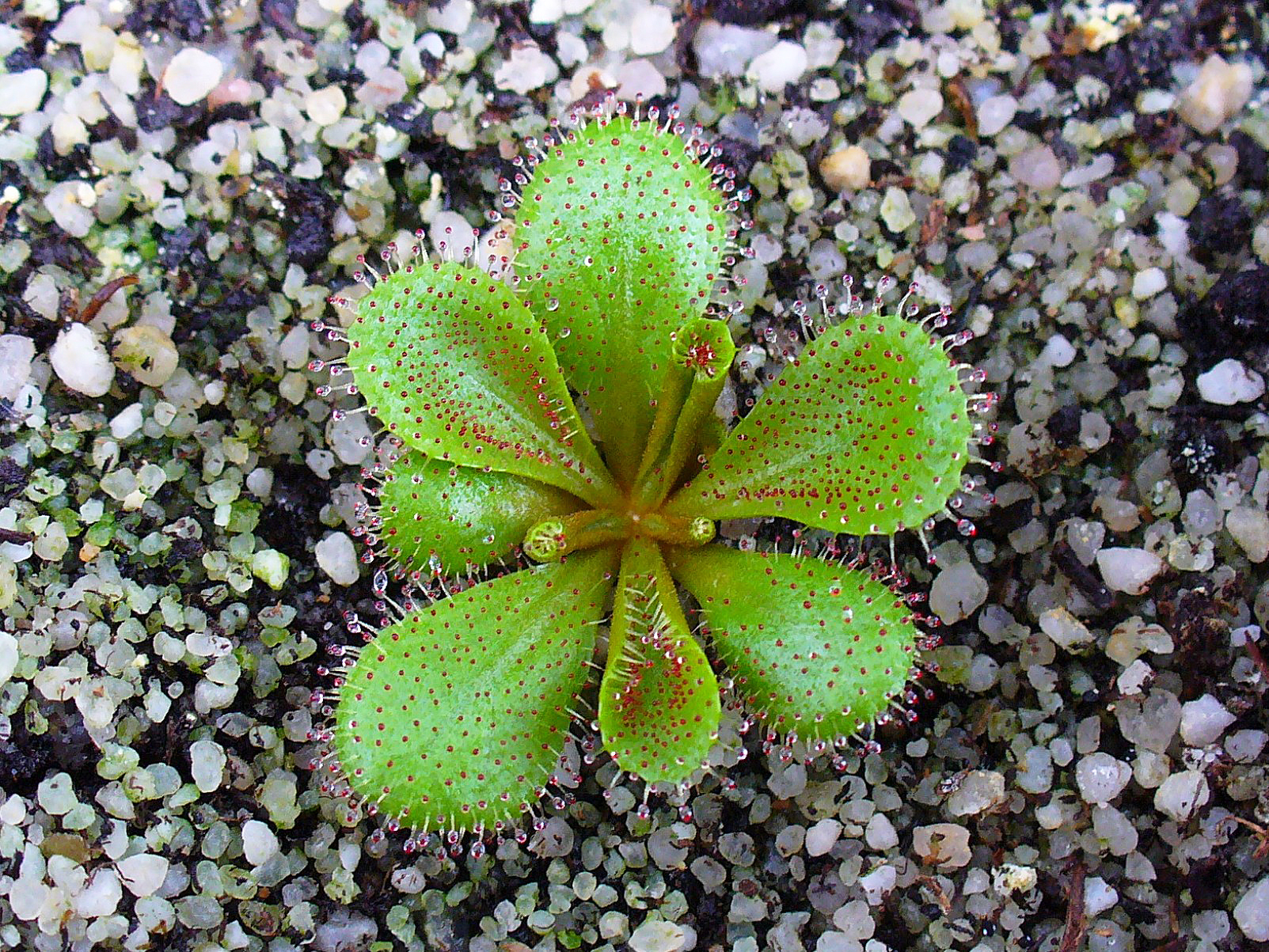
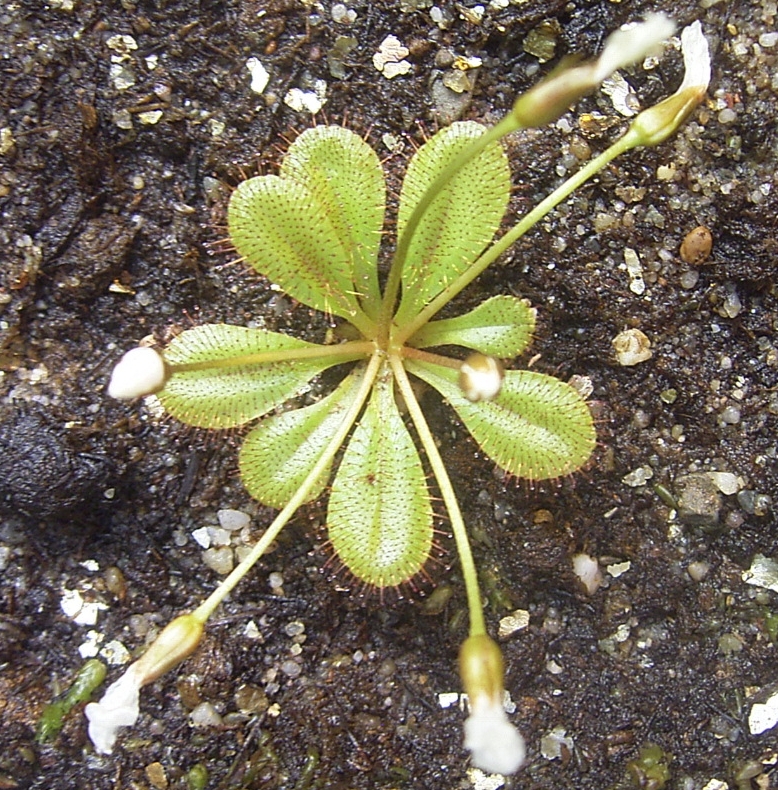
A perennial tuberous plant with a flat rosette of up to twelve leaves, golden yellow to deep red, and a total height of only 1 to 4 cm. The leaves lie flat on the ground and bear stalked glands on their upper surface. The flowers are pure white, with white anthers and white style tips, held on short stalks just above the rosette. They appear early, from April to June and sometimes into August. Precise leaf measurements were not available in the sources consulted.
Similar species
Drosera erythrorhiza also forms flat rosettes from a tuber but is usually larger and bears a branched, many-flowered inflorescence above the rosette. Drosera browniana from the granite country of the interior is related but flowers later, in August and September, with pinkish white flowers. Drosera zonaria has leaves with a conspicuous red margin. The combination of early flowering, pure white flowers sitting on the rosette and golden yellow to red leaf colour is characteristic.
The trap and how it works
An active flypaper trap at ground level. The flat rosette catches crawling and jumping animals: ants, springtails, small spiders and gnats flying just above the ground. The stalked glands hold the prey, after which the surrounding tentacles bend over it and secrete enzymes. The red leaf colour is partly a response to strong light and can therefore vary from site to site.
Habitat and ecology
Winter-wet soil, especially near granite rocks (FloraBase), and otherwise in various spots in heath and open woodland that are moist in the wet season (W7, R3). The plant shoots after the first heavy autumn rains, flowers quickly and withdraws into its tuber at the end of winter or the start of spring.
Distribution and elevation
Endemic to the south-west of Western Australia, from the Murchison River in the north to Albany in the south, and inland to Paynes Find and Southern Cross. FloraBase lists ten bioregions, from the Swan Coastal Plain and Warren to the Murchison and Coolgardie: one of the widest ranges among tuberous sundews.
- Recorded (quarter-degree cells)
Forms and variation
Traditionally two subspecies are recognised: subsp. bulbosa and subsp. major. The latter was raised to species rank by Lowrie as Drosera major, a view that FloraBase now also includes. R.P. Gibson additionally described subsp. coronata. The classification of this group is therefore in flux; this guide treats D. bulbosa in its current, narrower sense.
Where and when to see it
A species for the early season: come in May or June, when many other sundews are barely above ground. Search near granite rocks and in open patches that stay moist after rain. The red rosettes stand out against bare sand or grey loam, especially in side light. Flowers open in sunny weather around midday.
Conservation status
Assessed as Least Concern (LC) on the IUCN Red List and listed as not threatened in Western Australia. Not in CITES. Thanks to its large range the species as a whole is not threatened, although local populations have disappeared through clearing and urbanisation.
Scientific name
Drosera bulbosa | W.J. Hooker, 1841
Described by William Jackson Hooker in 1841, in Icones Plantarum, volume 4, plate 375. The precise type locality could not be established. The species is endemic to Western Australia. From the Latin bulbosus ("bulbous") — refers to the tuberous rootstock of this perennial sundew, also known as the "red-leaved sundew".
World Checklist of Vascular Plants (WCVP), via Plants of the World Online (POWO), Royal Botanic Gardens, Kew.