All species › Nightjars › Nightjars › Egyptian nightjar
Egyptian nightjar | Caprimulgus aegyptius
Egyptische nachtzwaluw | Chotacabras egipcio
The palest nightjar in the whole map area: a bird that lies by day like a handful of sand on the sand, and comes free of the ground only as darkness falls. Looking for it means looking not for a bird but for two eyes in a torch beam.

Voice
A sustained mechanical churr of low, wooden notes: koorr-koorr-koorr-koorr, running on for minutes and swelling and fading as the bird turns its head from side to side, so that the sound seems to slide past you. Slower and hollower than the churr of European nightjar and without its sudden changes of pitch. Heaviest around midnight in April and May, delivered from a low sand ridge or a bare clay pan.
No freely licensed recording is available for this species yet.
Identification
Bigger, longer-winged and longer-tailed than European nightjar, and above all far paler: sandy to light grey-buff, finely marked in a pattern that only close views resolve and that at any distance melts into one warm, even tone. Flat head, big dark eye, a tiny bill above an enormous gape fringed with stiff rictal bristles. Rows of pale cream spots run across the wing coverts. The white primary patch is small and dull — present in both sexes but rarely obvious — and white tail corners are all but absent. In flight the slow, soft, almost moth-like action stands out, with long glides just above the sand.
Confusion species
European nightjar is darker, greyer-brown and shorter-tailed, and the male shows clear white in primary and tail corner. Red-necked nightjar is larger and much more rufous, with an orange collar and a bold white primary window, and in the western Mediterranean it sits in different country: cork oak, maquis and pine edge rather than bare sand. In the far south-east the Nubian nightjar can occur alongside it; that bird is much smaller, redder in tone and shows large, conspicuous white wing patches. In practice colour decides: no other nightjar in this region is so pale and so evenly sand-coloured.
Habitat
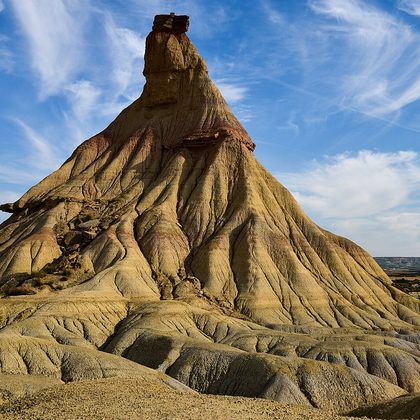
Desert with enough life in it: plains of sand, gravel and clay with scattered bushes, the tamarisk edges of wadis, salt flats and the fringes of oases and irrigated ground. Water nearby is nearly always the key — it hunts moths and beetles over damp patches, canals and fields, and by day it lies out on bare sand, in a shallow scrape or under a bush.
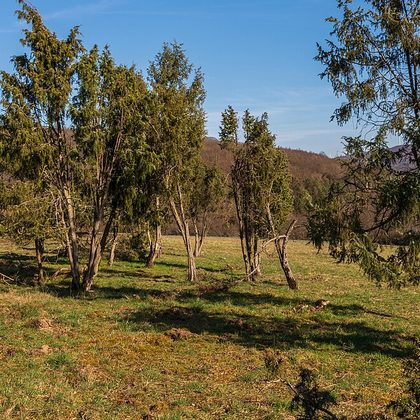
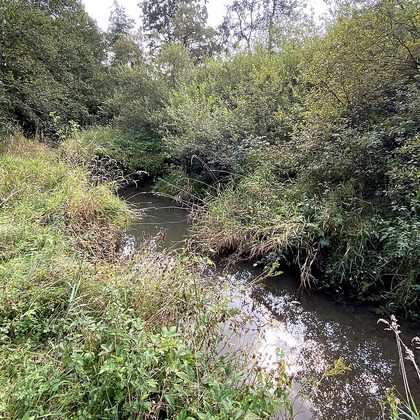
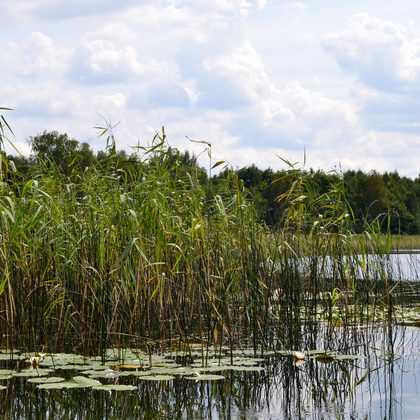
Where the bird is most at home, classified with EUNIS — the European standard for habitats.
Range and movements
A breeding bird of the Sahara and the desert belt beyond it, from Morocco and Algeria through the Nile valley and Sinai to the Levant, Iraq and Central Asia. Within the map window the centre of gravity is clearly Morocco, where it is widespread in the southern desert, with further birds in Algeria, Egypt and small numbers in Israel and Jordan. Almost the whole population moves to the Sahel; only in Egypt do a few birds stay through the winter. In Europe it is a major rarity, with a handful of records ever.
- Breeding (summer)
- Passage
- dark = core range, pale = thinly spread
Where and when to look
An hour after sunset, drive at walking pace along a sand piste in the southern Moroccan desert — the country around Merzouga and Erg Chebbi is the classic ground — and keep the headlights low across the surface. The eyes glow orange-red, often in the middle of the track, and the bird lets you approach surprisingly close. Stay in the vehicle and switch the engine off: stepping out puts it up at once. If you would rather listen, stand near a desert spring on a windless evening and wait for the wooden churr.
Conservation status
Not globally threatened (IUCN: Least Concern), with an enormous range, though the world trend is judged to be slowly falling. The pinch is always in the same places: the damp edges of the desert. New irrigation, groundwater pumped from ever deeper, building along oasis margins and the surfacing of tracks all cost breeding ground, and on unlit desert roads birds are hit because they freeze rather than move when light approaches. Where the oasis margins survive as landscape, the species holds on without difficulty.