All species › Nightjars › Nightjars › Nubian nightjar
Nubian nightjar | Caprimulgus nubicus
Nubische nachtzwaluw | Chotacabras nubio
The smallest nightjar of the region, and the most tied to one place: it keeps to salt marsh with scattered tamarisks around the Dead Sea and in the Arava, and to almost nowhere else. A bird of a few thousand hectares, findable in a single evening and losable in a single generation.

Voice
Not a churr but a repeated two-syllable call, a soft, full kow-wow … kow-wow with half a second between, kept up for minutes from the ground or from a tamarisk. The male sounds clearer and higher, the female lower and hoarser; hear both and you are standing at a pair. The sound carries only one or two hundred metres and is lost at once in wind. The best moment is a still evening around full moon in March, when the display flights begin.
No freely licensed recording is available for this species yet.
Identification
Small and compact for a nightjar: shorter-tailed and blunter-winged than its relatives, with a rounder head. The plumage is grey with a great deal of rufous, a warm rusty band across the nape, and large yellow to cream droplet spots across scapulars and wing coverts that look almost scaled at close range. In flight the big white primary patches and white tail corners leap out at once, and in both sexes — unlike European nightjar, where only the male carries them. The flight is short, low and fluttering, more like a large moth than the sailing action of a European nightjar.
Confusion species
Egyptian nightjar occupies the same country and is the main confusion risk: it is clearly larger, longer in wing and tail, and a pale, even sandy colour without the rufous nape band and without the big white wing patches. European nightjar passes through the region on migration; it is larger and much darker, and shows white only in the male, smaller and set closer to the wingtip. If a bird is too far off for colour, size and flight action still help: everything about the Nubian nightjar is shorter and more fluttery. And take note of where you are standing — away from the salt marsh of the Dead Sea and the Arava the odds on this species are slim.
Habitat
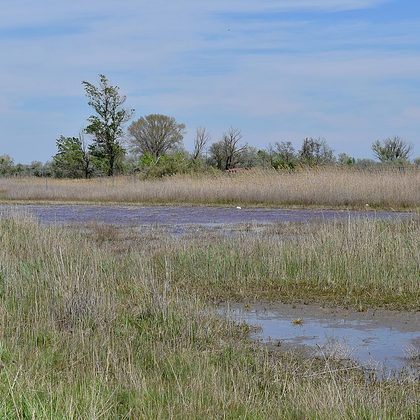
Salt marsh with scattered tamarisks is the core: there it roosts by day and there it breeds, on bare ground between the salt crust. Alongside it uses rocky flats and thinly vegetated dunes, and it feeds almost always in the open — along the edge of the marsh, over springs and irrigation channels and over the vegetable fields and greenhouses of Kikar Sdom. Salt marsh and open hunting ground have to lie next to one another; take one away and the bird goes.
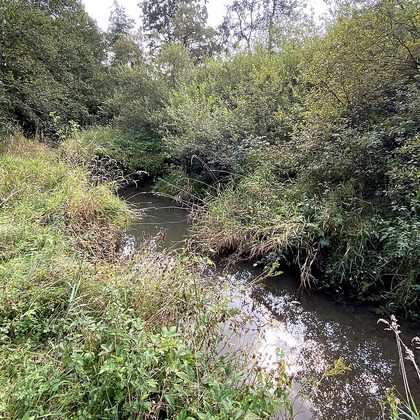
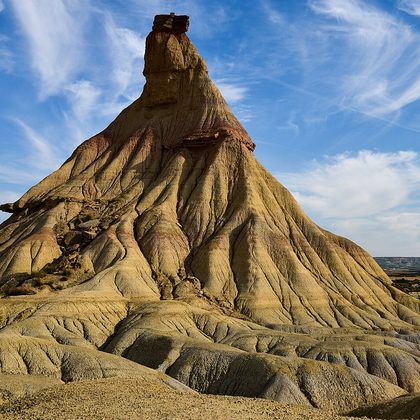
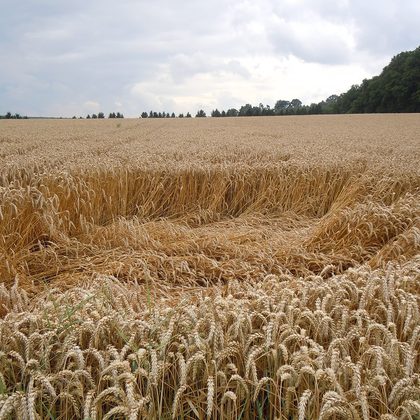
Where the bird is most at home, classified with EUNIS — the European standard for habitats.
Range and movements
A bird of the dry country around the Red Sea and the Horn of Africa, which within the map window reaches only its northern limit. In Israel it holds the Sodom basin south of the Dead Sea, the northern Arava and the northern Dead Sea, with a handful of pairs in the southern Arava; the Israeli estimate comes to some seventy-five to a hundred pairs. In Jordan a small remnant survives in the southern Ghor. Into the 1980s the species was spread more widely across the Arava and the Jordan valley, and that contraction is well documented.
- Breeding (summer)
- dark = core range, pale = thinly spread
Where and when to look
Go to the salt marsh of Kikar Sdom on a windless evening in March or April and be there half an hour after sunset. Stay on the road or on an existing track and listen first; the kow-wow tells you where to look, and only then do you raise binoculars. Drive at walking pace after dark: the birds settle on the tarmac and freeze in headlights, which here is the main cause of death. Do not walk into the marsh itself — the nests lie on bare ground and cannot be seen until you are standing on one.
Conservation status
Not globally threatened (IUCN: Least Concern), because most of the range lies in Africa. At the northern edge, inside the map window, the picture is quite different: the Israeli red list rates the species vulnerable, an improvement on the critically endangered status of around the turn of the century, but with a population of the order of a hundred pairs every intervention weighs heavily. Turning salt marsh into greenhouses and vegetable ground is the largest item, followed by pesticides, road casualties and off-road driving. The reserves declared in the Sodom basin are the direct reason things have improved at all.