All species › Owls › Typical owls › Great grey owl
Great grey owl
Strix nebulosa | Laplanduil | Cárabo lapón
An owl that looks as long as an Eagle-Owl but weighs less than a third as much: the bulk is mostly dense, woolly plumage. It belongs to the old conifer forests and peat bogs of Fennoscandia and northern Russia, where it hunts voles, regularly in broad daylight.

Voice
The male gives a deep, muffled series of ten to twenty notes, hoo-hoo-hoo-hoo-hoo, accelerating towards the end, falling in pitch and dying away; on still nights it carries a kilometre or two. The female answers higher and hoarser, and at the nest a short, rasping chek is used. Most vocal from February to April, in the hours around midnight and again in the early morning.
No freely licensed recording is available for this species yet.
Identification
Huge-looking, uniformly grey owl without ear tufts, with an enormous round face marked by fine concentric rings around two small yellow eyes. Below the pale yellow bill sits a black chin patch between two white spots, together forming a white moustache or bow tie. Underparts grey with diffuse streaking; in flight the wings are long and broad and the tail long and barred, the beats slow and silent. The bird looks massive but rarely weighs more than one and a half kilos — a lot of feather, not much bird; females are larger and up to a third heavier than males.
Confusion species
Tawny Owl is far smaller and stocky, big-headed but with a round plain face without rings, wholly black eyes and heavy streaking; in flight broad and round-winged with a short tail and utterly silent beats. Ural Owl is intermediate in size, with a plain pale face without rings, dark eyes and a strikingly long, wedge-shaped tail. Eagle-Owl is much heavier, warm ochre-brown, with long ear tufts and blazing orange eyes. Only Great Grey Owl has the concentric rings, the black chin patch with white moustache and small yellow eyes set in an enormous grey face.
Habitat
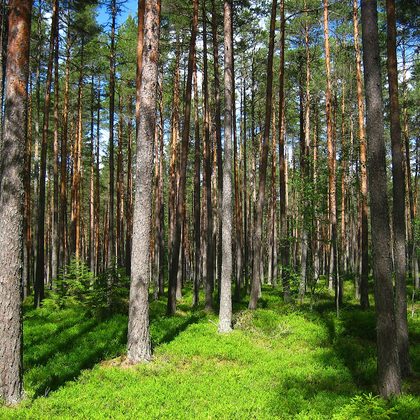
Old, open conifer forest of spruce and Scots pine, broken up by raised bog, aapa mire and damp forest edge. It hunts from a low perch over clear-fells, young plantation and small meadows, listening voles out from under half a metre of snow. It builds no nest of its own, using broken-off tree stumps, old raptor and raven nests and purpose-built nesting platforms.
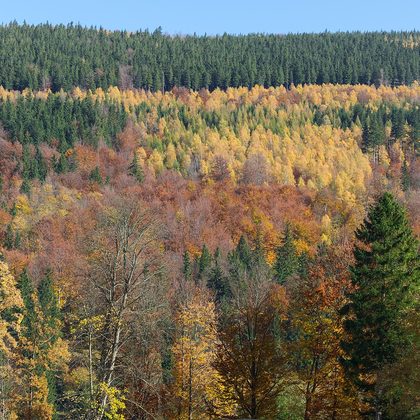
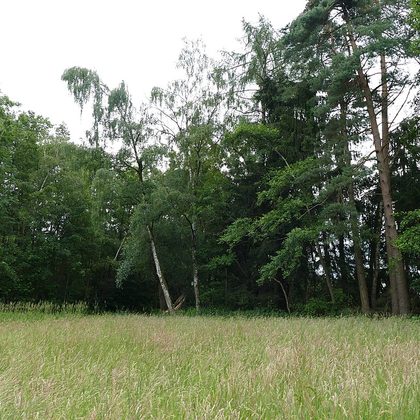
Where the bird is most at home, classified with EUNIS — the European standard for habitats.

Range and movements
Within the map area a breeding bird of Sweden, Finland, Norway, Estonia, Latvia, Lithuania, Belarus and northern Russia; from there the range runs unbroken far into Siberia and right across the boreal belt of North America. The Netherlands and Belgium lie well outside it, so seeing one means travelling north. In winters with few voles birds drop down to central Sweden and southern Finland, and very occasionally further.
- Resident
- Breeding (summer)
- Passage
- dark = core range, pale = thinly spread
Where and when to look
Go to eastern Finland (Kuhmo, Kuusamo) or central Sweden in March or April and drive the forest gravel roads at walking pace during the last two hours before sunset; the birds then hunt from posts and low branches along clear-fells. Pick a year when vole numbers are high, because in poor vole years almost no pair breeds and the birds leave the area.
Conservation status
Not globally threatened (IUCN: Least Concern). European numbers swing widely with the vole cycle and can increase tenfold or collapse from one year to the next, which makes trends hard to calculate. The main threat is the loss of old forest with thick broken stumps and old raptor nests; nesting platforms in Finland and Sweden make up for part of that. Birds are also killed on forest roads and on fence wire, and photographic interest in day-hunting individuals causes local disturbance.