All species › Pelicans, herons and ibises › Herons and bitterns › Green heron
Green heron
Butorides virescens | Groene reiger | Garcita verdosa
The Green Heron is a small, thickset American heron, barely larger than a Little Bittern, that hunts hunched at the water's edge with its neck drawn in. In Europe it is one of the rarest Nearctic strays, and almost every record concerns a single quiet bird at a sheltered pond, creek or harbour.

Voice
Usually silent when perched. On flying up it gives an explosive, complaining kyow or skeow, the sound most European observers get to hear; an uneasy bird adds a low, clucking series of kuk-kuk-kuk. Near the nest males produce a rasping raah-rahh and a hollow, far-carrying whoom-whoom-whoom, but that is a sound of American swamps rather than of a European stray.
Recording: Audrey Plassio — CC BY-SA 4.0 · Wikimedia Commons
Identification
Small and compact, with short legs, a thick neck usually held drawn in, and a long, heavy, dagger-shaped bill, blackish above and yellowish below. The adult has a glossy dark green-blue crown, raised into a shaggy crest when the bird is alert, and a deep chestnut neck and neck side broken by a white line running down the centre of the throat. The upperparts are blue-grey with a green sheen, the coverts neatly edged pale buff. Legs yellow to orange, turning bright orange-red in display; lores yellow. Juveniles are browner, with coarse buff and brown streaking on neck and underparts and rusty spots along the covert edges. In flight it looks round-winged and short-necked, with the toes barely reaching past the tail.
Confusion species
The Striated Heron is the real problem: the two have been treated as separate species only since the 1990s and they share the same shape. On adults the neck settles it — deep chestnut in a Green Heron, grey to grey-buff in a Striated Heron. Young birds are harder, but a young Green Heron is warmer and rustier on the wing coverts. Little Bittern is smaller and shows a large pale covert panel against black flight feathers, which no Butorides ever does. A juvenile Night Heron is much bigger and broader winged, marked with large white droplets rather than fine rusty fringes. Squacco Heron flashes white wings the moment it takes off.
Habitat
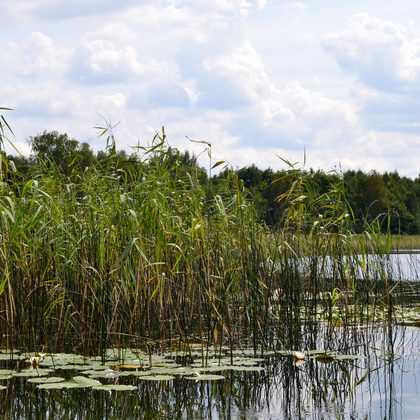
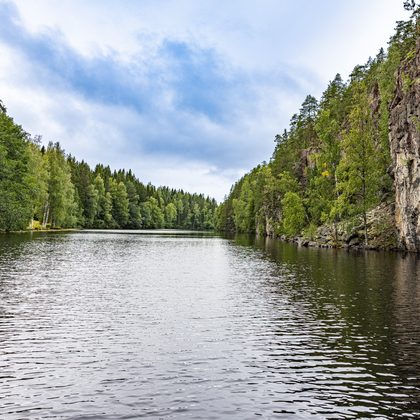
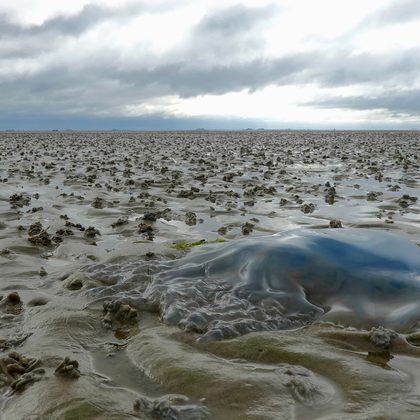
Sheltered fresh and brackish water with cover growing right down to the waterline: pond and ditch margins, wooded creeks, reservoir edges, willow and mangrove fringes, and harbour basins. It hunts alone, crouched on a low branch, a floating log or a mooring, and is one of the few birds that fishes with bait, dropping a feather, an insect or a scrap of bread on the surface and seizing whatever comes to look.
Where the bird is most at home, classified with EUNIS — the European standard for habitats.


Range and movements
The species breeds across North and Central America and the Caribbean; northern birds move south in September and October, and that is when a few are carried over the Atlantic. In our area it is a genuine rarity. The Azores account for the great majority of records, with birds in most years on Corvo, Flores, Terceira and São Miguel, and there are scattered records for Iceland, Ireland, Britain, France, the Netherlands and the Canary Islands. Single birds often settle for months or return to the same spot for years, so one individual can account for a whole national record.
Where and when to look
Work the sheltered edges — a reed-lined pond corner, a stream mouth, a harbour wall with overhanging cover — in the first and last hour of daylight, when the bird leaves its perch to feed. It sits low and motionless and is easily passed over, so scan the waterline itself rather than the open water, and give every small dark heron that flushes with a sharp barking call a second look. In the Azores, October is the month.
Conservation status
Not globally threatened (IUCN: Least Concern). The North American population is large, although it has thinned in parts of the east as wooded pond margins and small wetlands are drained or tidied away. For our area the species carries no conservation weight of its own: it appears here only as an occasional stray, and the number of records depends mainly on autumn weather over the North Atlantic.