All species › Passerines › Shrikes › Long-tailed shrike
Long-tailed shrike | Lanius schach
Langstaartklauwier | Alcaudón schach
The Long-tailed Shrike is an Asian species that only rarely reaches Europe: across the whole north-west of the continent there are just a handful of accepted records. It is a large shrike with a strikingly long, graduated tail that hunts from a perch like our own species and impales prey on thorns and barbed wire. Anyone who finds one should document it thoroughly.

Voice
Usually silent as a vagrant. On its breeding grounds it is noisy, with harsh grating scolding series often likened to the squealing of a frog in trouble: a rasping gwer-lek-gwer-lek followed by barking yaou-yaou notes. This shrike is also a mimic and weaves imitations through a soft, sustained chattering song.
No freely licensed recording is available for this species yet.
Identification
Larger and much longer-tailed than Red-backed Shrike, the tail trailing like a long black spike as the bird flies off, its outer feathers clearly shorter than the central ones. The form recorded in Europe has a grey crown and nape that merges gradually into a rufous back, a black forehead running into a broad black mask, a white throat, rufous flanks and rump, and black wings with a small white patch at the base of the primaries. Some eastern forms have an entirely black head and much darker upperparts. Young birds are duller, with fine vermiculation on flanks and back and a browner mask. The bill is heavy and strongly hooked.
Confusion species
Great Grey Shrike is ash-grey above with no rufous at all, has a straight tail with a great deal of white and a white wing patch, and is less long-tailed. A male Red-backed Shrike also shows a grey crown and brown back, but is distinctly smaller and far shorter-tailed, lacks the black forehead above the bill, and has a black-and-white tail rather than a long black one. Woodchat Shrike has a chestnut crown and nape with a white shoulder and white rump. What settles it is the length and graduated shape of the tail, together with the gradual transition from grey crown to rufous back.
Habitat
In Asia a bird of open country with scattered bushes: thorn scrub, rough grassland, cultivation and market gardens with hedges, ditch banks and roadsides, gardens and village edges. The constant is low lookouts with open, short vegetation beneath them. The few European birds have been found in comparable coastal ground: dune scrub, rough field margins and hedges.
Where the bird is most at home, classified with EUNIS — the European standard for habitats.
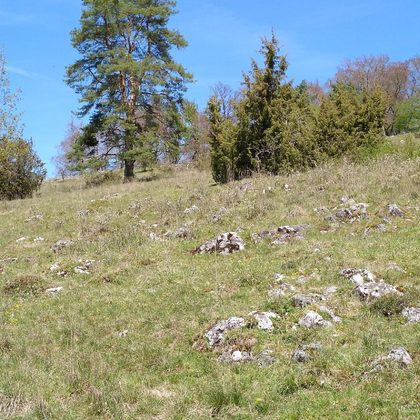

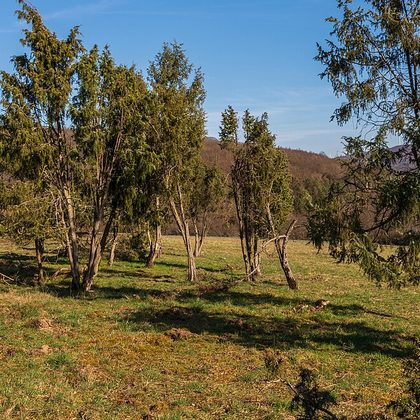
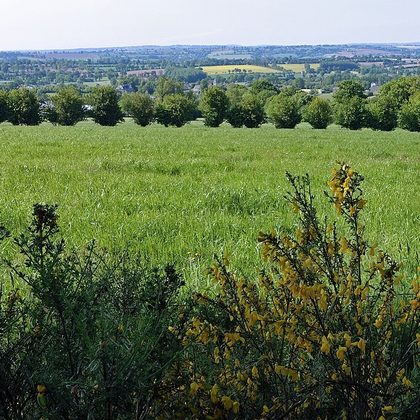
Range and movements
Breeds from Central Asia through the Indian subcontinent and China to South-East Asia, Indonesia and New Guinea. Only the Central Asian form of Kazakhstan and Afghanistan is a genuine migrant, wintering on the plains of southern Asia, and it is that form which is expected — and has been identified — as a vagrant in Europe. Accepted records include Turkey (1987), Sweden (1999), Scotland (2000), Denmark (2007), the Netherlands (Den Helder, October 2011) and Belgium (Het Zwin, 2017); up to 2024 each country involved has just one.
Where and when to look
There is nothing to plan for. What does pay is to look properly at every shrike at a coastal migration site in October and November, rather than writing it off as Red-backed or Great Grey. On a long-tailed, grey-and-brown shrike, check the black forehead band, the rufous rump and the graduated tail, and take as many photographs of back, tail and wing as you can: those are exactly the features a records committee will want.
Conservation status
Not globally threatened (IUCN: Least Concern): the range is vast and in parts of Asia the species does well on small-scale farmland. For Europe it matters only as a vagrant. Because Long-tailed Shrikes are kept as cage birds in parts of South-East Asia, a records committee always weighs whether a bird could have arrived under its own power; the accepted records concern the migratory Central Asian form and fall in autumn, the season in which other Asian vagrants also turn up in Europe.