All species › Passerines › Mockingbirds and thrashers › Northern mockingbird
Northern mockingbird | Mimus polyglottos
Spotlijster | Sinsonte norteño
One of the most famous singers in the world and one of the rarest birds on this side of the Atlantic. The northern mockingbird borrows the phrases of every bird around it, repeats each one three to six times, and will run through the lot at two in the morning under a full moon. Britain has three accepted records; the Netherlands has one.

Voice
This is where the species lives. The song is an unbroken chain of phrases, each repeated three to six times before the bird moves to the next — that repetition pattern is the diagnostic feature, since Grey Catbird does not repeat and Brown Thrasher repeats at most twice. Much of the material is borrowed: the calls and songs of other birds, and also frogs, crickets, a barking dog, a squeaking gate, a car alarm. A male commands something like two hundred song types over a lifetime and goes on adding new ones for as long as he lives, keeping separate spring and autumn repertoires. He sings through the day and often deep into the night; nocturnal singers are mostly unmated males, and singing peaks around the full moon. The call is a harsh, grating chack.
Recording: Anonymous — CC0 · xeno-canto
Identification
Slim and long-tailed, a little larger than a Starling but far more elegant. Plain ash-grey above, dirty white to pale grey below, with no streaking. Two thin white wing bars show on the closed wing, and in flight two big white wing flashes open up, together with white outer tail feathers on an otherwise blackish-grey tail. The bill is black, straight, with a slight downcurve at the tip; the eye is yellow to orange-yellow in adults and greyer in first-years; the legs are long and black. It perches high and in the open on wires, fences and bush tops, tail hanging or slightly cocked, and runs and hops over short grass. Juveniles have a spotted breast and a dull eye. Sexes alike.
Confusion species
For a European observer the first thought is a shrike: Great Grey and Lesser Grey Shrike are also grey above, white below, with a white flash in the wing. But both have a heavy, hook-tipped bill and a black mask through the eye, which the mockingbird entirely lacks, and both sit more horizontally on a shorter, stiffer tail. Among the other American vagrants of the same family, Grey Catbird is uniform slate with a black cap and a rufous vent, and Brown Thrasher is warm rufous above with heavily streaked underparts. Finally, consider an escape: the species was once kept as a cage bird in enormous numbers. Look hard at the tail and wing tips for abrasion, at the legs for a closed ring, and at the bird's manner — an unusually tame, unwary bird deserves suspicion.
Habitat
In North America a bird of the edge of settlement: gardens, parks, cemeteries, hedges, road verges, car parks, orchards and rank scrub. The combination is always the same — short mown or bare ground to feed on, with a dense, preferably thorny bush beside it to nest in and sing from. It takes insects from the ground in summer and lives largely on berries in winter, and defends a territory in both seasons with great noise: it flies slowly after intruders or walks at them with its legs stretched, flicking the white wing patches open, and will take on cats, snakes and people. The nest is a solid twig cup low in a thick shrub, usually under two metres.
Where the bird is most at home, classified with EUNIS — the European standard for habitats.

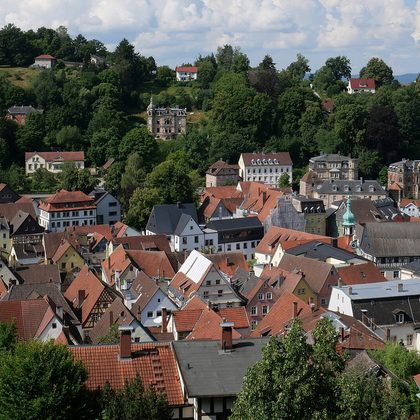
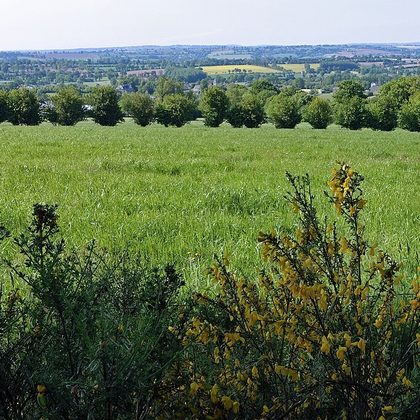
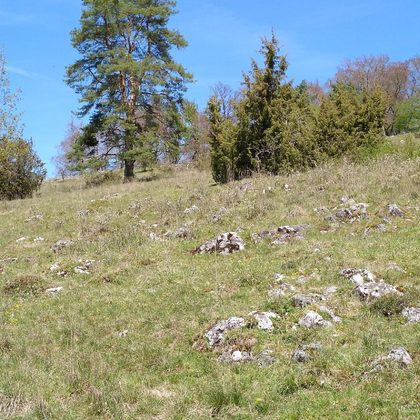

Range and movements
Breeds across almost the whole of the United States, in southern Canada, Mexico and the Greater Antilles, having spread north into New England and Ontario over the twentieth century. Inside the area of this guide it is a vagrant. Britain has three accepted records, all Category A: Saltash, Cornwall on 30 August 1982; Horsey Island, Essex from 17 to 23 May 1988; and a bird that wandered from Exmouth in Devon in January 2021 to Surrey in April and Northumberland in May, which drew very large crowds. The Netherlands has one record, on Schiermonnikoog from 16 to 23 October 1988. An earlier bird at Blakeney Point, Norfolk in August 1971 remains in Category D.
Where and when to look
You will not find one by looking for it. You find one by noticing that a grey, long-tailed bird in a coastal garden is behaving too openly for anything on the British list: perched high and exposed, running short bursts over mown grass, jerking its wings open so that the white patches flare, and staying put in the same hedge for days. Report it at once and photograph the wing, the tail and the legs — the rarities committee will want to see the white patches and, just as much, whether there is a ring. To simply learn the bird, any car park in North America will do; a spring visit puts you within earshot of a full repertoire in ten minutes.
Conservation status
Not globally threatened, with a population in the tens of millions, though numbers are drifting down in parts of the American south-east as hedges and scrub are cleared. In the nineteenth century the species was trapped hard in the eastern United States for the cage-bird trade — nestlings were taken and sold for large sums — and it was all but wiped out around the big cities. Once the trade was outlawed it recovered completely and then spread northwards. That history still matters here: every European record has to be weighed against the possibility of an escaped cage bird, which is exactly why the 1971 Norfolk bird sits in Category D while the later ones do not.