All species › Passerines › Sunbirds › Palestine sunbird
Palestine sunbird | Cinnyris osea
Palestijnse honingzuiger | Suimanga palestino
This species brings with it an entire family that appears nowhere else in this book: the sunbirds, birds of Africa and southern Asia with a long curved bill and a tubular tongue, built to take nectar from flowers. The Palestine sunbird is the only one that reaches the map area, and it reaches it comfortably: in the gardens of Jerusalem, Amman and Beirut it is a common bird. In poor light the male is simply a small black bird; turn him into the sun and green, blue and violet metal runs over him, and in display he flicks out two vivid orange-yellow tufts from the sides of his breast.

Voice
Loud, sharp and metallic, and surprisingly insistent for so small a bird — in a Jerusalem garden you hear it all day. The ordinary call is a short, hard chip or chit-chit with a tinny ring, fired off in runs the moment the bird is agitated. The song is a fast, high, slightly rattling series of those same sharp notes with squeaks and twitters woven through, usually three to five seconds long and then begun again; the male delivers it from an open twig, a wire or a roof edge, and repeats it through the spring with striking persistence. In a busy town garden it sits between the sound of sparrows and bulbuls, but it is sharper and higher than either. It is heard from January into June, with a peak in February and March.
No freely licensed recording is available for this species yet.
Identification
A small, short-tailed bird with a long, thin, clearly decurved bill — the character everything starts from, because no other bird of this size in the Levant carries such a bill. The breeding male is dark throughout, with a metallic gloss that is green to blue-green on head, mantle, throat and breast and turns violet and blue on the breast sides and rump; belly and undertail are dull black. On each side of the breast sits a tuft of vivid orange-yellow feathers, normally hidden under the wing and flicked out only in display or dispute. In shade none of that gloss shows and the bird reads plain black, so it pays to wait until he turns. Outside the breeding season the male is duller and shows pale areas on the belly. The female is quite different: grey-brown above, dingy pale grey below, without gloss and without pectoral tufts, but with the same long curved bill. Juveniles resemble the female; young males first acquire a dark throat.
Confusion species
Across almost all the ground where the reader will meet it there is no second sunbird, and the curved bill closes the identification at a glance. Only in the far south, in the Arava and around Eilat, does Nile Valley sunbird come into it: a smaller, shorter-billed bird whose breeding male has yellow underparts and two long thin tail streamers projecting well beyond the tail, so confusion is out of the question there — but the females of the two are similar small grey-brown birds and call for attention to size and bill length. The real stumbling block is a female in a garden. She is regularly taken for a whitethroat or a blackcap, but those have a short straight bill and a quite different, more horizontal carriage; a sunbird hangs at flowers, hops with its tail cocked and pushes its bill into the corolla. And a dark male against the light gets written off as a young starling or a small thrush; bill and size correct that at once, because this bird is barely larger than a long-tailed wren.
Habitat
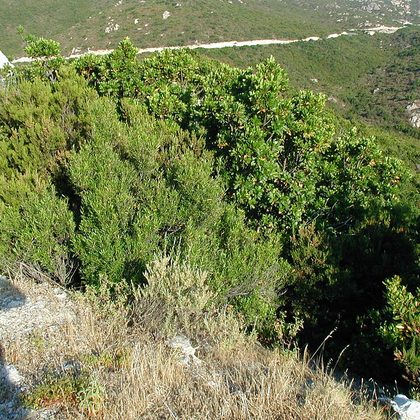
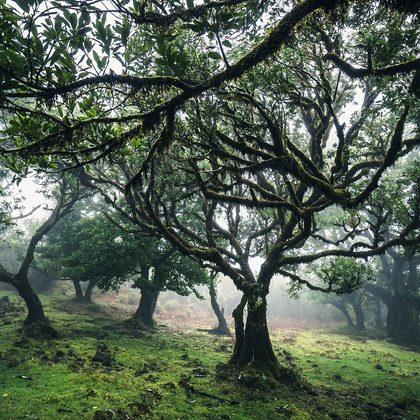
More than of any landscape, this is a bird of flowers, and so in the Middle East a bird of gardens. Town gardens and parks, hotel grounds, nurseries, orange and olive groves, kibbutz gardens and roadside planting form its core, and introduced hibiscus, bougainvillea, aloe, coral tree and bottlebrush have made it commoner in the cities than it has ever been in any natural landscape. It also occupies natural scrub: maquis with flowering shrubs on the Judean slopes and in Galilee, acacia wadis at the desert edge, oases and date groves along the Dead Sea and in the Arava, and the edges of cork oak and holm oak woodland. It occurs from far below sea level along the Dead Sea up into the hills. The nest is the family's signature: a hanging pear-shaped purse of plant fibre, down and spider silk with a side entrance and a small porch above it, woven at the end of a thin branch, often at eye level and often right beside a house. The female builds and incubates alone. Alongside nectar both sexes take a great many small insects and spiders, and the young are raised almost entirely on insects.
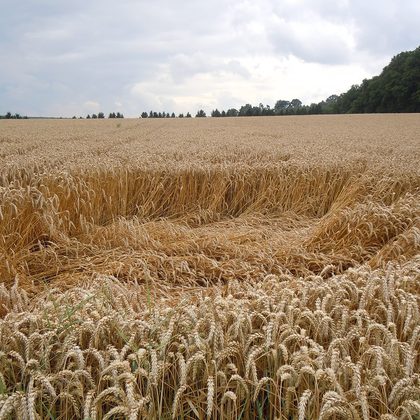
Where the bird is most at home, classified with EUNIS — the European standard for habitats.

Range and movements
A bird of the Levant and north-east Africa. Within the map area it breeds in Israel, the Palestinian territories, Jordan, Lebanon and western Syria, and further south in Sinai; beyond it, in south-west Arabia and, in a separate form, in the Sahel belt of Chad and Sudan. In Israel it is common and widespread, from the coastal plain and the Jordan valley up into the Judean hills and the Golan, and is really absent only from open desert where no flowering shrub stands. It is resident and does not migrate, but it has clearly spread north and inland during the twentieth century, following the spread of gardens, parks and irrigation; the northern limit of the range now lies in Lebanon and western Syria. It goes no further into Europe, and no wild birds have been recorded west of the Levant.
- Resident
- dark = core range, pale = thinly spread
Where and when to look
Look for a garden, not a nature reserve. Any hotel planting, any town park and any garden with hibiscus or bottlebrush in Jerusalem, Tel Aviv, Amman or beside the Dead Sea will produce the bird within half an hour; the best months are February to April, when the males sing without a break and most things are in flower. Stand at a flowering shrub rather than walking about: the birds work a round and come past of their own accord. Face the sun rather than keeping it behind you, because a male backlit is a black silhouette and a male lit from the side is a green and blue jewel; turn a quarter circle if you must. The breast tufts show only when two males quarrel or one displays, and that is worth waiting for. Search the same bushes for the nest purse hanging from a thin branch; it often hangs low and can still be found months after the season.
Conservation status
Not globally threatened, and within the map area one of the few species that has unmistakably done better. The spread of gardens, parks and irrigated planting in Israel, Jordan and Lebanon has given it a ribbon of nectar right through the region, including places where without irrigation no flowering shrub would grow, and it has both increased and pushed north as a result. The population is large and stable with no sign of decline. What pressures there are, are local: the loss of old gardens and orchards to building, the use of insecticides in ornamental gardens — the young live on insects, not on nectar — and cats, which are a real problem at a nest built at eye level. Replacing flowering planting with evergreen shrubs that carry no nectar also makes the bird disappear from a neighbourhood without anyone noticing.