All species › Waterfowl › Ducks, geese and swans › Surf scoter
Surf scoter
Melanitta perspicillata | Brilzee-eend | Negrón careto
The most sought-after scoter on this side of the Atlantic and the one American vagrant in the group you can realistically go and find. The drake carries a huge orange, red and white bill and two white patches on an otherwise jet-black head. It is almost always among Common or Velvet Scoter, so finding one is a matter of working through raft after raft.

Voice
Effectively silent in Europe. Displaying drakes give a low gurgling note and a dry popping puk-puk; females a hard crow-like crahh. Neither is likely in the wintering areas. The useful point is the negative one: when a raft of Common Scoter strikes up its long fluting pyoo on a still evening, the Surf Scoter takes no part in it.
No freely licensed recording is available for this species yet.
Identification
A bulky scoter with a strikingly large wedge-shaped head-and-bill profile: the forehead runs unbroken into a deep, broad bill, so the head looks angular and top-heavy. Adult drake: all black, with a white patch on the forecrown and a larger white patch on the nape, and a bill patterned orange, red, yellow and white with a big round black spot at the base. Feet orange-red. Female and immature: dark brown with two pale patches on the side of the head, one in front of the eye and one on the ear-coverts, and often a vague pale nape patch as well; the bill is grey, showing dull orange on young males. There is no white in the wing in any plumage.
Confusion species
This is the hardest comparison in the book. Against Velvet Scoter the absence of white settles it: Velvet shows a white secondary panel in every plumage, Surf never does, so wait for the bird to flap, stretch or flush. Against Common Scoter shape settles it: Common has a rounded head and a short bill with a black knob and a small yellow patch, Surf a long sloping forehead running into a heavy bill. At long range the drake's white nape patch is the most useful mark, because it flashes each time the bird turns its head or dives, while the forecrown patch is smaller and often hidden behind a wave. On females and immatures the two pale face patches are rounder and more sharply cut than on Velvet, and there is often a pale nape patch that Velvet lacks. Adult drakes are straightforward in any season here; females and first-years are identifiable, but only in good light at close range, and only once you have seen both head shape and open wing.
Habitat
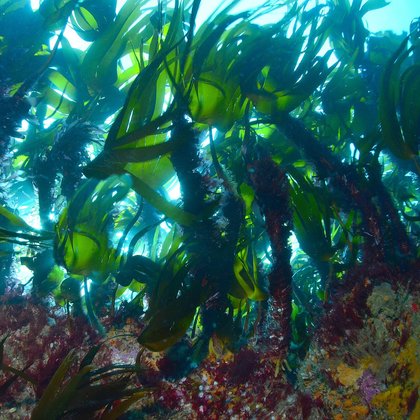
Shallow coastal seas, usually within a few kilometres of the shore over shellfish banks on sand and silt and over shallow rocky bottom carrying mussels. Often in bays, off piers and harbour mouths and in tide races at inlets, always swimming or diving rather than on the shore. Breeds beside boreal lakes and pools in Canada and Alaska; in Europe it is only ever a sea bird.
Where the bird is most at home, classified with EUNIS — the European standard for habitats.


Range and movements
A North American breeder wintering on the American Atlantic and Pacific coasts. In Britain and Ireland it is a scarce but annual visitor, with a few dozen birds present in an average winter; the Firth of Forth off Musselburgh and the Aberdeenshire coast at Blackdog are the traditional sites, with Irish concentrations in Donegal and Kerry. It is no longer treated as a national rarity here. On the near Continent it still is: the Dutch committee assesses every claim and has accepted thirty-six records involving more than forty birds, the first on 8 November 1914 and the great majority since 2000. Spain had fifteen accepted records up to 2004, the first in 1983, nearly all immatures on the north coast and above all in Galicia.
- Breeding (summer)
- Winter
- Passage
- Migration direction
- dark = core range, pale = thinly spread
Where and when to look
Work from a headland, a pier or a high dune foot, and grind through the moulting and wintering rafts, preferably in flat calm with the sun behind you. September and October are good months because the big moulting flocks sit tight then. Do not look for black, look for shape: a head that seems too large for the duck it belongs to. Then check for the white nape patch every time the bird dives or preens, and wait for a wing-flap to rule out white in the wing.
Conservation status
Not globally threatened, but North American numbers have fallen sharply since the middle of the last century. Oil pollution in the wintering areas, decline of mussel and shellfish beds, gillnet bycatch and disturbance of moulting flocks are the main pressures. None of that bears much on the European occurrence, which involves single birds rather than a population.