All species › Pigeons and doves › Pigeons and doves › Trocaz pigeon
Trocaz pigeon | Columba trocaz
Trocazduif | Paloma de Madeira
The trocaz pigeon is the big dark pigeon of the Madeiran laurel forest, and it lives nowhere else on earth. A silvery-white patch on the side of the neck gives it away, even when it is sitting high and backlit in the mist.

Voice
Weaker and deeper than a wood pigeon's, usually six syllables with the middle pair drawn out and stressed: uh-uh hrooh-hrooh ho-ho. The wet, dense forest muffles it, so the bird is nearly always heard before it is seen. Most vocal from February to June. On take-off the wings clap audibly together.
No freely licensed recording is available for this species yet.
Identification
Heavy and dark grey, larger and bulkier than a wood pigeon. The side of the neck carries a silvery-white scaled patch; the upper back glosses violet and the hindneck green. The upper breast is vinous pink, the belly paler grey. The tail is blackish with a broad pale grey band across it. The eye is yellowish-white, the bill reddish-purple with a yellow tip, the legs red. Juveniles are browner with little silver on the neck.
Confusion species
On Madeira there is almost nothing to confuse it with, since no other large woodland pigeon belongs there. Feral pigeons around Funchal and along the coast show a white rump and two black wing-bars; wood pigeon, an occasional visitor to the island, shows a white neck patch and a white wing band. The silvery neck patch and the complete absence of white in the wing keep the trocaz pigeon apart. The two Canary laurel pigeons do not reach Madeira and are in any case smaller and without silver.
Habitat
The laurel forest of the northern mountain slopes and the deep ravines, in cloud for much of the year, and the tall tree heath above it. It feeds in the canopy on laurel fruit, but comes down to terraces, vegetable plots and orchards when food is short, where it takes cabbage and fruit. Scrub and young secondary woodland are used as well.
Where the bird is most at home, classified with EUNIS — the European standard for habitats.
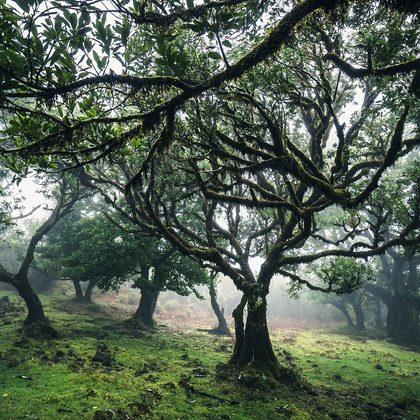
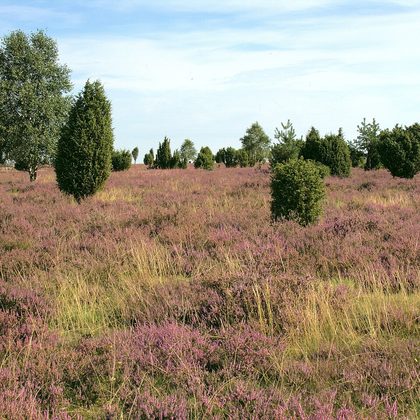
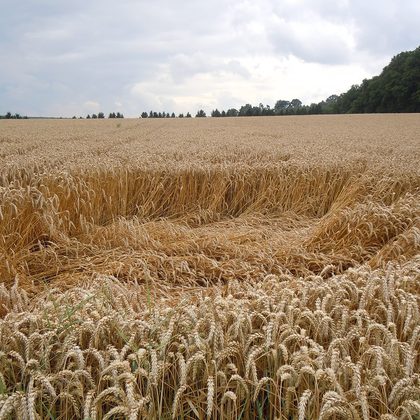
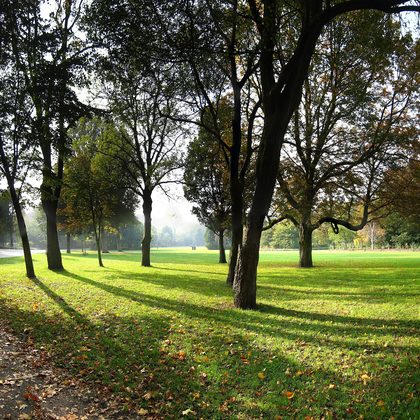
Range and movements
Madeira only, and mainly the northern flank of the island; it has gone from Porto Santo. Suitable forest covers little more than 150 square kilometres and holds an estimated seven to ten thousand birds. There is no other population anywhere.
- Resident
Where and when to look
Ribeiro Frio and the Balcões viewpoint early in the morning, or the Fanal woods when the mist is standing between the old laurels. At Balcões take the railing and look down the valley rather than up: the pigeons pass along the slope at eye level, and the pale grey tail band shows well.
Conservation status
Not threatened. The species was long scarce through logging and through persecution as a pest in the terraced gardens, but since the laurel forest was protected and listed as World Heritage numbers have risen sharply. Shooting continues where the birds come to cabbage and fruit, and the forest itself stays vulnerable to fire and to introduced plants.