All species › Waterfowl › Ducks, geese and swans › Whistling swan
Whistling swan
Cygnus columbianus | Fluitzwaan | Cisne silbador
The Nearctic counterpart of Bewick's Swan, and in Europe a bird found by reading bills rather than by spotting something obviously odd. The target is an adult with an almost wholly black bill carrying at most a pinhead of yellow in front of the eye. It rewards patient work at a swan feed and nothing else.

Voice
Higher and more barking than Bewick's: a short, goose-like hoo-ho-hoo that recalls a Canada Goose, given both in flight and from the water. Bewick's is lower and more conversational, a murmuring oo-oo-oo rising from the whole herd. The difference is usable only on a bird heard calling on its own; in a noisy herd at Welney it disappears.
No freely licensed recording is available for this species yet.
Identification
Adults are white throughout, with black legs and a straight, moderately long bill that is largely black. A small yellow spot usually sits just in front of the eye, often no bigger than a teardrop and sometimes absent altogether; the yellow never reaches past the nostril and never shows the broad, blunt front edge of Bewick's. The head is rounded and runs smoothly into the bill. Immatures are dingy grey with a fleshy bill base and dark tip, and cannot be separated from young Bewick's in the field.
Confusion species
Everything turns on Bewick's Swan (Cygnus bewickii), which sits in the same group and is treated on some lists as Cygnus columbianus bewickii alongside the nominate columbianus. Bewick's carries a solid yellow patch filling the lores, blunt-fronted and usually reaching to or beyond the nostril; on Whistling Swan the yellow stays a dot well behind it. Low-yellow Bewick's are real and account for most rejected claims, so photograph rather than argue. Whooper Swan is larger and longer-necked, with a wedge of yellow drawn to a sharp point past the nostril.
Habitat
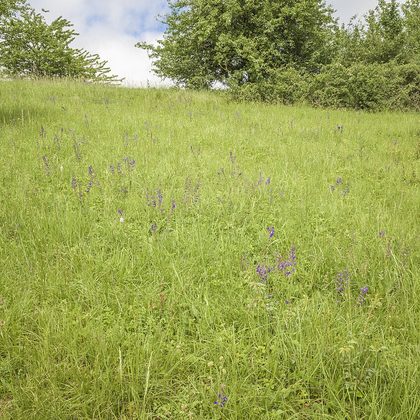
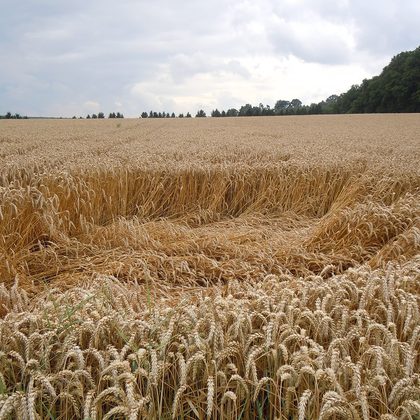
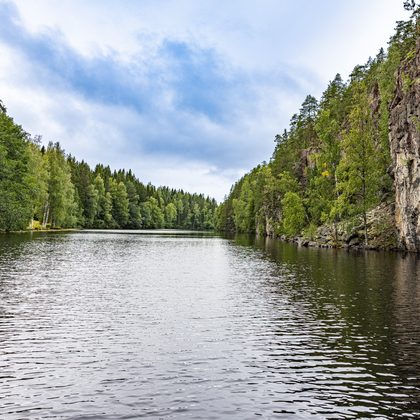
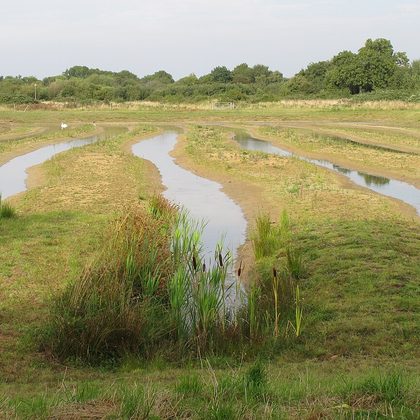
In Europe expect it where Bewick's Swans are: closely grazed or newly sown grassland, sugar-beet tops and potato waste, and flooded washes. Birds feed on the fields by day and drop onto shallow fresh water, washes or a lagoon to roost at dusk. Away from that company the chance of a Whistling Swan is negligible.
Where the bird is most at home, classified with EUNIS — the European standard for habitats.
Range and movements
Breeds on the tundra of Alaska and northern Canada and winters along both coasts of North America. In Europe a very rare vagrant, with most claims from Ireland and Britain and nearly all involving adults among wintering Bewick's herds. On the Continent claims are routinely rejected: the Netherlands has no accepted record at all, its committee having turned down some twenty reports between 1976 and 2005.
- Winter
- Passage
- dark = core range, pale = thinly spread
Where and when to look
Work the Bewick's herds on the Ouse Washes, at Welney and Martin Mere, and at Lough Foyle and the Wexford Slobs, from December to February. The afternoon feed is the moment: birds come close, lift their heads and turn in profile. Photograph both sides of the head square-on, because a claim without a clean bill profile goes nowhere.
Conservation status
Not threatened; the North American population is large and stable to slightly increasing. The pressures are lead poisoning from ingested shot, collisions with power lines along the flyways and the loss of shallow staging waters. European records are too few and too contested to say anything about the species itself.