All species › Passerines › Tits › Willow tit
Willow tit
Poecile montanus | Matkop | Carbonero montano
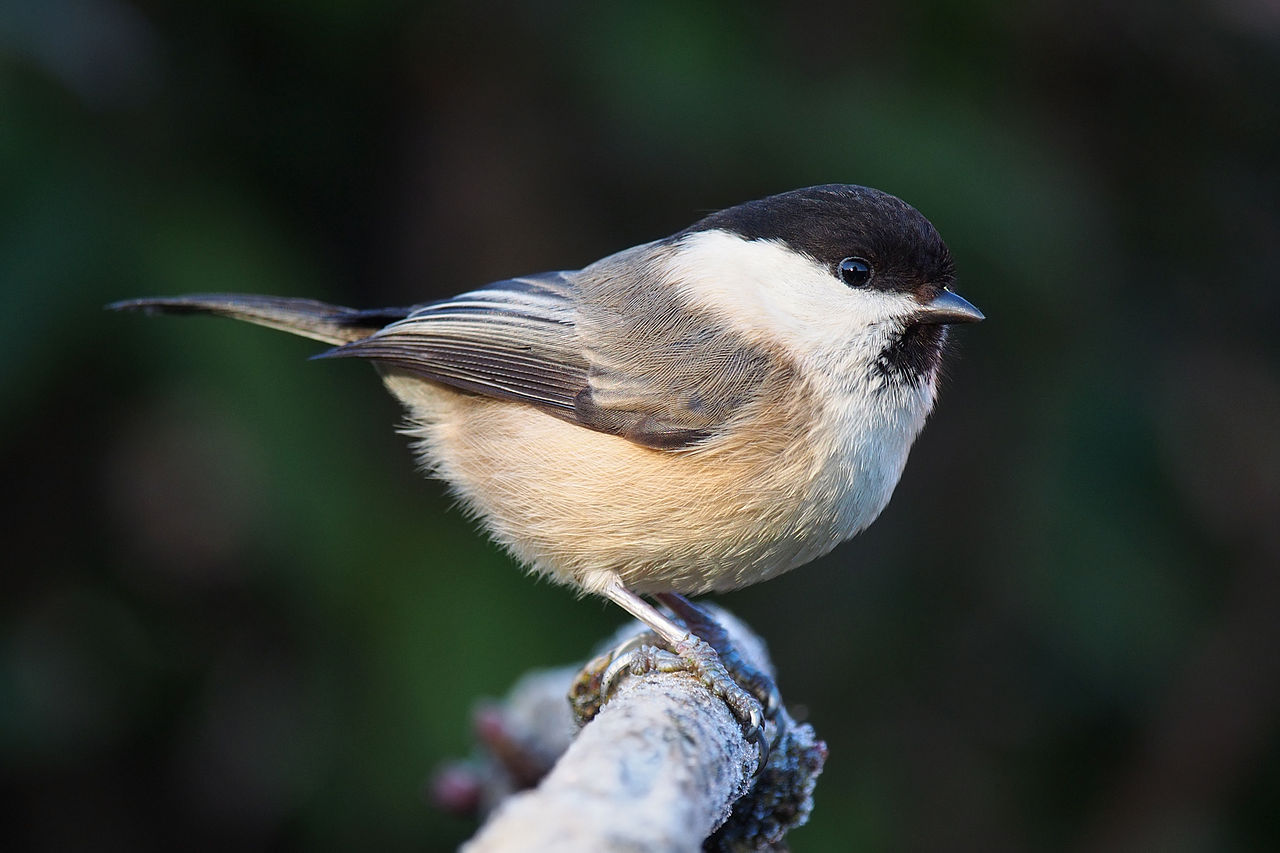
Willow Tit and Marsh Tit are the classic pair of the European field guide: barely separable on looks, settled in a second on voice. The Willow Tit is the bird of damp young woodland with dead wood, and it is the only tit that excavates its nest hole entirely by itself. In the Netherlands it is disappearing fast.
Voice
This is where it is decided. The call is a low, nasal, drawn-out tchay-tchay-tchay — often written dzee-dzee-dzee — usually in series of three or four, preceded by a few thin, high zi-zi notes. The sound is slow, plaintive and broad; something between a creaking gate and a spitting cat. It is never explosive. The song is a run of clear, wistful whistles, tyoo-tyoo-tyoo, all on one pitch, heard from February into May. Once the nasal call is learned, Willow and Marsh Tit never blur again.
Recording: Rabe19 — CC BY-SA 3.0 de · Wikimedia Commons
Identification
A small brown tit with a big head and a short, thick neck — the impression is bull-necked and rounded. The cap is dull black to sooty brown, without gloss, and runs well down the nape. The bib under the chin is large and ragged, with a diffuse lower edge that spreads onto the upper breast. The cheeks are white but turn distinctly buff to off-white towards the rear and reach far back. The key wing mark is the pale panel: the pale edges of the secondaries form an obvious light field on the closed wing. Flanks are warm buff. There is no pale spot at the base of the bill. Note that every one of these marks is variable, and on a poorly lit bird none of them decides the case alone.
Confusion species
It all turns on Marsh Tit — see its own species page, where the same difference is set out from the other side. Marsh Tit has a glossy blue-black cap cut off sharply on the nape, a small, neatly bounded bib, clean white cheeks without a buff rear, a uniformly brown wing with no pale panel, and a pale spot on the cutting edge of the upper mandible. Its head looks smaller and neater, its neck slimmer. Without a call, the wise course is to leave the bird unrecorded. Coal Tit shows a white nape patch and two white wing bars; Crested Tit has a crest.
Habitat
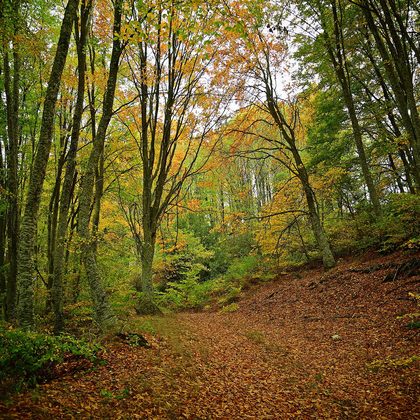
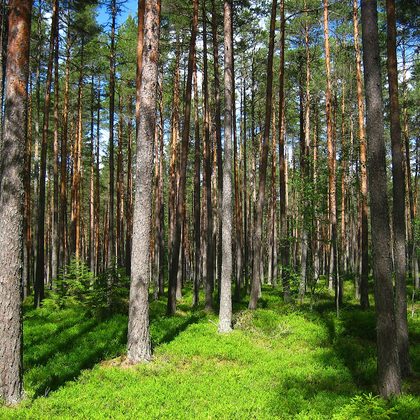
Damp young to middle-aged broadleaved woodland with a dense shrub layer and plenty of standing dead wood: willow and alder carr, birch carr, rank stream valleys, young plantation and neglected hedge banks. Also conifer wood, provided soft rotten stumps are present. The nest choice is decisive and unique: the Willow Tit excavates its cavity entirely itself in soft, rotting wood in a dead stump or a decayed fence post, and hardly ever uses a nest box or an existing hole. No rotting wood, no Willow Tit.
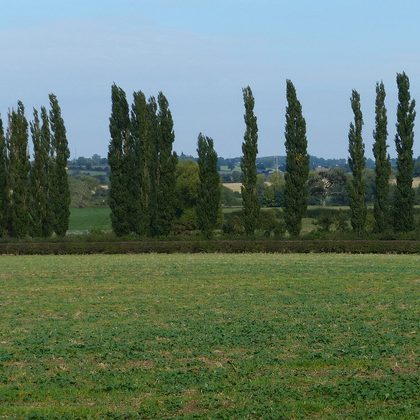
Where the bird is most at home, classified with EUNIS — the European standard for habitats.

Range and movements
From France and Britain far into Siberia, and from northern Scandinavia to the Alps and the Balkans; it is entirely absent from the Iberian Peninsula, so the Marsh Tit problem does not arise in Spain. In the Netherlands a resident of the sandy soils, the stream valleys and the peat marshes, with 7,500 to 12,000 breeding pairs in 2018–2020 and a winter population of some tens of thousands. The birds barely move: a Willow Tit usually lives its whole life within a few hundred metres.
- Resident
- Breeding (summer)
- Winter
- Passage
- dark = core range, pale = thinly spread
Where and when to look
The surest route is a winter tit flock. From November to February walk a damp carr wood or a rank stream-valley edge, wait until you hear the flock — Great, Blue and Long-tailed Tits, Treecreeper, Goldcrest — and then listen specifically for a low, nasal tchay-tchay-tchay among the clear calls. That is the Willow Tit. Only then look at the bird and check the dull cap, the large bib and the pale wing panel. In spring it pays to walk the old rotten fence posts along woodland tracks: fresh chippings beneath a hole betray a nest under construction.
Conservation status
Not globally threatened, but in free fall in western Europe and now one of Britain's most steeply declining breeding birds. In the Netherlands the species has halved in twenty-five years, with the sharpest fall in the peat districts and the Noordoostpolder. The causes all point the same way: the tidying away of dead wood, the loss of the shrub layer to grazing and deer, the drying out of carr woodland and competition for nest sites. Where dead wood is left standing and the wood stays wet, it holds on.