All species › Passerines › Wagtails and pipits › Eastern Yellow Wagtail
Eastern Yellow Wagtail | Motacilla tschutschensis
Oostelijke gele kwikstaart | Lavandera amarilla
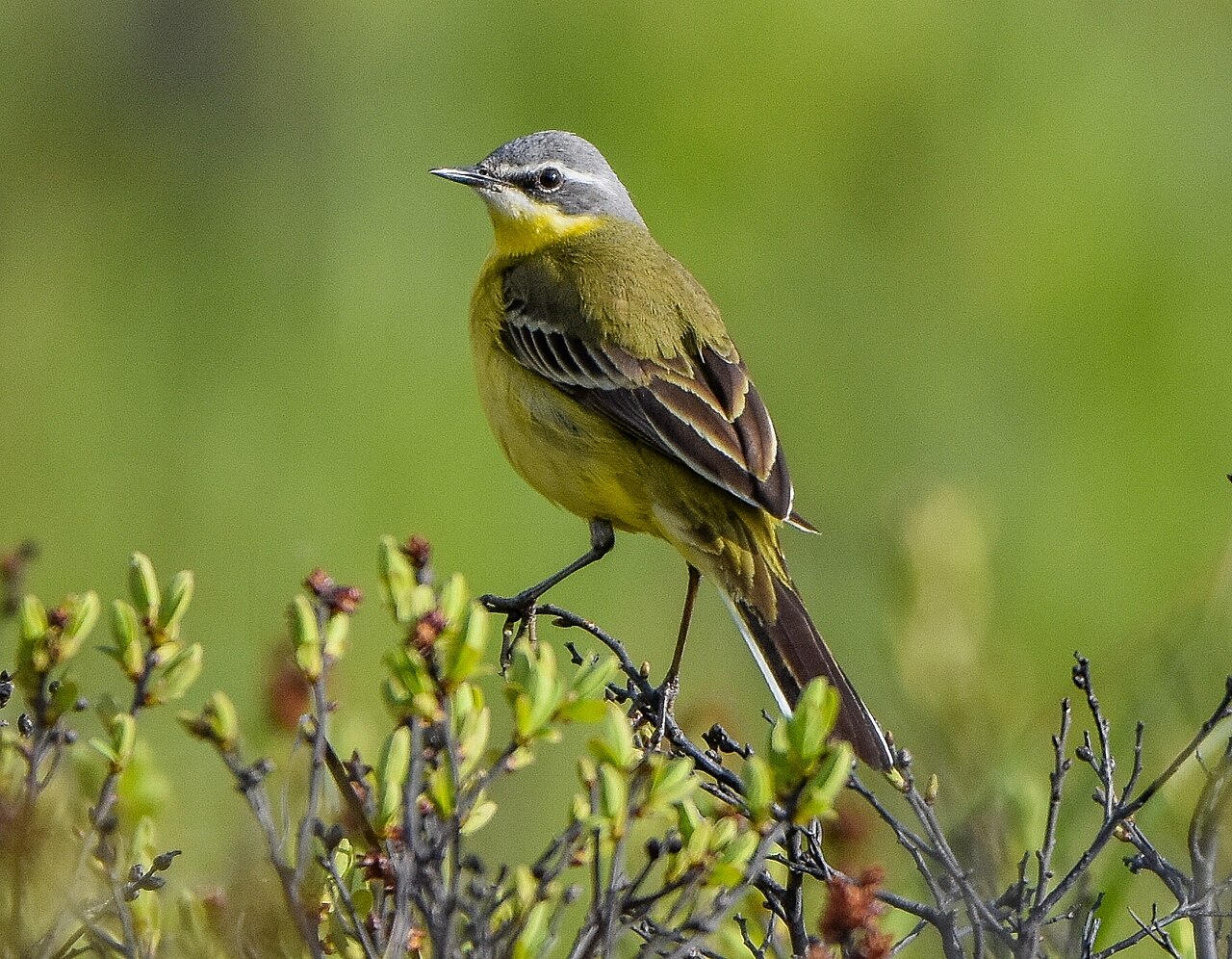
The Eastern Yellow Wagtail is a slim, long-tailed bird of wet bare ground that reaches Australia only as a visitor from the north: it breeds in far north-eastern Siberia and Alaska and winters in tropical Asia, and each southern summer a small stream of birds reaches the northern Australian coast. There it walks on the edges of mudflats, on sewage ponds and on closely grazed pasture, always moving and always pumping that tail.
Voice
The most useful sound is the flight call: a hoarse, faintly tinny, upward-drawn tsreep or dzheep, with a rasping quality other wagtails lack, usually heard as the bird takes off or passes high overhead. In practice it is the best feature available, because in the dull non-breeding plumage the birds wear in Australia the colours of one wagtail run into another. The song, a simple scratchy phrase of a few notes, is hardly ever heard in the wintering range.
No freely licensed recording has been found for this species yet; what to listen for is described below.
Identification
A slim wagtail of fifteen to sixteen centimetres, with a long but, for a wagtail, not extreme tail, long legs and a thin pointed bill. Birds reaching Australia are usually in non-breeding plumage or are young: olive-grey to grey-brown above with an olive-green cast to the rump, and dirty white to faintly yellow below, the yellow often reduced to the undertail. The head shows a clear pale supercilium over a dark ear covert patch, and two pale bars cross the wing. The legs are black — an indispensable feature. The tail is dark with white outer feathers. Adult males in breeding plumage, which occasionally turn up late in the season, are bright lemon-yellow from throat to belly with a blue-grey head. It walks and runs quickly over bare ground, pumps the tail without pause, and flies up in deep undulations.
Confusion species
Grey Wagtail (Motacilla cinerea), likewise a vagrant from Asia, is the hardest: it has a far longer tail, a grey rather than olive mantle, a bright yellow-green rump, a vivid yellow undertail that stands out sharply, and flesh to brownish legs instead of black. White Wagtail (Motacilla alba) shows no trace of yellow and is black, white and grey. Western Yellow Wagtail (Motacilla flava) is at best an exceptional visitor to Australia and is separated mainly on the softer, unrasping call — without the voice that distinction usually cannot be made in the field. Finally a confusion of names: Willie Wagtail (Rhipidura leucophrys) also wags its tail, but it is a black-and-white fantail that snatches insects from the air and carries not one yellow feather.
Habitat
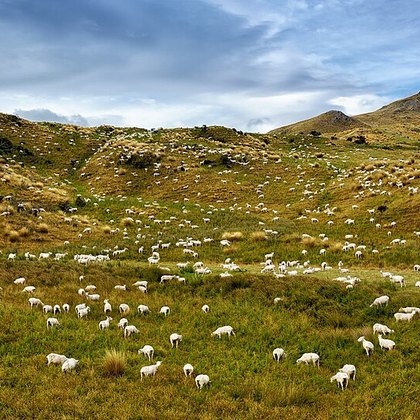
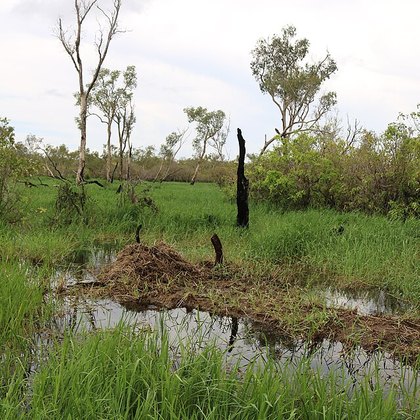
Open, wet or freshly trampled ground: the mud edges of estuaries and mangrove creeks, the banks of water storages and sewage ponds, wet paddocks and trampled stock watering points, airfields, rice fields and the margins of inland lagoons. It is always there among other waders and walking ground birds, feeding on foot, between the legs of cattle or along the waterline. It breeds only in the north, on tundra and in damp lowland.
Where the bird is most often found, arranged by main group and formation.


Range and movements
Breeds in north-eastern Siberia, on Kamchatka and in western Alaska, and winters from South-East Asia to Indonesia and New Guinea. In Australia it is a regular but scarce summer visitor, chiefly from October to April, with most records along the northern coast: the Darwin area, the sewage ponds and plains near Broome and the west coast of Cape York. Further south it is seen annually in small numbers, but there as a rarity. In New Zealand it is a distinct vagrant with only a handful of records.
- Resident
- dark = core range, pale = thinly spread
Where and when to look
Work a sewage pond or a water storage on the northern Australian coast in the southern summer, and listen for the rasping tsreep overhead before you even begin to search: this bird is heard more often than seen. Once you have one on the ground, go straight to the legs and the rump — black legs and an olive-green rump make it this species, flesh-coloured legs and a bright green rump make it Grey Wagtail.
Conservation
Least Concern (LC): the breeding range covers an enormous belt of tundra and taiga across north-east Asia and Alaska, and numbers are high. For Australia the species is not a conservation question but a visitor, though that makes the fate of such long-distance migrants no less sensitive: the loss of wetlands and mudflats along the East Asian-Australasian Flyway touches every bird that uses that route. Sewage ponds and artificial water storages in northern Australia, by contrast, provide a growing supply of suitable ground for the wintering birds.
Scientific name
Motacilla tschutschensis | Gmelin, 1789
Gmelin described the species in 1789 from material taken on the coast of the Chukotka Peninsula in far north-eastern Siberia; hence the odd specific name tschutschensis, 'of the Chukchi'. Motacilla is the Latin word Varro used for the wagtail, from motare, to move to and fro; the ending was later wrongly taken to mean 'little tail', which happens to fit perfectly. For a long time this bird ranked as the eastern subspecies group of Yellow Wagtail (Motacilla flava); on genetic evidence and differences in call it is now treated as a species of its own, and the Australian birds belong precisely to that eastern group.