All species › Passerines › Wagtails and pipits › Grey Wagtail
Grey Wagtail | Motacilla cinerea
Grote gele kwikstaart | Lavandera cascadeña
The Grey Wagtail is one of the rarest vagrants in this region: a Eurasian stream bird with a tail longer than any other wagtail's and a lemon-yellow undertail that lights up at every pump. It breeds from Europe to Japan and winters in Southeast Asia; the odd bird overshoots into Australian waters. This guide counts twenty-seven records since 2015.
Voice
The call is a sharp, metallic tzi-tzi or tsit-tsit, thrown out in flight and higher and more cutting than a White Wagtail's; over a creek or a sewage pond you usually hear it before you see the bird. On the ground it gives a short hard tchik when alarmed. It does not sing here: the thin trilling song belongs to the breeding grounds on the other side of the equator and is not given in Australia.
Recording: Lionel TRIBOULIN — CC0 · Ponte dos Sete Arcos (near Nordeste), Nordeste, Açores, Portugal · xeno-canto
Identification
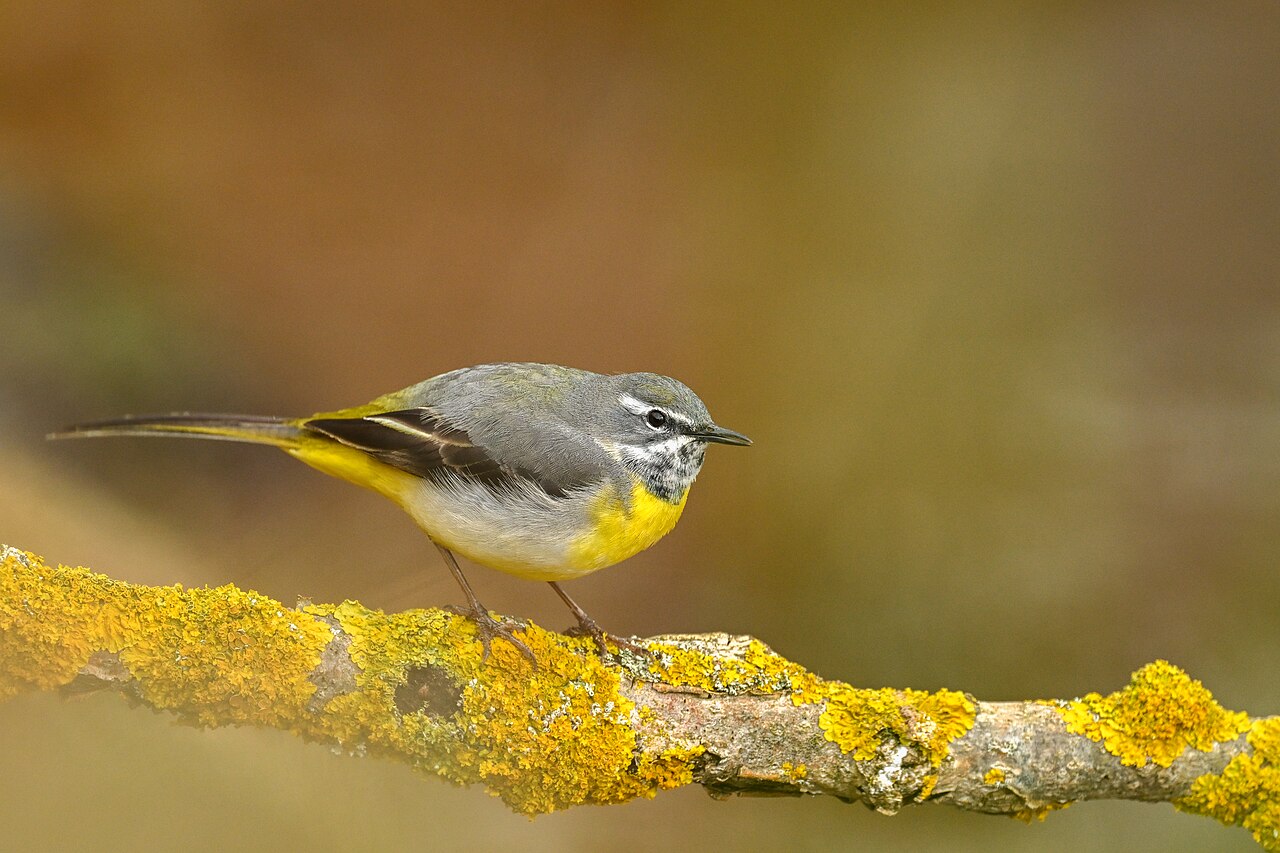
A markedly slender wagtail of eighteen to nineteen centimetres, most of which is the very long tail; that tail pumps without pause. The upperparts are blue-grey, the rump yellow-green and the undertail coverts bright lemon; the rest of the underside is paler yellow to dirty white. A white stripe runs over the eye. The legs are flesh-coloured to pinkish brown. The breeding male has a black throat, but birds reaching us are almost always in muted non-breeding dress.
Confusion species
White Wagtail (Motacilla alba), itself a vagrant here, is black, white and grey with no yellow anywhere. The yellow wagtails of the Motacilla flava complex are shorter-tailed, greener on the back and have black rather than flesh-coloured legs. Willie Wagtail (Rhipidura leucophrys) carries the name but is black with a white belly and swings its tail sideways, not up and down. New Zealand Pipit (Anthus novaeseelandiae) is brown and streaked.
Habitat
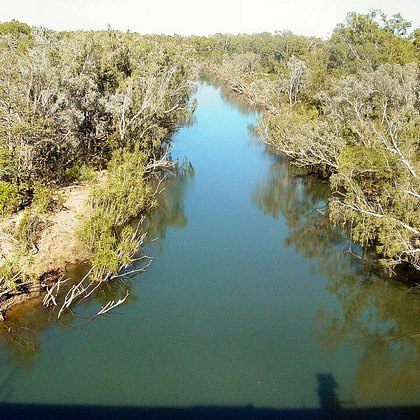
Where it turns up here it is at running or shallow fresh water: creeks with a stony bed, dams, sewage ponds, drainage channels, park ponds and the edge of an estuary. It walks over wet stones, over floating leaves and over concrete, picking insects off the water surface. It seeks no cover; it stays in the open and often allows a close approach.
Where the bird is most often found, arranged by main group and formation.


Range and movements
In Australia a rare vagrant, weighted to the north and west and to the Australian islands in the Indian Ocean, where the Asian migration passes closest; from the southeast only a few records exist. Nearly all sightings fall in the Australian summer, October to April, when the species is wintering in Asia. In New Zealand it is at most a high rarity.
- Non-breeding visitor
- dark = core range, pale = thinly spread
Where and when to look
On any unfamiliar wagtail look first at the tail and then at the legs: too long for an ordinary wagtail, and flesh-coloured rather than black, and the case is all but made. In the Australian summer walk the edge of a sewage pond or a creek bed and listen for the sharp tzi-tzi of a bird that flushes ahead of you and drops in again further on. Report every record; there are very few.
Conservation
Least Concern (LC), with a very large breeding range from western Europe to Japan and a population regarded as stable. For this region the bird is too scarce for anything to be done for it or about it: it does not breed here and needs no habitat here. What decides its numbers in the long run happens on fast northern-hemisphere streams — pollution, water abstraction and the straightening of mountain brooks.
Scientific name
Motacilla cinerea | Tunstall, 1771
Tunstall described the bird in 1771 as Motacilla cinerea, and it has stayed in that genus, so author and year carry no parentheses; the type locality lies in Britain. Motacilla was the Roman name for a wagtail, formed on motare, 'to move about'; the ending -cilla was later read wrongly as 'tail'. cinerea means 'ash-grey', from cinis, 'ashes', after the grey upperparts.