All species › Pigeons and doves › Doves and pigeons › New Zealand Pigeon
New Zealand Pigeon | Hemiphaga novaeseelandiae
Nieuw-zeelandse duif | Paloma maorí
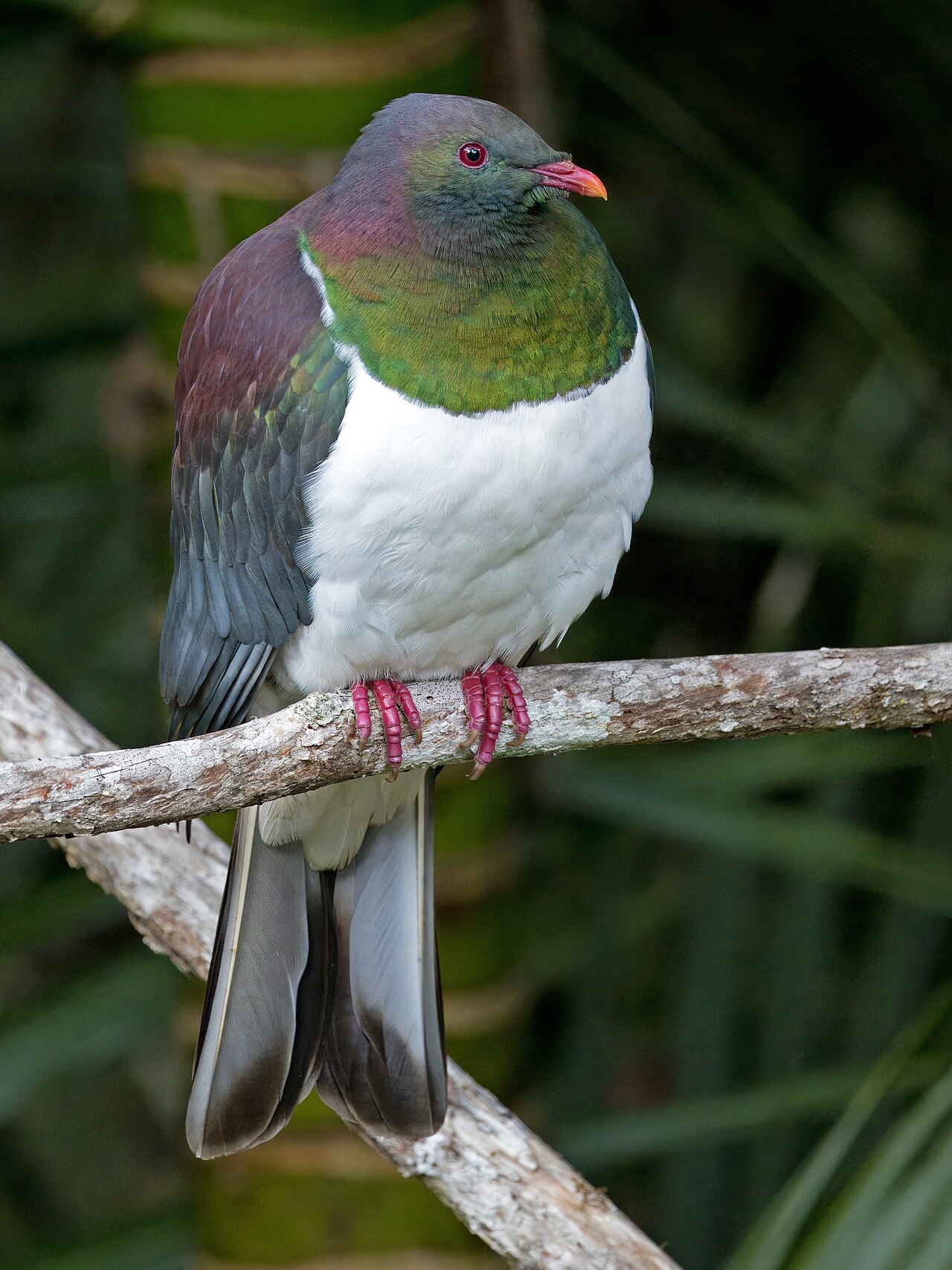
The New Zealand Pigeon, kererū in Maori, is a half-metre forest pigeon with a green-blue back, a purple-bronze sheen over neck and shoulders and a knife-sharp white belly. It is heavy, slow and noisy in flight, and since the extinction of the moa it is the only bird left that can still swallow New Zealand's largest forest fruits whole.
Voice
A quiet bird, giving only an occasional short, low oo — when a harrier passes over, for instance — and besides that a softer, longer contact note with a rising tail, usually repeated a few times. The real sound of this species comes not from the throat but from the wings: a heavy, rhythmically whistling whoosh-whoosh that carries through the forest. In display it climbs steeply, stalls, and slides back down with clapping wings.
No freely licensed recording has been found for this species yet; what to listen for is described below.
Identification
A very large, thickset arboreal pigeon of half a metre, with a small head and a heavy breast. Head, neck, back and wings are green-blue with a purple-bronze iridescence over neck, mantle and wing coverts that shifts colour with every turn. From the upper breast down the underside is clean white, with a sharp, almost ruled border between dark and white. Bill, feet and eyes are crimson. Young birds are duller, with a smudgy off-white breast and a ragged border.
Confusion species
Within New Zealand no other bird resembles it; the only real confusion is Chatham Islands Pigeon (Hemiphaga chathamensis), the sister species recognised as distinct only in 2001 and confined to the Chatham Islands. That bird is larger and heavier, has a clearly pale grey rump and upper tail coverts which are absent here, a maroon rather than green-blue mantle, and a red bill with an orange tip against the kererū's uniformly red one. Since the ranges do not meet, in practice place settles it.
Habitat
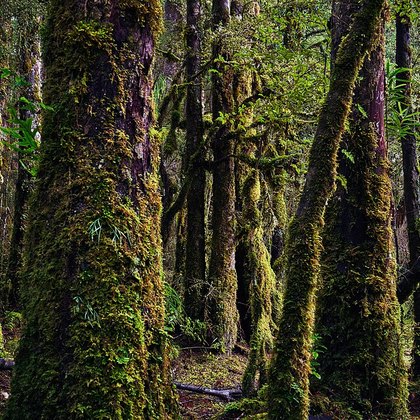
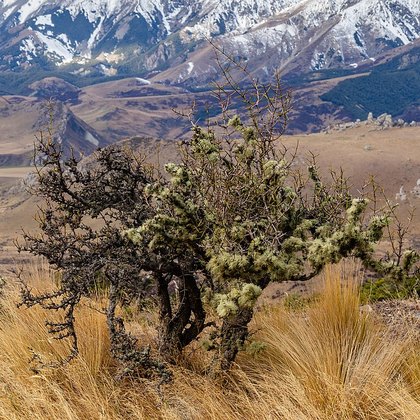
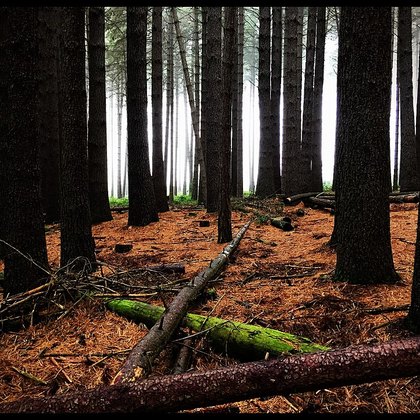
Native forest of every kind: podocarp-broadleaf, southern beech and regenerating second growth, but also exotic plantation with a native understorey. Beyond that it uses farm shelterbelts, town parks and gardens, where it takes kowhai, tree lucerne, willow and poplar. It looks above all for ripe fruit and switches to leaves and buds as soon as fruit runs out.
Where the bird is most often found, arranged by main group and formation.


Range and movements
Throughout New Zealand wherever forest or shrubland stands, from Northland to Stewart Island, and on most offshore islands. Densities are highest where predators are absent or held hard down, as on predator-free islands and in fenced sanctuaries. The related Norfolk Island Pigeon (Hemiphaga spadicea), long treated as a subspecies of this bird, died out around 1900, so the genus now counts two species within the map window of this guide.
- Resident
- dark = core range, pale = thinly spread
Where and when to look
Find it by the sound of its wings: the heavy whistling of a kererū crossing a gap gives it away before you see it, even in thick forest. Then look up into the outer branches of a fruiting tree, where it will sit motionless for minutes on end, betrayed only by a falling fruit. In late summer a bird that has gorged on fermented fruit can fly strikingly clumsily — not a rarity but a well-known phenomenon.
Conservation
Least Concern (LC), and classed Not Threatened on the New Zealand national list, but that is the product of protection rather than of ease: the species has been fully protected since 1921 and illegal hunting still occurs. The heaviest losses come from introduced mammals — possums, stoats, feral cats and ship rats — taking eggs and chicks from the open stick nest. Beyond that count vehicle strikes and collisions with windows and power lines. Where pest control works well, numbers recover quickly.
Scientific name
Hemiphaga novaeseelandiae | (Gmelin, 1789)
Gmelin described the species in 1789 as Columba novaeseelandiae, from material of Cook's voyages; the move to Hemiphaga puts author and year in parentheses. Bonaparte introduced that genus in 1854 and built the name from Greek hēmi 'half' and the tail of Carpophaga 'fruit-eater', because he placed the bird halfway between two other genera. novaeseelandiae simply means 'of New Zealand'. The Maori names kererū, kūkū and kūkupa vary by district and are all formed from the sound the bird makes.