All species › Passerines › Honeyeaters › Noisy Miner
Noisy Miner | Manorina melanocephala
Tuinhoningeter | Mielero chillón
The Noisy Miner is the grey honeyeater with the black mask and yellow bill that holds every street, park and thinned woodland edge in eastern Australia. It lives in colonies of dozens to hundreds of birds that together drive out anything entering their ground — from a silvereye to a Wedge-tailed Eagle. A native species that human land use has turned into a conservation problem.
Voice
All day there is a loud, penetrating pwee pwee pwee, and at any disturbance a fast piping pee pee pee that has the whole colony airborne within seconds. The repertoire is large: yapping scolds, rusty screeching notes, short contact calls between birds sitting close together. Quiet is not something a miner colony really does.
Recording: James Ray — CC BY-SA 4.0 · Bronte, Waverley Council, New South Wales, Australia · xeno-canto
Identification
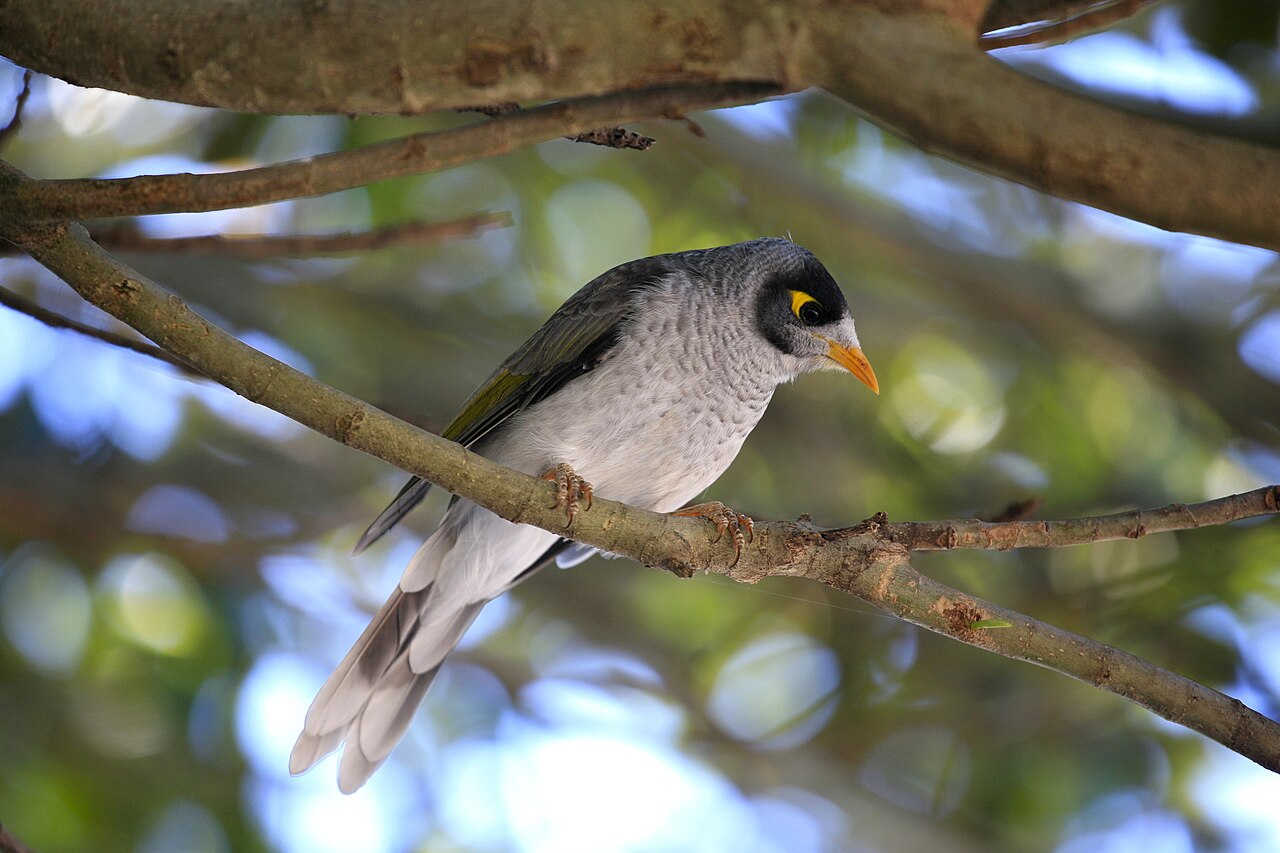
A solid honeyeater of 24 to 29 centimetres, evenly grey, with a black crown and black cheeks, a yellow bill and yellow legs. Behind the eye lies a bare yellow patch of skin that stands out at close range. The wing carries an olive-yellow panel, the tail is white-tipped and the forehead is pale. Sexes are alike; young birds are brownish grey with a duller mask.
Confusion species
Yellow-throated Miner (Manorina flavigula) of drier inland country has a grey crown and a white rump that flashes in flight. Bell Miner (M. melanophrys) is smaller and olive-green, gives a single metallic tink and keeps to damp gullies. Black-eared Miner (M. melanotis) of the mallee is rare and darker-masked. The introduced Common Myna looks superficially similar but is brown with white wing patches and is a starling.
Habitat
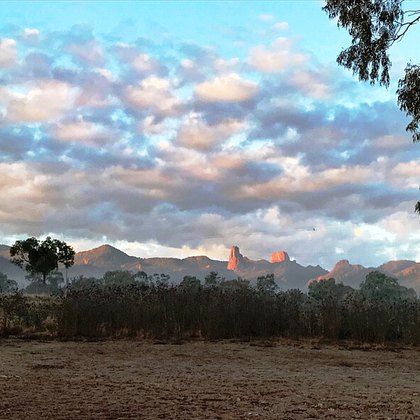
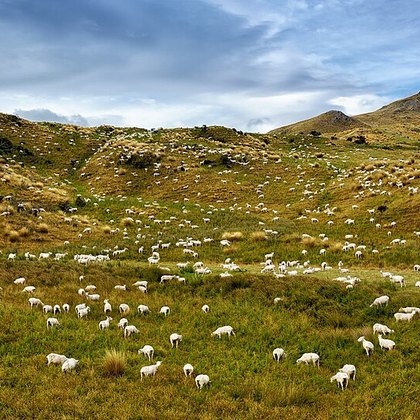
Dry eucalypt woodland with an open, bare understorey is the original habitat; to that add gardens, city parks, sports fields, road verges, farm shelterbelts and the edge of every fragmented remnant. What it needs is a tree layer with nothing beneath it — exactly what stock, fire, mowing and gardening produce everywhere. Closed forest with dense understorey it avoids.
Where the bird is most often found, arranged by main group and formation.


Range and movements
Eastern and southeastern Australia, from northern Queensland along the coast and hinterland to southeastern South Australia, and in Tasmania. Four subspecies. The range has grown over the past century and, more to the point, filled in: clearing, thinning and planted suburbs have made this the commonest bird across much of the southeast. It does not migrate; a colony stays put.
- Resident
- dark = core range, pale = thinly spread
Where and when to look
Anyone after small bush birds in eastern Australia should walk outside this bird's ground: where the colony sits, the honeyeaters, thornbills and fairywrens are gone. Watch the social structure — stable coteries of ten to twenty-five birds within the colony — and the mass turnout the moment one bird raises the alarm.
Conservation
Least Concern (LC) and increasing. The problem runs the other way: aggressive exclusion of birds by over-abundant Noisy Miners has been listed as a key threatening process under Australia's EPBC Act since 2014. Researchers call the species a reverse keystone species, because its presence in fragmented woodland measurably suppresses bird diversity.
Scientific name
Manorina melanocephala | (Latham, 1801)
Latham described the species in 1801 as Gracula melanocephala, among the mynas; the later move puts author and year in parentheses. The genus Manorina was introduced by Vieillot in 1818, from Greek manos, 'thin, loose', and rhis, 'nostril', after the open nostril slit. melanocephala means 'black-headed', from melas, 'black', and kephale, 'head'.