All species › Waders, gulls and terns › Buttonquails › Red-backed Buttonquail
Red-backed Buttonquail | Turnix maculosus
Roodrugvechtkwartel | Torillo moteado
The Red-backed Buttonquail is Australia's smallest buttonquail, a bird of tall rank grass along swamps in the tropical north. As in all buttonquail the female is the larger and the brighter: she calls, she wins the males, and she leaves incubation and the care of the young to them. Most observers have to settle for a bird that claps up out of the grass a metre away and vanishes again fifty metres on.
Voice
The calling sex is the female, and her voice is a low booming oom, repeated every few seconds and swelling in strength — a sound that in grass seems to come from all sides at once. She calls mainly at dusk and at night, and most in the wet season. Alongside it there is a softer cooing coo-coo between birds. The male is all but silent, and a flushed bird produces nothing beyond the whirr of its wings.
No freely licensed recording has been found for this species yet; what to listen for is described below.
Identification
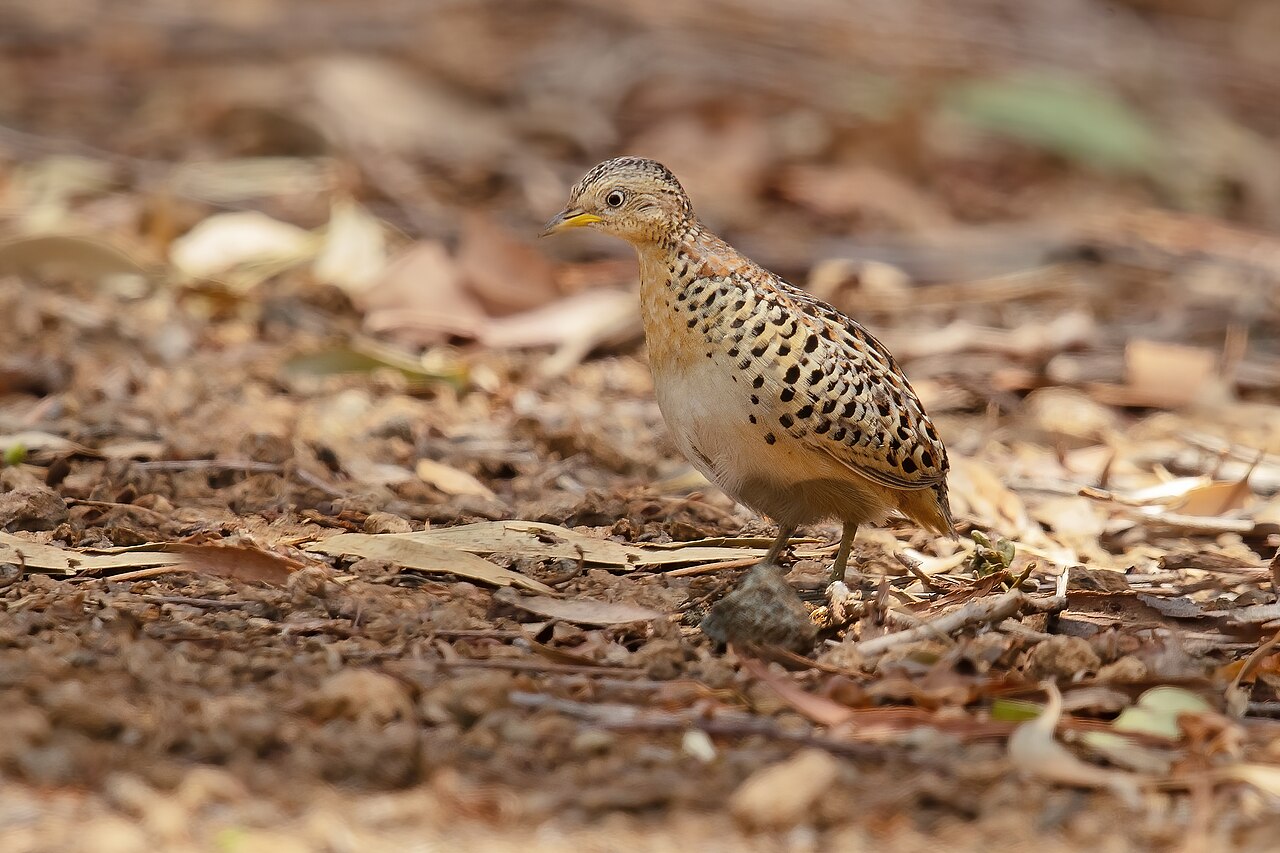
A small, round, short-tailed bird of twelve to sixteen centimetres, with a yellow bill and yellow legs and with three toes: the hind toe is absent, which separates all buttonquail from the true quails. The female has a rufous mantle and wings barred with black and spotted with white, a grey face and an orange-buff breast with black spotting on the flanks. The male is duller, buff rather than rufous, with a paler bill and finer markings. In flight the pale coverts stand out against the darker primaries; the bird flies low and whirring, drops in after a few tens of metres and then runs. Young birds are darker than the male and more densely spotted.
Confusion species
Little Buttonquail (Turnix velox) is the usual confusion in the dry interior: much paler and sandier, with a white eye and a white flank stripe, and it avoids the wet grass this species prefers. Painted Buttonquail (T. varius) is larger, greyer and studded with pearly spots, and belongs in dry woodland with leaf litter. Chestnut-backed Buttonquail (T. castanotus) of the northwest is larger and warmer brown and sits on stony savanna slopes. King Quail (Synoicus chinensis) shares the wet grass but is a true quail: darker, with a hind toe, the male with a blue-grey breast and a black and white throat pattern.
Habitat
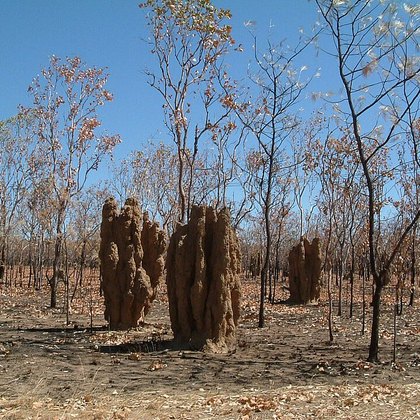
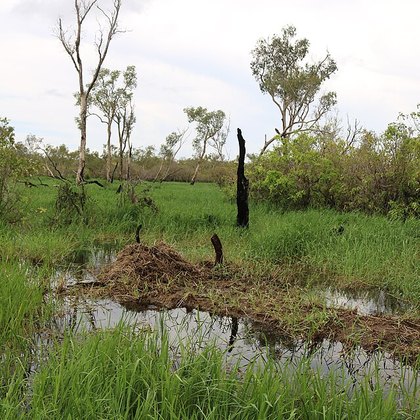
Tall rank grass on damp ground: the edges of swamps and creeks, sedgeland, wet savanna and grassland that thickens after the rains. Also in cane fields, along railway and road verges and in rank pasture, provided the grass is tall and dense enough to disappear into. It avoids closely grazed land, bare ground and closed forest. In the dry season it withdraws to the lowest strips, which stay damp longest.
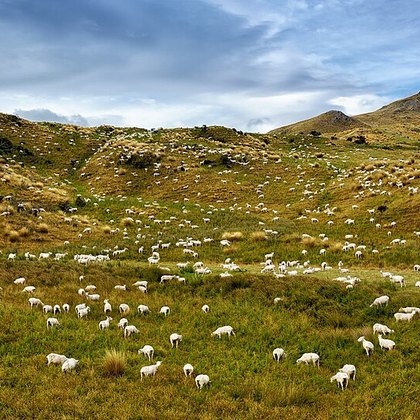
Where the bird is most often found, arranged by main group and formation.

Range and movements
The tropical coastal belt of Australia, from the Kimberley in Western Australia through the Northern Territory and along the Queensland coast into northeastern New South Wales; outside the guide also in the Lesser Sundas, New Guinea and the Philippines. It is resident where the grass stands and a wanderer where it burns or dries out, so the occupancy of a site varies greatly from year to year. After a wet season birds turn up where none have been recorded for years. It does not reach New Zealand.
- Resident
- dark = core range, pale = thinly spread
Where and when to look
In the wet season walk the edge of a savanna swamp at last light and listen for the female's low booming; that is by far the most reliable way to establish the species. By day look for the round bare platelets in the litter where the birds have scratched round and round on the spot. If a bird claps up, check bill and legs: yellow points to this species, grey-blue to Little Buttonquail.
Conservation
Least Concern (LC), with a wide range and a large, scattered population for which no reliable count exists. Along the southeastern edge of the range coastal grasslands have been cleared or heavily grazed on a large scale, and there it has become locally rare. Because it shows itself only by chance, and the female's call is the one dependable clue at any distance, every trend for this species rests on thin ground.
Scientific name
Turnix maculosus | (Temminck, 1815)
Temminck described the bird in 1815 as Hemipodius maculosus; because it was later moved to another genus, author and year stand in parentheses. The genus Turnix was introduced by Bonnaterre in 1791 and is a shortening of Latin coturnix, 'quail'. maculosus means 'spotted'. The type locality was first given as 'New Holland', the old name for Australia; that proved wrong and the place was later corrected to Timor.