All species › Cuckoos › Cuckoos › Sahul Brush Cuckoo
Sahul Brush Cuckoo | Cacomantis variolosus
Sahoelstruikkoekoek | Cuco varioloso
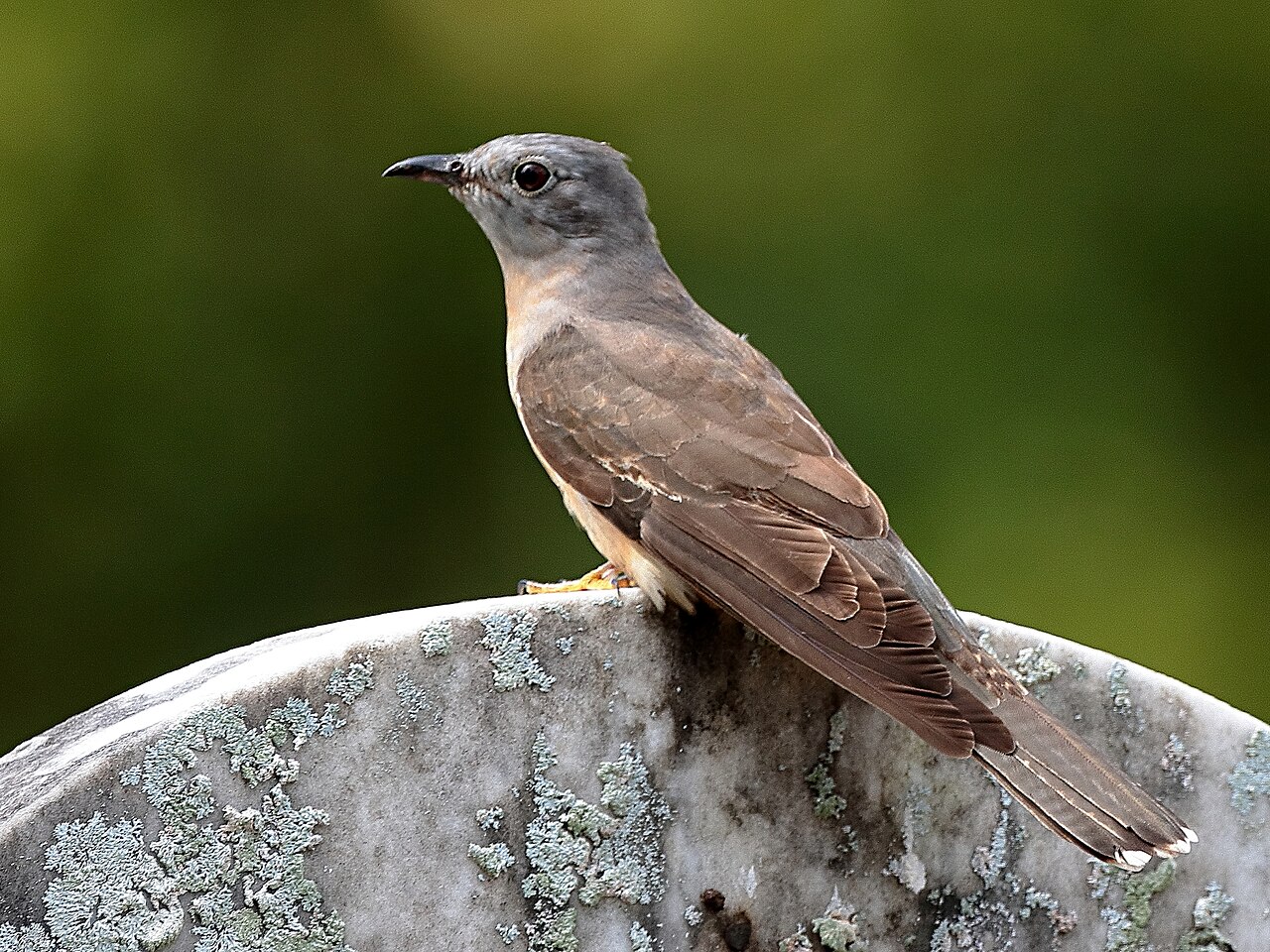
The Sahul Brush Cuckoo is a small, plainly grey-brown cuckoo heard all summer along the northern and eastern rim of Australia: a descending run of clear whistles that grows steadily faster and lower. Looking rarely helps — it sits still, high and unmarked — but the call is unmistakable. Since the Australian and New Guinean birds have been treated as a species of their own, it is named after Sahul, the ice-age landmass that joined Australia and New Guinea.
Voice
The main call is a descending series of loud, clear whistles: fear-fear-fear-fear, each note a little lower and quicker than the last, until the run dies away. There is also a three-note, questioning where's-the-tea. Elsewhere in its range that accelerating repetition earned it the name 'brain-fever bird'. It calls mainly from September to February, and on moonlit nights as well.
No freely licensed recording has been found for this species yet; what to listen for is described below.
Identification
A small cuckoo of 22 to 23 centimetres and about 38 grams. The male is grey-brown above, with grey head, neck and breast grading into light grey to buff on belly and flanks. The eye-ring is grey, not yellow — the quickest mark of all. The wings are pointed and swept back, the tail barred but shorter than a Fan-tailed Cuckoo's. Females come in two forms: the usual one, like the male but paler below, and a scarcer barred morph with streaked upperparts and heavily barred underparts. Juveniles are heavily barred dark brown above and mottled and barred below.
Confusion species
Fan-tailed Cuckoo (Cacomantis flabelliformis) is the species to rule out and overlaps along the whole east coast: it is larger, deeper slate-grey above, warmer buff below, and has a broad bright yellow eye-ring and a longer tail that it fans on landing. Chestnut-breasted Cuckoo (Cacomantis castaneiventris) of the Cape York rainforest is equally small but has deep chestnut underparts. Pallid Cuckoo (Heteroscenes pallidus) is clearly bigger, greyer and has a dark eye-stripe. The eye-ring colour — grey against yellow — separates the two hardest species at a glance.
Habitat
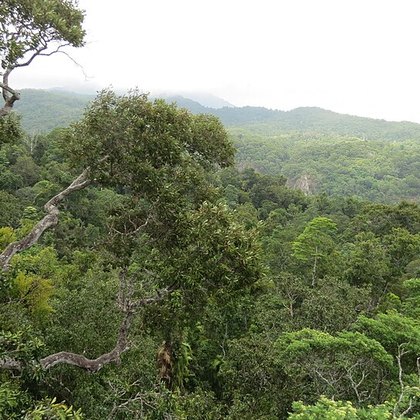
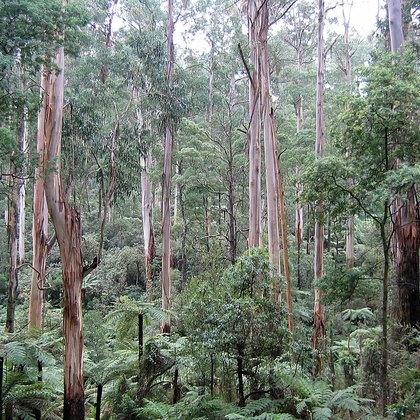
Wooded country in the broad sense: rainforest, wet sclerophyll forest, paperbark swamp forest, gallery forest along creeks and rivers, mangrove edges and more open forest and woodland. Occasionally in gardens. It forages high in the canopy for insects, especially hairy caterpillars, and sometimes comes to the ground. As a brood parasite it lays one egg per nest, mostly with flycatchers, robins, fairy-wrens, gerygones and honeyeaters; at least 58 host species are recorded in Australia, and the eggs match the local host from region to region.
Where the bird is most often found, arranged by main group and formation.


Range and movements
Northern and eastern Australia: from the Kimberley across the Top End and Gulf country to Cape York, and from there down the Queensland and New South Wales coast into Victoria. It is absent from South Australia, Tasmania, the interior and the south-west. In the south of that range it is migratory: birds arrive in spring, parasitise nests through the summer and move north to New Guinea and the islands for the winter. In the tropical north part of the population stays all year. It does not occur in New Zealand.
- Resident
- Breeding (summer)
- dark = core range, pale = thinly spread
Where and when to look
Go by the descending whistle; from September to February it is one of the commonest sounds along any rainforest edge or paperbark swamp, and it gives the bird away at a hundred metres. Then search thin horizontal branches at mid-height for a small, silent grey bird. Always check the eye-ring before writing down 'Fan-tailed'.
Conservation
Least Concern (LC) and rated secure in every state where it occurs. Its strength is its breadth: with dozens of host species and a large range it depends on no single bird and no single forest type. Where it does go wrong, it is the loss of exactly its best country — coastal rainforest, paperbark swamp and creek-side gallery forest — to clearing, drainage and hot fire.
Scientific name
Cacomantis variolosus | (Vigors & Horsfield, 1827)
Vigors and Horsfield described the bird in 1827 as Cuculus variolosus; the move to Cacomantis puts authors and year in parentheses. variolosus is Latin for 'pock-marked, speckled', from variola, 'pustule' — for the heavily mottled and barred plumage of young birds. The genus Cacomantis was introduced in 1843 by Salomon Müller: Greek kakos, 'bad', and mantis, 'seer', after the superstition around their mournful calls. The type came from New South Wales. The English and Dutch names point to Sahul, the ice-age continent in which Australia and New Guinea were one landmass; the old 'Brush Cuckoo' has been split into a Sahul species and several Asian ones.