All species › Passerines › Grasshopper warblers, grassbirds and allies › Tawny Grassbird
Tawny Grassbird | Cincloramphus timoriensis
Rosse grasvogel | Yerbera leonada
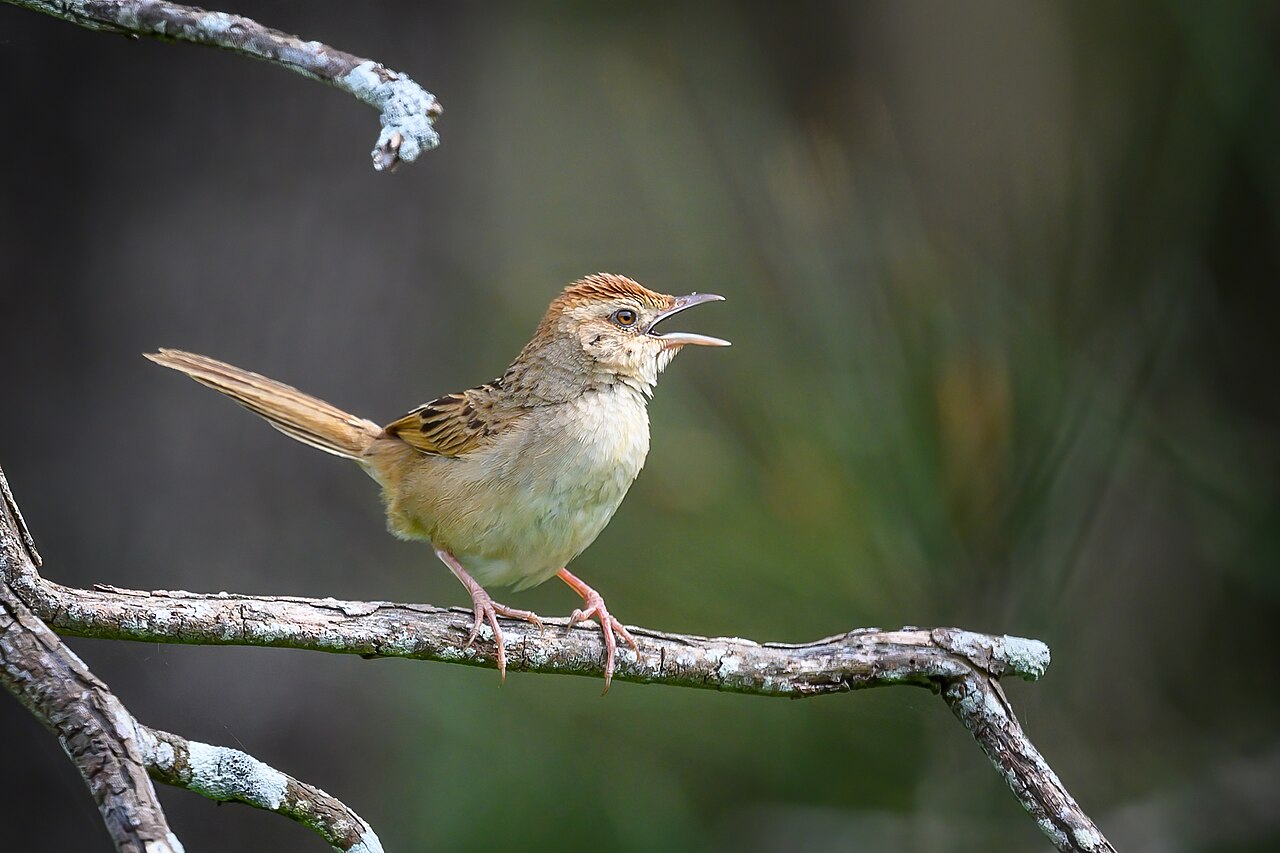
The Tawny Grassbird is the grassbird of wet grass: where the other two of its genus have taken the dry plain and the open woodland, this species keeps to rank tussock, swamp edges and canefields along the northern and eastern coast. It carries its rufous on the crown rather than the rump, has a long graduated tail and short rounded wings, and would rather not fly at all. To see it you must wait for the song flight, for that is about the only moment the bird rises above the grass.
Voice
A rattling, grating and somewhat throaty song delivered in the song flight: the bird flutters up ten or fifteen metres above the grass, sings a rumbling series, and then drops back into the vegetation with spread tail and dangling legs. On the way down comes a characteristic descending sput-sput-sput that slows like a tape being played too slow. From the grass there are also hard dry ticks and a sharp tschak when birds are disturbed. The song is given mainly in the early morning and in the hours before sunset and carries hundreds of metres in damp still weather; on windy days the species falls silent and is scarcely provable in the same field.
No freely licensed recording has been found for this species yet; what to listen for is described below.
Identification
Sixteen to nineteen centimetres, much of it tail: long, strongly graduated, often looking ragged, and spread wide in flight. The crown is warm rufous to cinnamon and forms a clear cap, which in good light is the first thing to catch the eye. Back and wing coverts are brown with heavy dark streaking, giving a scaled impression; the underparts by contrast are plain pale buff to dirty white and carry no streaking, and that contrast between a streaked top and an unstreaked underside is the second key character. A faint pale brow runs over the eye. The bill is short and fine, the legs stout and flesh-coloured. Male and female look alike; young birds are yellower below and have a duller crown.
Confusion species
Little Grassbird (Poodytes gramineus) shares the swamp but is clearly smaller, darker, and finely streaked on crown and breast alike — and it is exactly that streaked breast the Tawny Grassbird lacks. Rufous Songlark (Cincloramphus mathewsi) carries the rufous on the rump instead of the crown, has a longer finer bill, and sings in flight from tree to tree in dry open woodland. Brown Songlark (Cincloramphus cruralis) is larger, longer-legged and sits on bare plains. Australian Reed Warbler (Acrocephalus australis) is in the same reeds but is plain olive-brown without any streaking, has a longer straight bill and a much louder rattling song. Golden-headed Cisticola (Cisticola exilis) at ten centimetres is half the size and much shorter-tailed. What settles it is the combination of rufous cap, streaked back and plain underparts.
Habitat
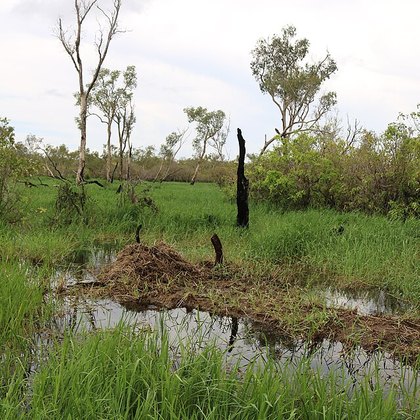
Rank tall grass on damp ground: the edges of freshwater swamps and reedbeds, wet grassland and floodplain, grass beneath paperbark swamp forest, blady grass in openings in tropical savanna, and in the east, to a large extent, the canefields and rank drain margins that go with them. The bird needs cover at eye height and ground damp enough to keep that grass rank; as soon as the grass is mown, burnt or grazed short the place is empty, and as soon as shrubs grow through it the bird goes too. After fire or cutting it returns once the grass stands a metre high again, which produces the picture of a species shifting with the rotation of the land.
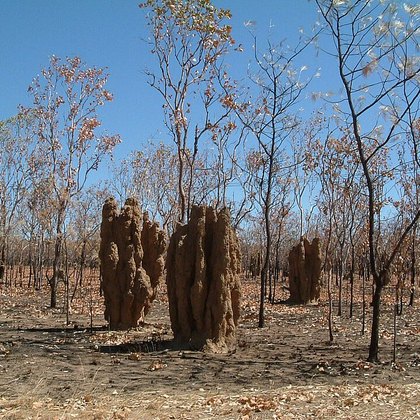
Where the bird is most often found, arranged by main group and formation.



Range and movements
In Australia along the northern and eastern coast and the lowlands behind it: from the Kimberley across the Northern Territory and the Gulf of Carpentaria to Cape York, and thence south down the coast of Queensland and New South Wales to about the latitude of Sydney. Beyond that the species in the broad sense extends over New Guinea and parts of the Indo-Australian archipelago to Timor, the type locality. Australian birds are residents with no migration of consequence; at most they shift locally as swamps dry out and fill again. Some of the island populations, notably those of New Guinea, are treated in recent arrangements as a separate species Cincloramphus macrurus, so the limits of Cincloramphus timoriensis are not yet finally settled.
- Resident
- dark = core range, pale = thinly spread
Where and when to look
Work a swamp edge or a cane block with a rank margin in the early morning and look up rather than into the grass: the chance of seeing the bird lies almost wholly in the song flight, and that lasts only seconds. Stand where you can see over the grass and wait for a bird to climb; the descending sput-sput of its return then marks the spot at once. Searching at ground level yields at best a brown shape that dives back into the grass a few metres on, tail trailing. On windy days the search is usually wasted.
Conservation
Least Concern: the range is large, the species is locally numerous, and it has adapted strikingly well to a man-made landscape. The cane country of coastal Queensland supplies exactly the rank tall grass on damp ground that it needs, and there the bird occupies both the edges of the blocks and the rank verges and drains between them. Its vulnerability lies in the tempo of management: cane cut and burnt right to the drain, swamp margins drained, and grassland burnt every year all keep the vegetation too short for a nest. Large-scale drainage of coastal wetland in the north and east is thus the only loss of consequence; against that, the species recolonises rank ground quickly.
Scientific name
Cincloramphus timoriensis | (Wallace, 1864)
Wallace described the bird in 1864 as Megalurus timoriensis, from material from Timor; because the species now stands in another genus, author and date are bracketed. The epithet timoriensis simply means 'of Timor' and so points away from Australia, which shows how broadly the species was originally conceived. The genus Cincloramphus was introduced by Gould in 1838, from Greek kinklos, the name of a small waterside bird, and rhamphos, 'bill'; the species was moved into it in the twenty-first century, along with the Brown and Rufous Songlarks, once molecular work had shown that the broad genus Megalurus was an assemblage of birds not closely related. The Dutch rosse grasvogel and the Spanish yerbera leonada take the overall colour tone; the English Tawny Grassbird does the same.