All species › Swifts › Hummingbirds › Allen's Hummingbird
Allen's Hummingbird | Selasphorus sasin
Allens kolibrie | Colibrí de Allen
Allen's Hummingbird breeds in a narrow strip along the Pacific coast, from southwestern Oregon to southern California, and nowhere else on earth. It is one of the continent's earliest migrants: males leave their Mexican wintering grounds in December and are singing over the flowering coastal hills again in January.
Click a thumbnail to switch the photo above.
Voice
The voice itself amounts to little: a sharp tick while feeding, and from a favourite perch a short three-part tinkling buzz when another hummingbird enters the territory. What the male makes with his feathers is far louder. In low territorial flights the outer flight feathers hum like a bumblebee, and through the pendulum display runs a stuttering series of wing buzzes. At the bottom of the dive, from tens of metres up, the tail feathers produce a high fading squeal lasting about a second — not a voice, but air passing over feathers.
No freely licensed recording has been found for this species yet; what to listen for is described below.
Identification
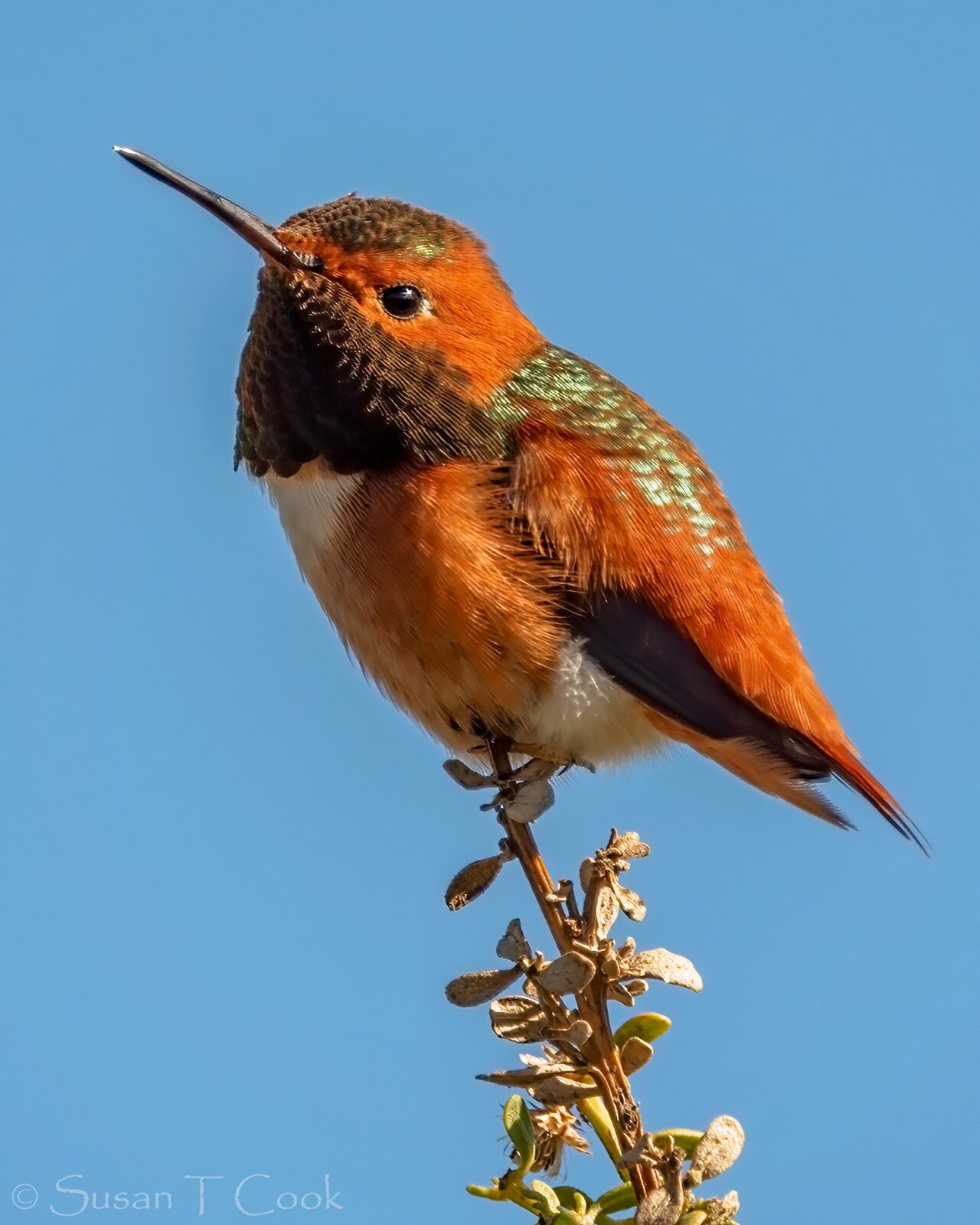
The male has a bronze-green back and crown, a coppery rump, tail and flanks, and a gorget of deep reddish orange. That gorget is not pigment but an interference colour produced by feather structure: it lights up only when the light falls over the observer's shoulder, and from any other angle looks dull black. Female and immature are bronze-green above with coppery sides and a spotted throat; the female usually shows a small orange-red patch in the centre. The bill is straight and about as long as the head, the tail extends past the wingtips, and the outermost tail feather is narrower than the rest. At about three and a half grams this is one of the smallest breeding birds in North America.
Confusion species
The real problem is Rufous Hummingbird (Selasphorus rufus). Its adult male usually has an entirely rufous back, but a proportion show green there, and then only the shape and width of the tail feathers separate them — in practice unusable in the field. Females and juveniles of the two are not safely distinguishable at all; away from the narrow coastal strip and outside the breeding season, place and date are the only handle. The much commoner Anna's Hummingbird is larger and heavier, lacks all rufous, and in the male has a rose-red crown as well as throat.
Habitat
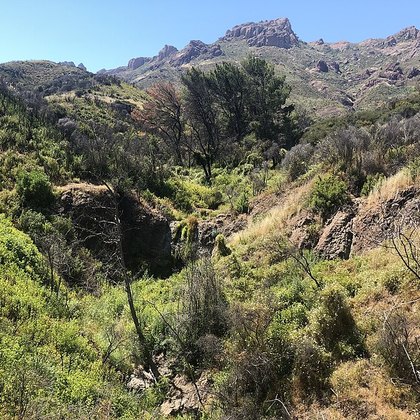
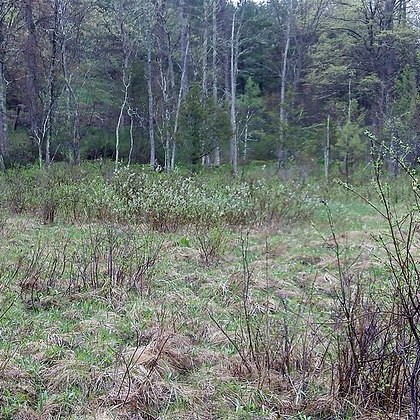
Coastal scrub, chaparral, thickets along bluffs and gullies, woodland edges, and the gardens and parks of coastal towns, from sea level to about three hundred metres. Males take the open, flower-rich slopes; females nest in dense cover and in the trees behind it, including eucalyptus, redwood and Douglas-fir. The dry interior valleys and the high mountains are avoided; the species keeps within reach of the coastal fog. On the Mexican wintering grounds it uses oak-pine forest, edges and brushy clearings with plenty of flowers.
Where the bird is most often found, arranged by the USNVC — the vegetation classification of the United States and Canada — and CMECS for sea and coast.



Range and movements
The breeding range is a ribbon no more than fifty kilometres wide, from the coast of southwestern Oregon south to the Los Angeles area. Migratory birds winter in the interior of central and southern Mexico; the outward journey begins as early as December and the return falls in July and August. On the Channel Islands and the Palos Verdes peninsula lives a non-migratory form that has spread through urban southern California since the mid-twentieth century and increased there. For the migrants it means that a bird of three and a half grams covers several thousand kilometres a year.
- Resident
- Breeding (summer)
- Winter
- Passage
- dark = core range, pale = thinly spread
Where and when to look
Look for it in late January and February on a coastal hillside where wild currant and monkeyflower are in bloom: it is back while most other hummingbirds are still away. Stand below a singing perch and wait for the dive — the fading squeal at the bottom is the one sound that separates it with certainty from Rufous Hummingbird. On a perched bird, check the outermost tail feather, which is strikingly narrow.
Conservation
The world population is put at 1.5 million birds, but the Breeding Bird Survey indicates a decline of about 2.6 percent a year between 1968 and 2023, seventy-seven percent in total. The species is accordingly listed as a red-alert tipping point species in the 2025 State of the Birds report. Loss of coastal vegetation to development is the main cause; unlike some other hummingbirds it adapts poorly to built-up areas, although feeders and introduced flowering trees take up part of the slack. The resident population in urban southern California is meanwhile increasing.
Scientific name
Selasphorus sasin | (Lesson, 1829)
Lesson described the species in 1829 as Ornismya Sasin; because it was later placed in another genus, author and year stand in parentheses. The genus Selasphorus is Greek for 'flame-bearer', after the glowing throat of the males. The specific part sasin is not Latin but an indigenous name for a hummingbird, which Lesson adopted. The type locality is given as Nootka Sound, in the vicinity of Monterey and San Francisco, California, later fixed on San Francisco. The English name honours Charles Andrew Allen, who collected the birds in California.