All species › Waterfowl › Ducks, swans and geese › American Wigeon
American Wigeon | Mareca americana
Amerikaanse smient | Silbón americano
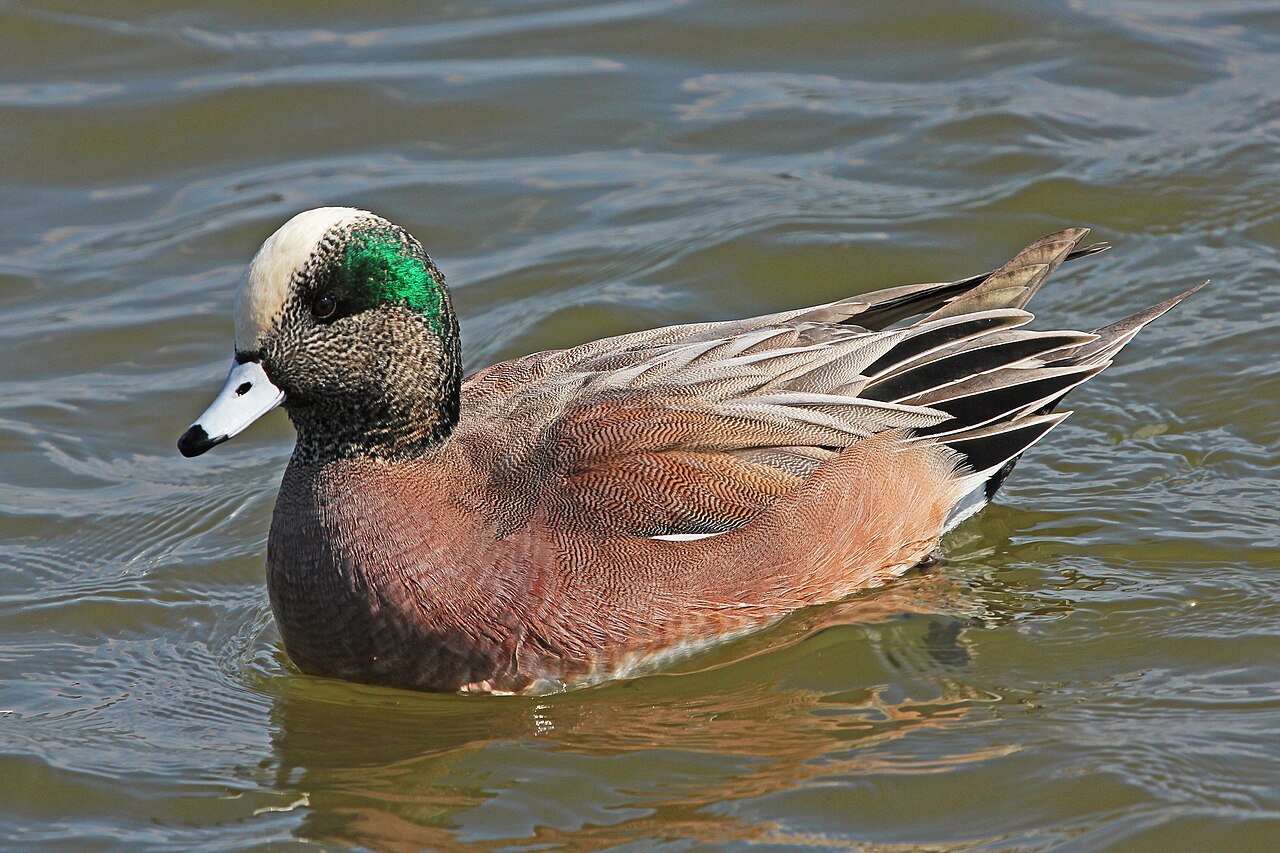
The American Wigeon is the duck that grazes most like a goose: on lawns, fields and golf courses it walks along on foot cropping vegetation instead of dabbling. The male has a white forecrown and a broad green stripe behind the eye on an otherwise grey-brown head, above a cinnamon-coloured body. It breeds from Alaska through the interior of western Canada and the United States and is one of the most numerous ducks found across nearly the whole continent in winter.
Voice
The male gives a high, nasal three-note whistle, whee-whee-wheeoo, with a tone closer to a toy trumpet than to a bird, used year-round as a courtship call, a contact call and an alarm. The female does not whistle, but gives a hoarse, grating growl, mainly during courtship. In a mixed flock of wigeon the male's whistle is usually the first thing that gives it away, long before a head can be picked out.
Recording: Valerie Heemstra — CC BY-NC-SA 4.0 · Cedarville Township (near Cedar River), Menominee County, Michigan, United States · xeno-canto
Identification
The male has a creamy-white forecrown and crown above a grey-brown head with a broad, glossy green stripe behind the eye, a cinnamon body and white patches on either side of the black rear end; the bill in both sexes is pale grey with a black tip. The female is warm brown with a greyer, plainer head and a faint dark smudge around the eye, lacking the green stripe. In flight the male shows a large white patch on the forewing followed by a green speculum; the female instead has a dark speculum with a narrow white border. Non-breeding males temporarily resemble the female but keep the white wing patch.
Confusion species
The main confusion species is Eurasian Wigeon (Mareca penelope), which travels almost always among flocks of American Wigeon: the male has a chestnut head with a cream-buff forehead and lacks the green eye-stripe, while the female is warmer reddish-brown and shows a grey rather than white armpit in flight. Where the two species meet, occasional hybrids show a head pattern intermediate between the two. From Gadwall, American Wigeon is told by its much shorter, pale grey bill against Gadwall's long dark one, and by its white rather than chestnut-and-black wing pattern.
Habitat
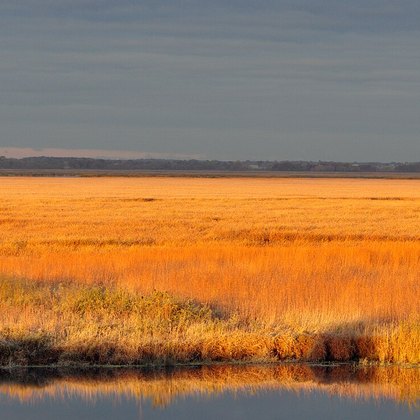
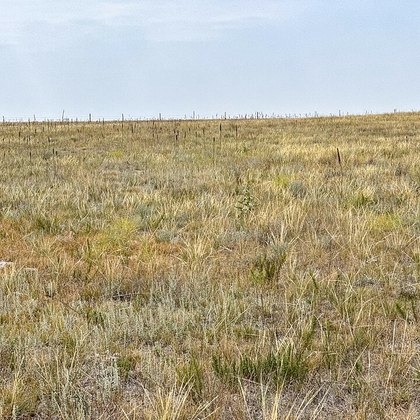
It breeds at shallow prairie lakes and marshes and at the edge of the boreal taiga, often some distance from water in short grass. In winter it uses a wide range of open water — shallow lakes, estuaries, flooded fields and reservoirs — but what sets it apart from most ducks is that it spends at least as much time grazing on dry land: lawns, golf courses and fields next to water are regular feeding grounds. It also regularly steals aquatic plants brought to the surface by diving ducks and coots, by waiting close beside them until they resurface.
Where the bird is most often found, arranged by the USNVC — the vegetation classification of the United States and Canada — and CMECS for sea and coast.


Range and movements
It breeds from Alaska across nearly all of Canada except the far north, and further south through the interior west, from Idaho and Colorado to the Dakotas and Minnesota. In winter it spreads across almost the entire continent to the south of that, from the Great Lakes to the Gulf Coast, and is one of the most numerous wintering ducks of Mexico, the Caribbean and Central America; small numbers winter further south still, into Panama and northern South America. Migration takes place in large, noisy flocks and begins early in autumn.
- Resident
- Breeding (summer)
- Winter
- Passage
- dark = core range, pale = thinly spread
Where and when to look
Look for the white forecrown among a mixed flock of dabbling ducks on a lake or estuary — it catches the light from a distance even when the rest of the bird sits in shadow. On park ponds and golf courses in winter it is often the most approachable duck present, because unlike most species it forages by grazing on land rather than staying on the water. Listen first: the male's nasal whistle often gives the species away before you have seen it.
Conservation
The North American breeding population is estimated at over 3.2 million birds, above the long-term survey average. In the mid-twentieth century the species declined sharply as prairie potholes were drained for agriculture; the recovery of recent decades is closely tied to the protection and creation of wetlands along the migration routes. It is still hunted across parts of its range, within quotas set from the annual surveys.
Scientific name
Mareca americana | (Gmelin, 1789)
Gmelin described the species in 1789 as Anas americana; because it has been placed in the genus Mareca since 1824, author and year stand in parentheses. That genus was introduced that year by Stephens, from the Portuguese marreca, 'small duck'. americana is Latin for 'of America', after its range. The type locality comprises Louisiana and the state of New York.