All species › Birds of prey › Kites, Old World vultures, eagles and hawks › Bald Eagle
Bald Eagle | Haliaeetus leucocephalus
Amerikaanse zeearend | Pigargo americano
The Bald Eagle has appeared on the Great Seal of the United States since 1782 and, since December 2024, is also the national bird in law. It is besides the best-known recovery story in conservation: from little more than four hundred breeding pairs in the contiguous states to well over three hundred thousand birds today.
Voice
Anyone hearing it for the first time is disappointed: not a mighty scream but a thin, high, stuttering series — kwik-kik-kik-kik-kik — and a squeaky kee-kee-keer, closer to a gull than to an eagle. Pairs call in duet at the nest, head thrown back and bill raised; the same stutter comes in flight and in squabbles over fish. Film soundtracks routinely dub in the scream of a Red-tailed Hawk, which keeps the misconception alive.
Recording: Rachel Thurman — CC BY 4.0 · Riverside Rotary Park (near Juneau), Juneau City and Borough, Alaska, United States · xeno-canto
Identification
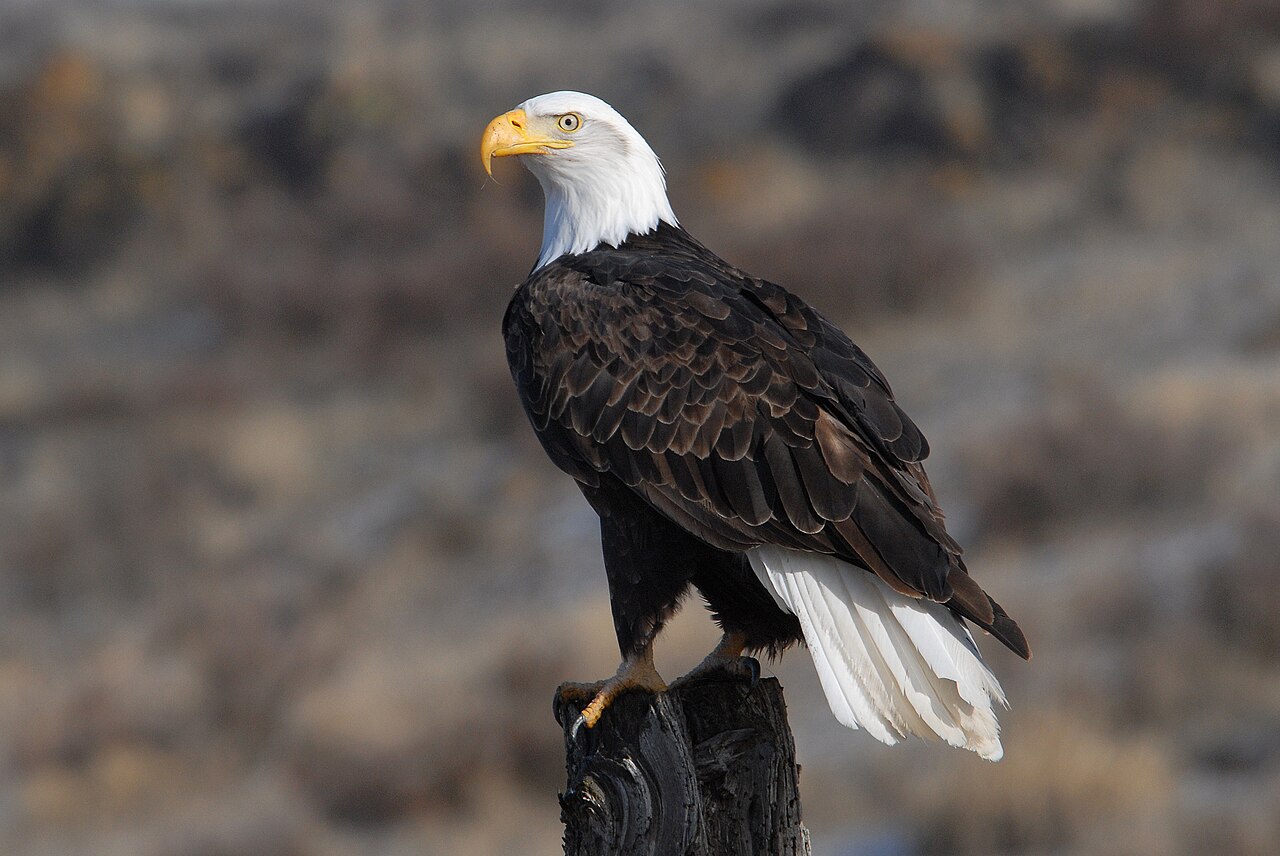
The adult is unmistakable: chocolate-brown body, pure white head and tail, and a heavy yellow hooked bill that merges with the yellow cere into one massive block; the legs are unfeathered and yellow. Immatures are dark brown with untidy white blotching on the belly, axillaries and underwing coverts, and pass through four to five years of plumages before head and tail turn white; over those same years bill and eye change from dark greyish brown to clear yellow. In flight the wings are broad and plank-like, with parallel edges, and are held perfectly flat. The head end is characteristically heavy: head plus bill project more than half a tail length forward.
Confusion species
The immature is the classic pitfall against Golden Eagle. That species has a small head projecting less than half a tail length, legs feathered to the toes, a golden-brown nape, and holds its wings in a shallow dihedral; young Golden Eagles carry sharply defined white patches at the base of the primaries and a white tail base with a clean black terminal band, whereas the white of a young Bald Eagle is irregular and blotchy and sits mainly in the underwing coverts and axillaries. Turkey Vulture soars in a far stronger dihedral and rocks continually; Osprey is much smaller, white below, and holds a kinked wing. In Greenland and the Aleutians the eagle to reckon with is White-tailed Eagle, with a short wedge-shaped tail and a pale head; Steller's Sea Eagle is an extremely rare vagrant with a huge orange bill and white shoulders.
Habitat
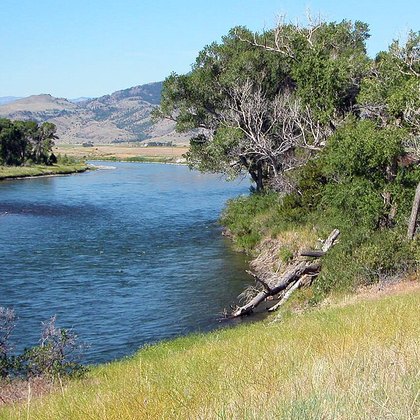
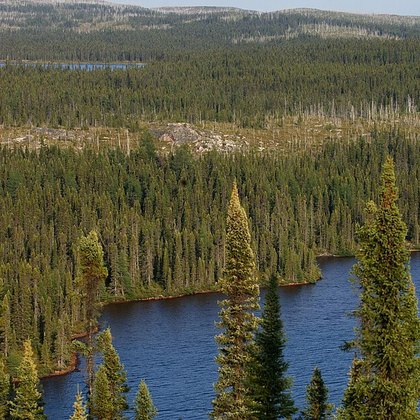
Coasts, large rivers, lakes and reservoirs with open water to fish and heavy trees or cliffs to nest in. Densities are highest along the salmon rivers of Alaska and the Pacific Northwest, but the species is now routine over farmland, along highways and at the edges of cities, drawn to carrion, waterfowl and landfills. The eyrie is among the largest of all bird nests: added to year after year until it is two metres across and weighs hundreds of kilograms.
Where the bird is most often found, arranged by the USNVC — the vegetation classification of the United States and Canada — and CMECS for sea and coast.



Range and movements
Breeds throughout Alaska — by far its stronghold — across Canada to the treeline, in all forty-eight contiguous states, and in small numbers in northwestern Mexico, on Baja California and along the coast of Sonora. It is absent from Greenland, where the breeding sea eagle is the Eurasian Haliaeetus albicilla. Northern birds move south as soon as the water freezes and gather at open water — several thousand along the Chilkat in Alaska in November, hundreds below the Mississippi locks in January. Southern birds stay put and breed in winter instead: in Florida the eggs are laid in November and December.
- Resident
- Breeding (summer)
- Winter
- Passage
- dark = core range, pale = thinly spread
Where and when to look
The best place to learn the species is a winter concentration at open water: below a Mississippi lock, or at a late salmon river, adults and immatures sit side by side in the same tree, and only then do the four age classes really come apart. Do not go by the amount of white, which varies enormously, but by the colour of the bill and eye. And for any distant soaring bird, check whether the wings lie dead flat — that alone settles half of all Golden Eagle confusions.
Conservation
After the Second World War the species collapsed under DDT, which thinned the eggshells until clutches failed; by 1963 little more than four hundred occupied eyries remained in the contiguous states. The 1972 ban on DDT, protection under the Endangered Species Act and the Bald and Golden Eagle Protection Act reversed the decline completely: downlisted to threatened in 1995, delisted in 2007, and the most recent national survey put the population at about 316,700 birds in the lower forty-eight. What remains are lead poisoning from ammunition in carrion — detectable in roughly half of the eagles sampled and demonstrably slowing population growth — collisions, electrocution, and since 2022 highly pathogenic avian influenza, which cost whole breeding seasons in some states.
Scientific name
Haliaeetus leucocephalus | (Linnaeus, 1766)
Linnaeus described the species in 1766, in the twelfth edition of Systema Naturae, as Falco leucocephalus; because it was later moved to another genus, author and year stand in parentheses. The genus Haliaeetus was introduced in 1809 by the French zoologist Savigny, in the Description de l'Égypte. Haliaeetus is Neo-Latin from Greek haliaietos, 'sea eagle', from hals, 'sea', and aetos, 'eagle'; leucocephalus combines leukos, 'white', and kephale, 'head'. The English name has nothing to do with baldness: Middle English balde meant 'white' or 'white-marked', as it still does in piebald. Linnaeus worked from the 'Bald Eagle' that Mark Catesby figured from Carolina, and the type locality accordingly reads Carolina.