All species › Passerines › New World blackbirds, troupials and allies › Brewer's Blackbird
Brewer's Blackbird | Euphagus cyanocephalus
Brewers troepiaal | Turpial ojiclaro
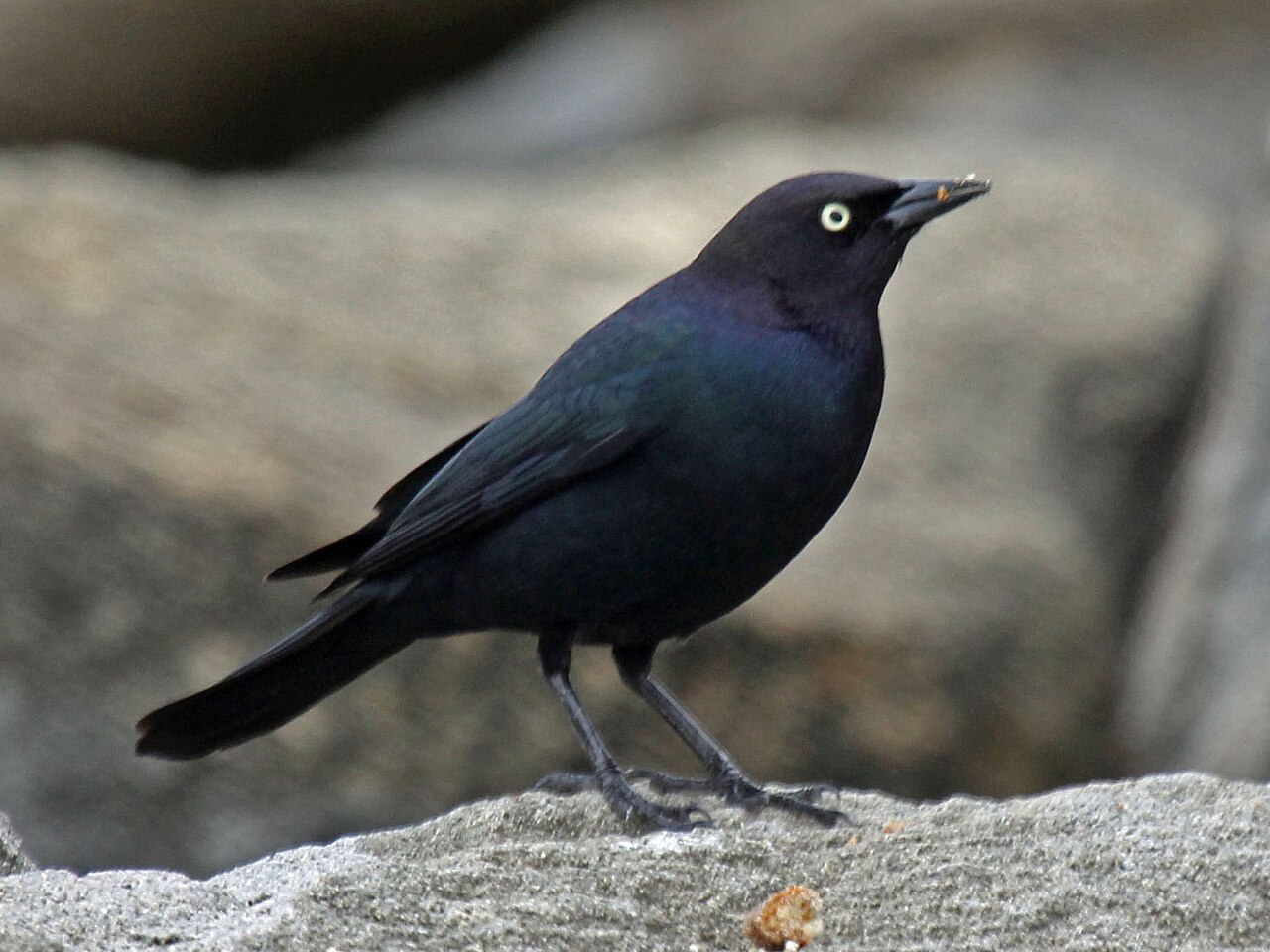
Brewer's Blackbird is the blackbird of car parks, pastures and fields across western North America. The male is black with a purple gloss on the head and a yellow eye; the female is greyish brown with a dark eye. Since 1966 the population has fallen by more than half.
Voice
The song is short and hoarse: a squeaky, creaking k-shee of less than a second, often preceded by one or two low gurgling notes, given with head feathers raised and tail spread. The usual call is a sharp check, repeated steadily in flocks. A flock on the ground produces a rattling, hissing background sound.
Recording: Jonathon Jongsma — CC BY-SA 3.0 · Wildlife Loop Rd, Custer State Park, South Dakota, United States · xeno-canto
Identification
The male is black with a purple gloss on head and neck and a green-blue gloss on body and wings; the eye is bright yellow and stands out against the black. The female is plain greyish brown with a dark brown eye and no streaking. Both sexes have a slim, pointed bill, a medium-length square-ended tail and fairly long legs. Walking, the bird jerks its head with each step.
Confusion species
Rusty Blackbird also has a yellow eye, but a longer, thinner bill, and in winter plumage rusty feather edges on head and back; it keeps to swamp forest and wooded shores, not open fields. Common Grackle is much larger, with a long wedge-shaped tail. Brown-headed Cowbird is smaller, with a short conical bill, a dark eye and, in the male, a brown head. Red-winged Blackbird has red shoulders and a dark eye.
Habitat
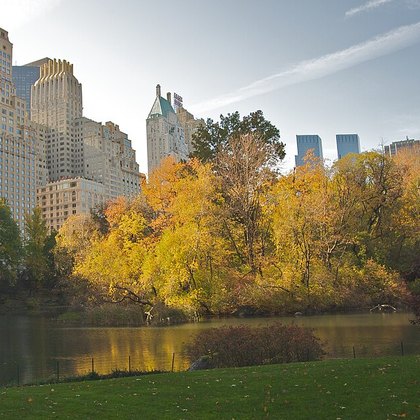
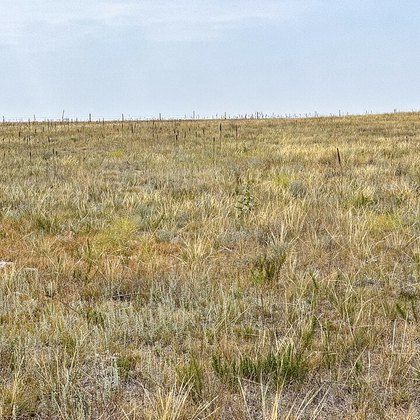
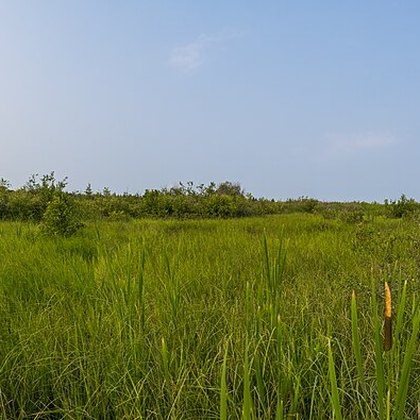
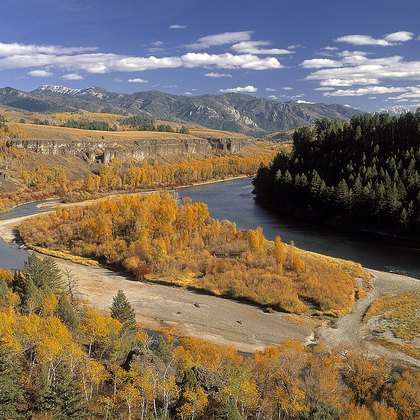
Open and semi-open ground, often near water: pasture, farmland, riparian strips, shortgrass steppe, roadsides, lawns, car parks, schoolyards and campgrounds, from below sea level to about 2400 metres. It nests in loose groups of up to thirty pairs in shrubs, trees or reedbeds. Outside the breeding season it forms mixed flocks with cowbirds and other blackbirds on stubble fields and around livestock operations.
Where the bird is most often found, arranged by the USNVC — the vegetation classification of the United States and Canada — and CMECS for sea and coast.



Range and movements
The breeding range runs from British Columbia and the Canadian prairie provinces south across the western United States and east to the Great Lakes; during the twentieth century the eastern limit advanced into Michigan and Ontario. In the West, from Washington to New Mexico, the species is present all year. Northern and eastern breeders leave and winter in the southeastern United States and across nearly all of Mexico as far as the south of the country. East of the Mississippi it is a scarce and irregular winter visitor.
- Resident
- Breeding (summer)
- Winter
- Passage
- dark = core range, pale = thinly spread
Where and when to look
Check a car park or a feedlot in the West: the birds walk among the vehicles and allow a close approach. In doubt, look at the eye first — yellow in the male, dark in the female — and then at the slim bill, which separates the species from any cowbird.
Conservation
The species is listed as Near Threatened. Breeding Bird Survey counts show a decline of about 57 percent since 1966, despite the eastward expansion of the range. Factors named are the conversion of mixed farmland to large-scale monoculture, pesticides reducing the insect supply, and control where the species is treated as an agricultural pest. It is also considered sensitive to the shifting climate of the West.
Scientific name
Euphagus cyanocephalus | (Wagler, 1829)
Wagler described the species in 1829 as Psarocolius cyanocephalus; because it was later placed in Euphagus, author and year stand in parentheses. Euphagus was introduced by Cassin in 1867, from Greek eu 'well' and phagein 'to eat'. The species name cyanocephalus comes from kuanos 'dark blue' and kephalos 'headed', after the gloss on the male's head. The English name refers to the American ornithologist Thomas Mayo Brewer. The described specimen came from Mexico, later assigned to Temascaltepec.