All species › Passerines › Tits, chickadees and titmice › Carolina Chickadee
Carolina Chickadee | Poecile carolinensis
Carolinamees | Carbonero de Carolina
The Carolina Chickadee is the chickadee of the southeastern United States, and it resembles the Black-capped Chickadee so closely that the two were not separated until 1834. Where their ranges meet there is a narrow band in which they breed with one another, and that band has been moving north since the 1970s.
Voice
The song is a clear whistled fee-bee fee-bay of four notes, two high and two low alternating; the Black-capped Chickadee keeps to two notes. The call that gives the bird its English name is a rapid chicka-dee-dee-dee, higher and noticeably faster and more hurried than the Black-capped Chickadee's. The number of dee syllables rises with the alarm in the flock: an owl or a cat on the ground adds more of them. In the band where both species occur, birds sing the phrases of each, and then the sound proves nothing.
Recording: Rory Nefdt — CC BY-NC-SA 4.0 · Lusby, Calvert County, Maryland, United States · xeno-canto
Identification
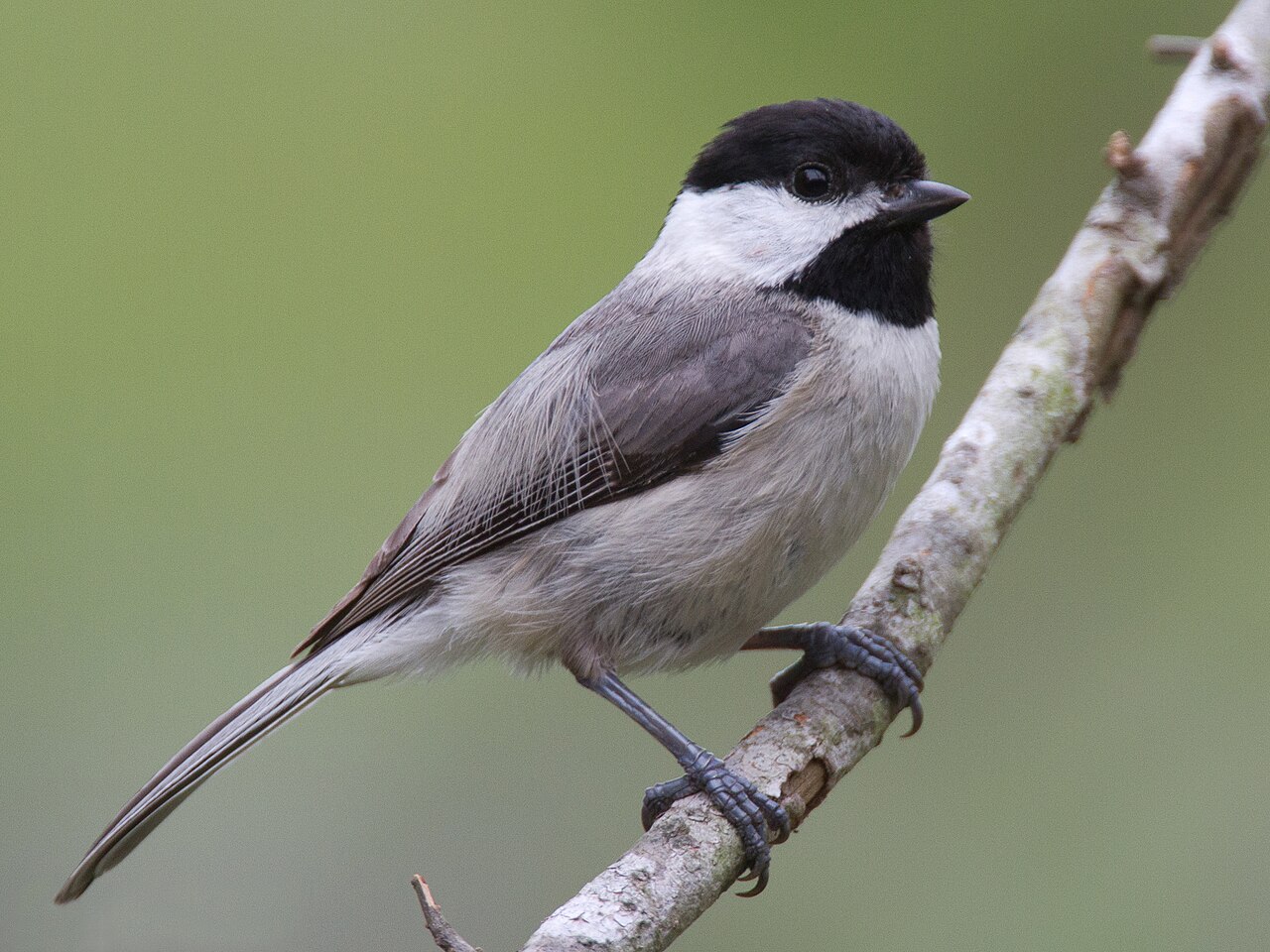
A small grey tit with a black cap running back into the nape, a black throat patch, and clean white cheeks between the two. The back is plain grey, the flanks at most a pale buff, the underparts dirty white. Male, female and juvenile are marked alike, and there is no different seasonal plumage. The wing feathers have narrow, inconspicuous pale edges, where those of the Black-capped Chickadee carry broad white fringes that make a pale panel in the folded wing. The lower edge of the black throat patch is straight and sharply drawn; on the Black-capped Chickadee it frays out towards the breast.
Confusion species
Black-capped Chickadee (Poecile atricapillus) is the real problem: slightly larger, with broad white fringes to the wing feathers and a frayed black throat patch, but along a narrow band from New Jersey to Kansas the two overlap and hybridise as well. Outside that band, where you are standing is a more reliable character than the bird itself. Boreal Chickadee (Poecile hudsonicus) of the northern conifer forests has a brown cap and rusty flanks and does not reach this far south. Blue-gray Gnatcatcher works the same branches and is as small and as grey, but lacks the black head and carries a long white-edged tail that it moves continually.
Habitat
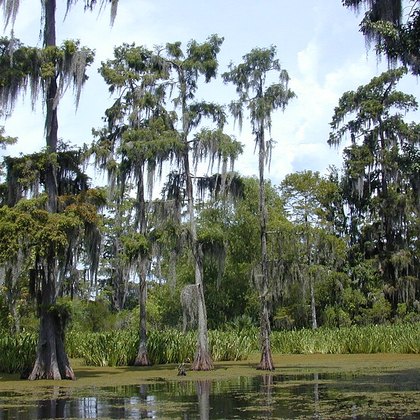
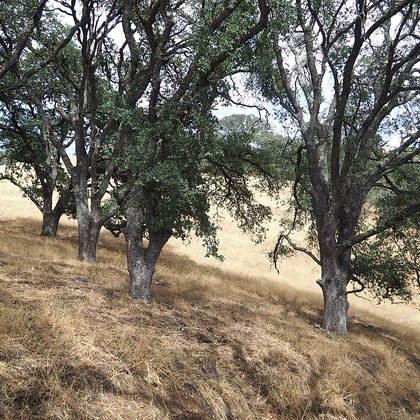
Deciduous and mixed woodland with plenty of dead wood, and above all its edges: woodland margins, hedgerows, riverside woods, and gardens and parks with old trees. In the southeast it extends into pine woodland and open oak woodland, and in the lowlands into cypress and gum swamp forest. It excavates its own nest hole in soft, rotten wood and therefore needs standing dead trunks; where these have been cleared it takes a nest box. It does not use high closed forest without a lower storey, or open farmland. In winter it stays in the same wood and moves through a fixed area with a settled flock.
Where the bird is most often found, arranged by the USNVC — the vegetation classification of the United States and Canada — and CMECS for sea and coast.



Range and movements
Resident in the southeastern United States, from southern New Jersey, Pennsylvania and Ohio south to the Gulf coast and central Florida, west into central Texas and eastern Oklahoma and Kansas. It does not migrate and is hardly ever seen outside that range; young birds too stay close to home. The northern limit lies against that of the Black-capped Chickadee and has moved tens of kilometres north in several places over the past fifty years, measured in Illinois and Missouri by the position of the hybrid zone. Researchers link that shift to winter minimum temperature.
- Resident
- Winter
- dark = core range, pale = thinly spread
Where and when to look
Do not look for the bird but for the flock: outside the breeding season it moves through its area in a settled group, with nuthatches, creepers and wintering warblers attached to it. In the zone where both chickadees occur, count the whistled notes — four, alternating high and low, is Carolina Chickadee; two is Black-capped Chickadee — and take it as settled only after a few repetitions. A handful of sunflower seed at the edge of a garden usually brings it out within a quarter of an hour.
Conservation
Not threatened (LC), with a breeding population estimated at well over ten million and close to stable since 1966. The loss of standing dead trees in managed woods and in gardens costs it nest holes; nest boxes take up part of that. At the northern edge of the range its limit moves with the softening winters, at the expense of the Black-capped Chickadee.
Scientific name
Poecile carolinensis | (Audubon, 1834)
Audubon described the species in 1834 as Parus carolinensis, among the tits of the Old World; because it was later placed in another genus, author and year stand in parentheses. The genus Poecile was introduced by Kaup in 1829 and goes back to Greek poikilos, 'pied' or 'mottled'. carolinensis means 'of Carolina'. The type locality is Charleston, South Carolina, where Audubon noted that this chickadee was smaller and sounded different from the bird he knew from the north.