All species › Birds of prey › Kites, Old World vultures, eagles and hawks › Golden Eagle
Golden Eagle | Aquila chrysaetos
Steenarend | Águila real
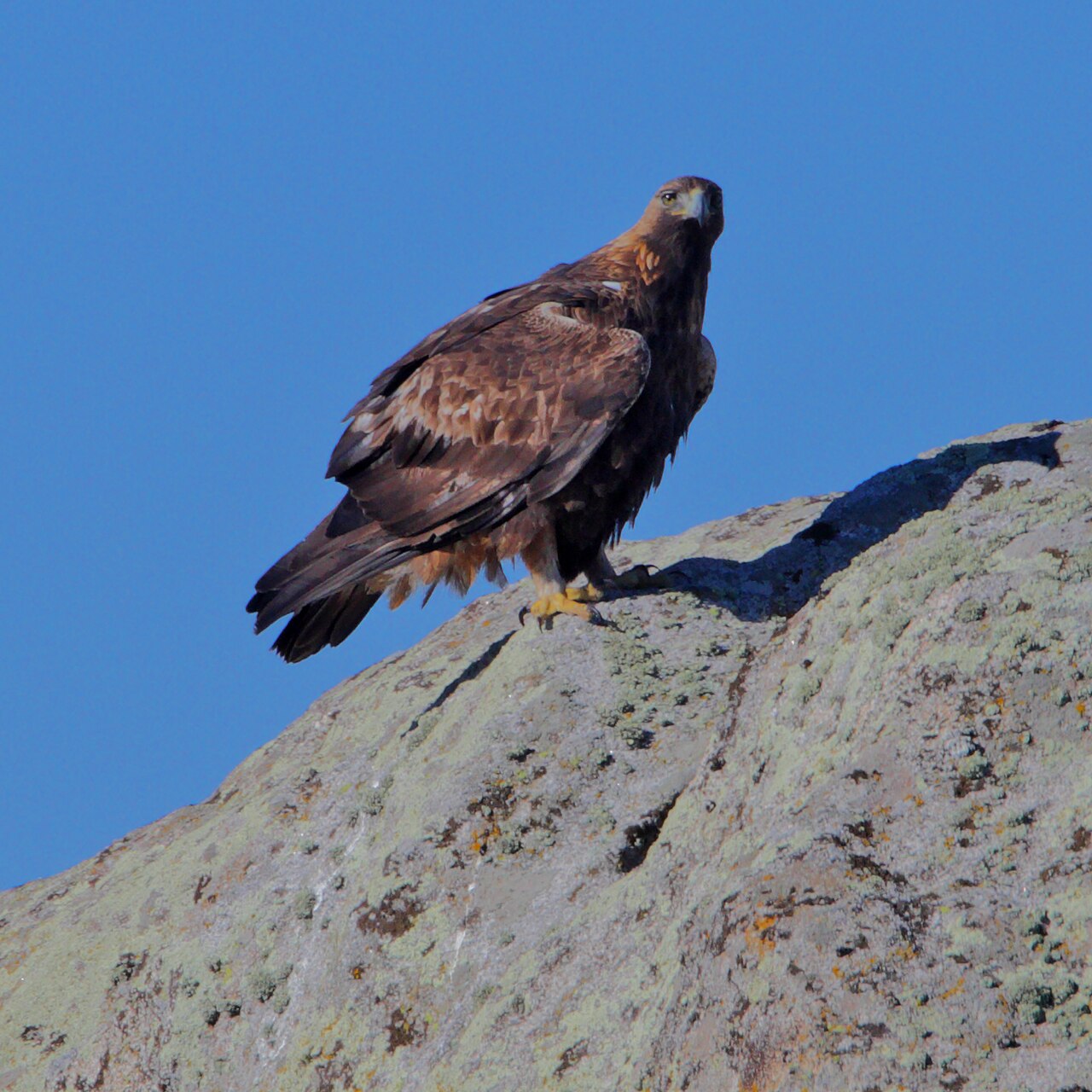
The largest raptor of open North America, with a wingspan of up to just over two metres and a golden sheen across crown and nape that gave it its name. It hunts hares, ground squirrels and prairie dogs and can approach three hundred kilometres an hour in a stoop. It occurs right around the northern hemisphere and is the national emblem of Mexico, shown on flag and coat of arms.
Voice
A silent bird: outside the breeding season it is almost never heard. What it does give is high, thin and weak for an animal of this size — a whistled wip or wonk, used by adults at the nest to announce a delivery of food. Young in the nest beg with a high, persistent call that in still weather carries more than a kilometre. Sound is therefore rarely the way to find one; the way to find one is to watch the sky above the ridge.
Recording: Vaslin Matthieu — CC BY-NC-SA 4.0 · Arrondissement de Narbonne (near Laroque-de-Fa), Aude, Occitanie, France · xeno-canto
Identification
Adults are uniform dark brown with a golden wash over the back of the head and neck, visible when the light falls on it, and the legs are feathered right down to the toes. Soaring birds hold the wings in a shallow V with the primaries spread like fingers, and the silhouette is known by the small head and the long tail, which projects further behind the body than the head does in front. The wings are broad but narrow in sharply where they meet the body. Juveniles show crisply edged white panels at the base of the tail and in the primaries, which fade away over the first five years. As in almost all hawks and eagles the female is larger and heavier than the male — with a pair on the same cliff the difference is visible.
Confusion species
Immature Bald Eagle is the main pitfall: it has a far heavier head and bill, holds its wings flat, and the white on body and underwing coverts is irregularly blotched rather than confined to clean-edged panels. Turkey Vulture also soars with raised wings but rocks constantly, has a smaller body, and shows a two-toned underwing with a pale trailing edge along its whole length. Ferruginous Hawk is big and pale-headed but has a short, pale tail and white primary patches on the upperwing. A dark Red-tailed Hawk is considerably smaller and has a shorter, broad tail without the long rear line of an eagle.
Habitat
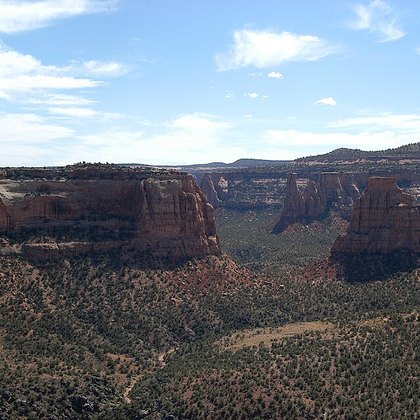
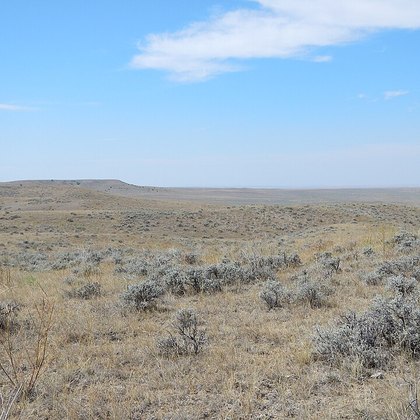
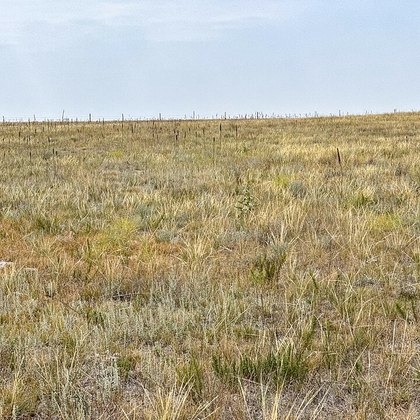
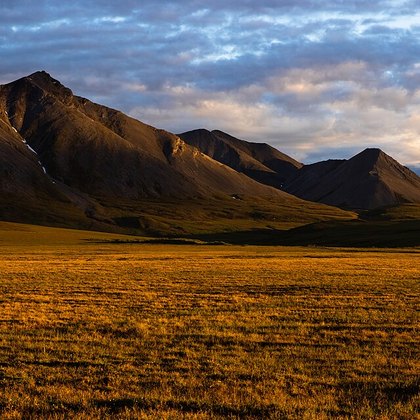
Open and half-open country under natural vegetation: mountain slopes, canyons, cliffs, sagebrush steppe, shortgrass prairie, desert edge and, in the north, tundra beyond the treeline. It prefers to nest on a rock face, but also uses a large tree or a transmission tower. Dense forest and built-up land are avoided; what it needs is a view, rising air along a slope and prey of some size. In winter it comes to carrion in the lowlands as well.
Where the bird is most often found, arranged by the USNVC — the vegetation classification of the United States and Canada — and CMECS for sea and coast.

Range and movements
Resident across almost all of western North America, from Alaska and British Columbia south into northern and central Mexico, with a separate eastern population that breeds in northern Quebec, Labrador and northern Ontario and winters on the forested ridges of the Appalachians. Northern birds move out; southern birds hold their territory all year. The eastern migration follows the ridgelines: southward from mid-October to early December, back in March and April, and at the hawk watches along those ridges the species is then annual. Beyond the Americas it occurs throughout Europe, North Africa and Asia.
- Resident
- Breeding (summer)
- Winter
- Passage
- dark = core range, pale = thinly spread
Where and when to look
Look for it on a clear morning with wind against a long ridge or canyon wall, where it rides the rising air without a wingbeat; the combination of small head, long tail and shallow V reads even at great range. In the east the Appalachian hawk watches in November and again in March are the most reliable place, and the crisply edged white panels of young birds are what to watch for.
Conservation
The world population is put at some hundred and thirty thousand birds and has been roughly stable since 1966; the species is listed as Least Concern (LC); the eastern North American population is estimated at five thousand birds or a little more. More than seventy per cent of recorded deaths are caused by people: lead poisoning after feeding on carrion containing shot or bullet fragments, electrocution on power poles, collisions with wind turbines, and collisions with vehicles at roadside carcasses. Because a pair first breeds only at four or five years old and rarely raises more than one young, the loss of adults has effects that last.
Scientific name
Aquila chrysaetos | (Linnaeus, 1758)
Linnaeus described the species in 1758 as Falco Chrysaëtos, among the falcons; because it was later moved to another genus, author and year stand in parentheses. The genus Aquila was introduced by Brisson in 1760; aquila is simply the Latin word for 'eagle'. chrysaetos goes back to Greek khrusos, 'gold', and aetos, 'eagle', after the golden nape feathers. Linnaeus gave Europe as the type area; he restricted that to Sweden in 1761, in the second edition of his Fauna Svecica.