All species › Passerines › Shrike-babblers, Erpornis and vireos › Gray Vireo
Gray Vireo | Vireo vicinior
Grijze vireo | Vireo gris
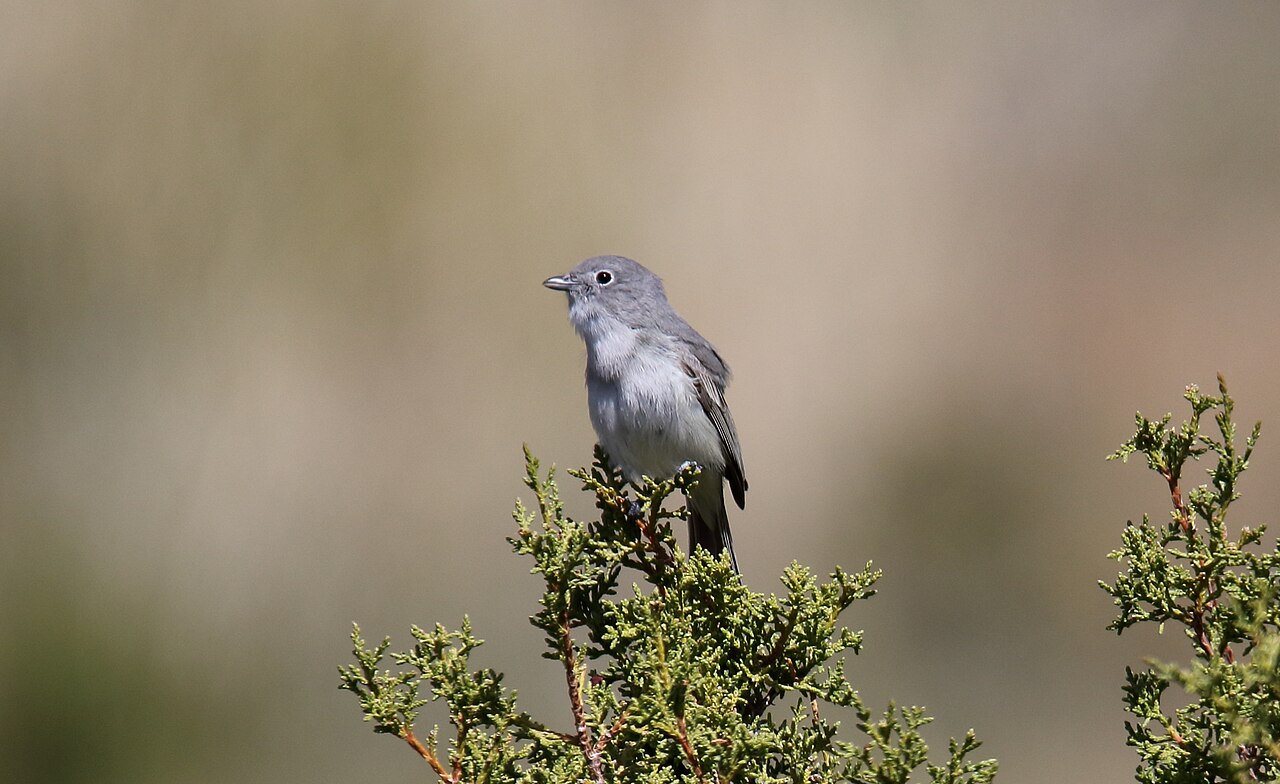
The Gray Vireo is the vireo of the dry Southwest: plain grey, with a long tail that it moves constantly from side to side, and tied to open juniper woodland and desert scrub. Of all North American vireos it forages the lowest and the fastest.
Voice
The song consists of short phrases of two or three notes, written as che-wee, chee-wee, choo, with a pause of one or two seconds between them; longer runs reach up to nine syllables. The male sings through the morning and keeps it up for hours, including while foraging, so the bird is easy to locate. It sings both from a perch and in flight, and throughout the year, at the highest rate in the breeding season.
Recording: Scott Gravette — CC BY-SA 4.0 · Kickapoo Cavern State Park, Texas, United States · xeno-canto
Identification
Plain grey above, whitish below, with a thin white eye-ring and white lores; late in the year the upperparts take on a greenish cast. The wing is dark grey to blackish with white tips to the greater coverts, forming a single narrow wing bar that is often barely visible. The tail is grey with white outer edges and is proportionately long. The bill is heavy and hooked. The bird moves quickly and nimbly among fine, often thorny branches, usually stays within four metres of the ground and flicks its tail from side to side as it goes.
Confusion species
Plumbeous Vireo has a much bolder eye-ring that runs forward through the lores to the bill, forming spectacles, two clear wing bars, and lives in montane forest rather than juniper woodland and desert scrub. Bell's Vireo has a finer bill, a partial eye-ring with a faint dark eye-line, and a different, chattering song; it also sits lower, in riparian scrub. Gray Flycatcher has a straighter, flat bill without a hook, holds a more upright posture and catches insects in the air from exposed perches rather than picking them from foliage. Blue-gray Gnatcatcher is smaller and thinner-billed, with a longer black-and-white tail.
Habitat
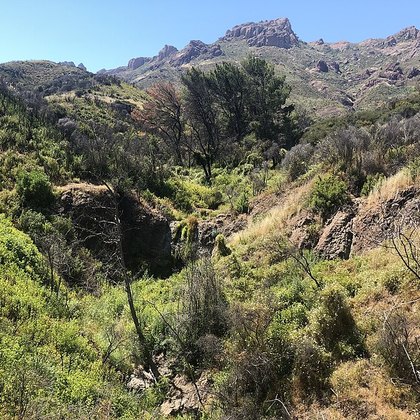
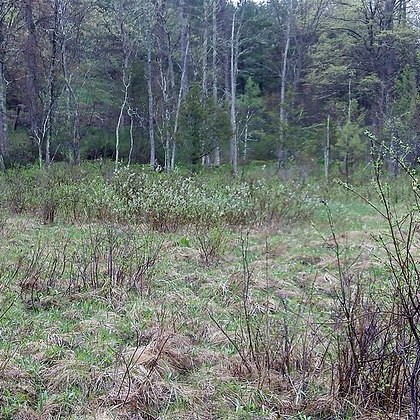
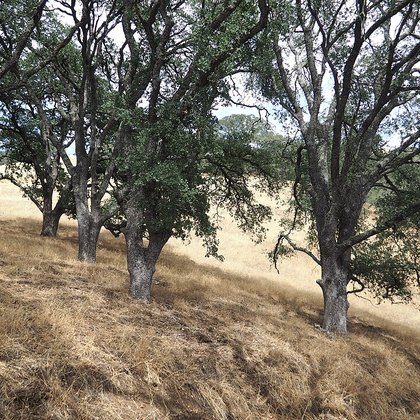
Open juniper woodland, pinyon-juniper, oak-juniper, chaparral and thorn scrub, typically with 35 to 45 per cent shrub cover and much bare ground between. Across most of the breeding range it occurs between 1600 and 2300 metres, lower in western Texas (from about 900 metres) and down to 400 metres in northern Mexico. On migration and in winter it uses arid and desert scrub. Wintering birds in Sonora eat the fruit of the elephant tree, Bursera microphylla, and related species, and defend individual winter territories.
Where the bird is most often found, arranged by the USNVC — the vegetation classification of the United States and Canada — and CMECS for sea and coast.


Range and movements
The main breeding range runs from southeastern California through northeastern Utah and northwestern Colorado to central and southwestern New Mexico and southeastern Arizona. Smaller breeding areas lie in south-central California, southeastern Colorado, southeastern New Mexico, southwestern Texas and northern Baja California. It winters in southern Baja California and from southwestern Arizona through most of Sonora. Birds are present year-round in the Big Bend of Texas, but the breeders leave for the winter, possibly to San Luis Potosí. Breeding runs from May to late August.
- Resident
- Breeding (summer)
- Winter
- Passage
- dark = core range, pale = thinly spread
Where and when to look
Look for it in May and June by song, in open juniper on a lower slope: the sound goes on for hours and moves with the foraging bird, so walk along quietly until it comes into view. Once you have it, watch the tail — no other grey vireo in the region moves it sideways so persistently.
Conservation
The IUCN places the species in the least concern category, with an estimated 410,000 to 460,000 mature birds and an increasing trend. In New Mexico, however, it is listed as threatened at state level and designated a Species Conservation Concern, Level 1; that state holds about 22,000 birds, some five per cent of the world total, and the state trend was put at roughly -16 per cent a year, though on few survey routes. Brood parasitism by Brown-headed Cowbird is the best-documented pressure: in a study in southeastern New Mexico more than two-thirds of the nineteen nests found were parasitised, and parasitised nests are often abandoned. Breeding and winter ranges lie largely in thinly settled country.
Scientific name
Vireo vicinior | Coues, 1866
Coues described the species in 1866 as Vireo vicinior, from a specimen from Fort Whipple, Arizona; since it still stands in the same genus, author and year go without parentheses. Vireo is a Latin word for a green migratory bird, from virere 'to be green'. The species name vicinior is the comparative of vicinus 'neighbouring, related', so 'more closely related', after the affinity Coues saw with the western vireos already known.