All species › Pelicans, herons and ibises › Herons, egrets and bitterns › Great Egret
Great Egret | Ardea alba
Grote zilverreiger | Garceta grande
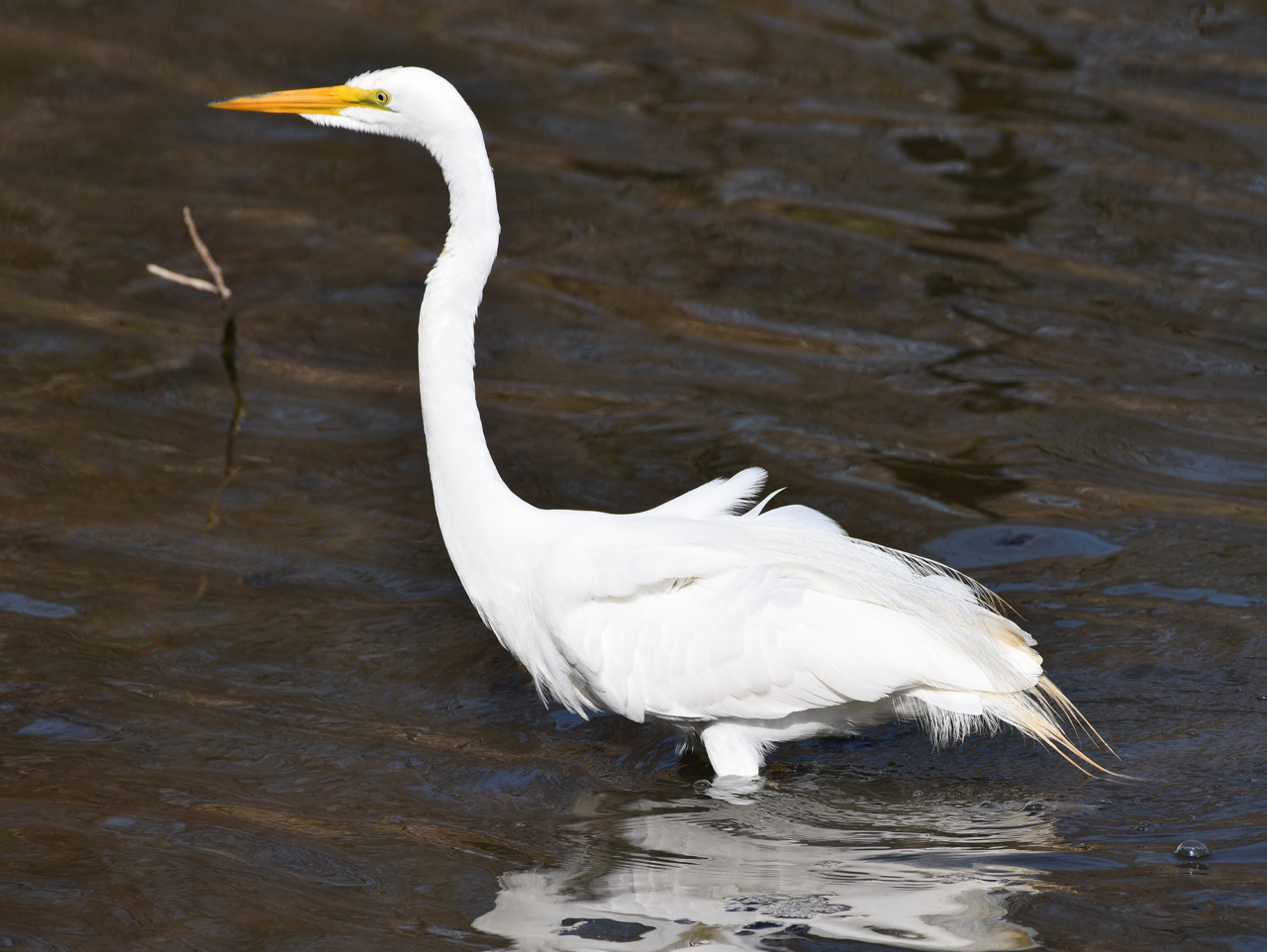
The Great Egret is the white heron to be found in almost any marsh on the continent: entirely white, with a yellow bill and black legs, and a neck that rests in a deep S and is straightened in a single movement as it strikes. By about 1900 it had nearly vanished from North America, because the long back plumes of the breeding dress were worked into hats. The society founded then for its protection still carries it on its emblem.
Voice
Most of the time it is silent. Startled, it goes up with a low, harsh kraa, shorter and deeper than a bird of this build leads you to expect, sometimes repeated until it is out of reach. At the colony it has more to say: hoarse cries and a dry rattling cuk-cuk-cuk as birds arrive at the nest or drive off a neighbour. The young beg with a raucous, unbroken screaming audible well beyond the nesting trees.
Recording: Esperanza Poveda — CC BY-NC-SA 4.0 · Aljarafe (near Choza de Huerta Tejada), Sevilla, Andalucía, Spain · xeno-canto
Identification
Adults are entirely white, with a yellow bill, black legs and black feet; the gape line runs back past the eye, a usable mark at close range. In the breeding season long, thin plumes grow along the back and trail beyond the tail, and the bare skin between bill and eye turns bright green. Male and female are alike, and young birds cannot be told from adults except by the lack of those back plumes. Standing, the bird is over a metre tall, with a long thin neck that hangs motionless in an S between one step and the next. In flight the neck is folded back between the shoulders, the black legs trail well beyond the tail, and the broad wings beat slowly and evenly.
Confusion species
Wood Stork (Mycteria americana) is as white but has a broad black trailing edge to the wing, a bare dark grey head with a bill that curves down at the tip, and flies with the neck outstretched. The white form of Great Blue Heron (Ardea herodias), which occurs only in south Florida and the Caribbean, is the same size but heavier built, with dull yellow rather than black legs. Snowy Egret (Egretta thula) is clearly smaller and has a black bill and yellow feet on black legs, exactly the reverse of this species. Cattle Egret is short in neck and leg, keeps to dry ground with livestock, and in the breeding season carries an orange wash over crown and back.
Habitat
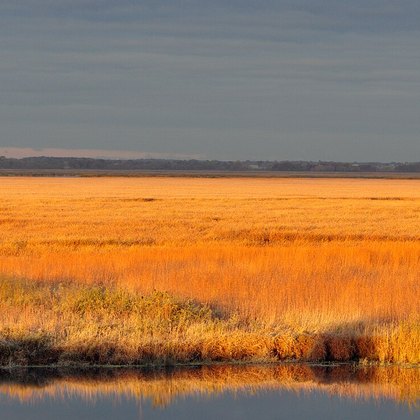
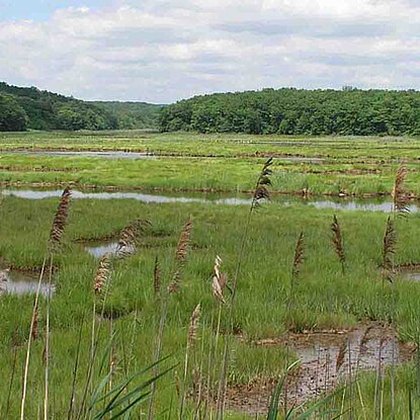
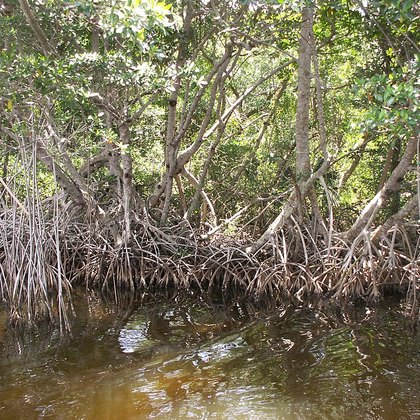
Shallow water of every kind: freshwater marsh, salt marsh, mangrove, the margins of lakes and slow rivers, rice fields, ditches and the edges of reservoirs. What it needs is firm footing and water up to about knee depth, in which it can see fish, frogs and shrimp. Unlike most herons it hunts in the open field as well: a freshly ploughed field or a mown meadow full of mice feeds it just as readily. It nests in colonies in trees or bushes over water, often with other herons, ibises and cormorants, and seldom more than a few kilometres from its hunting ground.
Where the bird is most often found, arranged by the USNVC — the vegetation classification of the United States and Canada — and CMECS for sea and coast.


Range and movements
In North America it breeds along the Atlantic coast from Maine southwards, through the Gulf states, the Mississippi valley and the prairie lakes into southern Canada, and in the west from Oregon to California; south of that it is resident far into South America. The northern breeders leave for the winter, the southern ones stay all year. Outside the Americas the same species occurs in Europe, Africa, Asia and Australia, which makes it one of the most widely spread of all herons. After the near-extermination around 1900 it has taken back the whole of its lost range and since the 1970s has pushed north: egrets now nest again on the Great Lakes and in southern Canada, where a century ago they were absent.
- Resident
- Breeding (summer)
- Winter
- Passage
- dark = core range, pale = thinly spread
Where and when to look
Look for it on a winter morning along a ditch or a rice field, where it stands like a white post in flat country and is visible from kilometres away. To watch it hunt, stand still and wait: the bird takes three or four slow paces, freezes, and then strikes with the neck straightened — a quarter of an hour can pass between attempts. In spring a mixed heron colony is the best place; watch there for the bright green skin between bill and eye, which holds that colour for only a few weeks.
Conservation
The Red List lists the species as Least Concern (LC), and in North America numbers have grown steadily since the protection of 1918; the North American breeding population is put at a few hundred thousand birds. The threat now is not shooting but water: drainage, channelling and the filling of marshes cost both nesting and hunting ground, and in south Florida the colonies have never returned to their level before the canals. Mercury and other substances build up in a bird that eats fish, and in some areas turn up in the eggs.
Scientific name
Ardea alba | Linnaeus, 1758
Linnaeus described the species in 1758 as Ardea alba and placed it at once in the genus Ardea; because it has been returned there after spells in Egretta and Casmerodius, author and year stand without parentheses. Ardea is the Latin word for heron, and at the same time the name of the town of Ardea in Latium. alba means 'white'. The type locality is Europe: Linnaeus knew the bird from that continent and not from America, though it is the same species.