All species › Kingfishers, bee-eaters and rollers › Kingfishers › Green Kingfisher
Green Kingfisher | Chloroceryle americana
Groene ijsvogel | Martín Pescador Verde
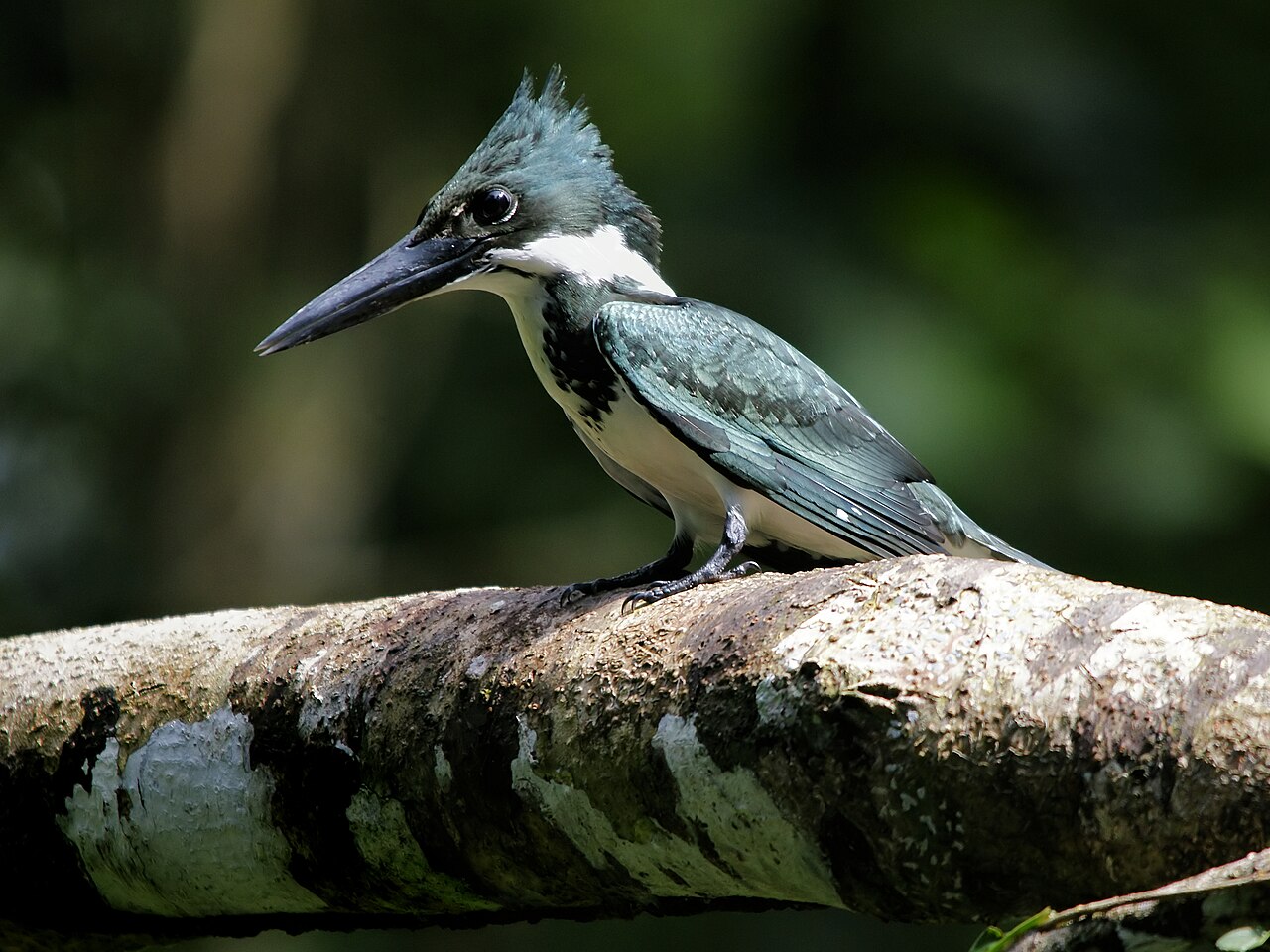
The Green Kingfisher is the smallest of the three kingfishers breeding in the extreme southern United States, and at the same time the most widespread kingfisher in the Western Hemisphere: its range runs from South Texas and southern Arizona deep into Argentina. It is dark green above with white spangling, white below with a rufous breast band in the male and a double green band in the female. The bill is long and heavy for the bird's size.
Voice
The call is a series of short, dry ticks, tik... tik-tik... tik, irregularly spaced and often masked by the sound of running water. When agitated or flying off along the bank the ticking speeds into a brief rattling burst. There is no song; the ticking, usually given from a low perch over the water, is the only vocalization the species produces.
Recording: Franco Vushurovich — CC BY-NC-SA 4.0 · Bosque de los Constituyentes, Rosario, Argentina · xeno-canto
Identification
A small, compact kingfisher with an inconspicuous, flat head lacking an obvious crest and a long, heavy bill. Metallic green above with a row of white spots on the wings and upper tail; the outer tail feathers are largely white, visible in flight. The male shows a rufous breast band on an otherwise white underside with green spotting on the flanks; the female lacks the rufous and instead carries two narrow green bands across the breast. Juveniles resemble the female but show a bronzy wash on the crown and a pale buffy tinge on the breast. The bird perches low, often less than a metre above the water, on a branch or root, and dives from there straight down.
Confusion species
Belted Kingfisher and Ringed Kingfisher, the other kingfishers within the breeding range, are considerably larger, carry a shaggy crest and perch high over the water rather than low near the waterline; the female Belted Kingfisher also shows a single broad band rather than two narrow ones. South of the border the range overlaps with Amazon Kingfisher (Chloroceryle amazona), which is clearly larger, has a heavier bill and, in the male, a complete rather than broken rufous band; Amazon Kingfisher also lacks the fine white spangling on the wing coverts that Green Kingfisher shows.
Habitat
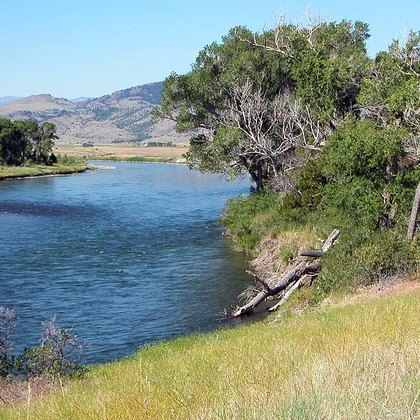
Clear, slow-flowing rivers and streams, oxbow lakes and ponds with a sheltered, vegetated bank, in Texas and Arizona mostly below a thousand metres. It needs low, overhanging branches or roots just above the water from which to hunt, and a steep bank of sand or clay in which the pair digs a nest tunnel. It avoids turbid water and bare, unshaded banks lacking cover.
Where the bird is most often found, arranged by the USNVC — the vegetation classification of the United States and Canada — and CMECS for sea and coast.



Range and movements
The range runs from the extreme south of Texas (mainly the Rio Grande Valley) and southeastern Arizona through Mexico and Central America into South America, where the species reaches as far as northern Argentina — one of the largest north-south ranges of any American bird. In the United States it is resident year-round at the few sites where it breeds; it does not withdraw in winter, though it follows the water when a stream dries up. The northern edge of the range has stayed stable since the early twentieth century.
- Resident
- Breeding (summer)
- Winter
- Passage
- dark = core range, pale = thinly spread
Where and when to look
Walk a shaded stretch of bank quietly and scan low branches and tree roots just above the water surface rather than the treetops; the bird more often gives itself away by its dry ticking than by movement. Santa Ana National Wildlife Refuge in South Texas and the riverside stretches near Patagonia in southeastern Arizona are considered the most reliable sites within the United States.
Conservation
Widespread worldwide and listed as Least Concern (LC). Within the United States the range is small and depends on a handful of rivers with enough shaded bank and clear flow; channelized banks, dam construction and river-water withdrawal for irrigation pose a local risk to the nest tunnels and the fish stocks the species depends on.
Scientific name
Chloroceryle americana | (Gmelin, 1788)
Gmelin described the species in 1788 as Alcedo americana, among the Old World kingfishers; it has since been moved to another genus, hence the parentheses around author and year. The genus Chloroceryle is built from Greek chloros, 'green', and keryle, an ancient Greek word for kingfisher, and unites the four small green kingfishers of the Americas. americana is Latin for 'of America', after the continent where Gmelin placed the species.