All species › Kingfishers, bee-eaters and rollers › Kingfishers › Ringed Kingfisher
Ringed Kingfisher | Megaceryle torquata
Amerikaanse reuzenijsvogel | Martín Gigante Neotropical
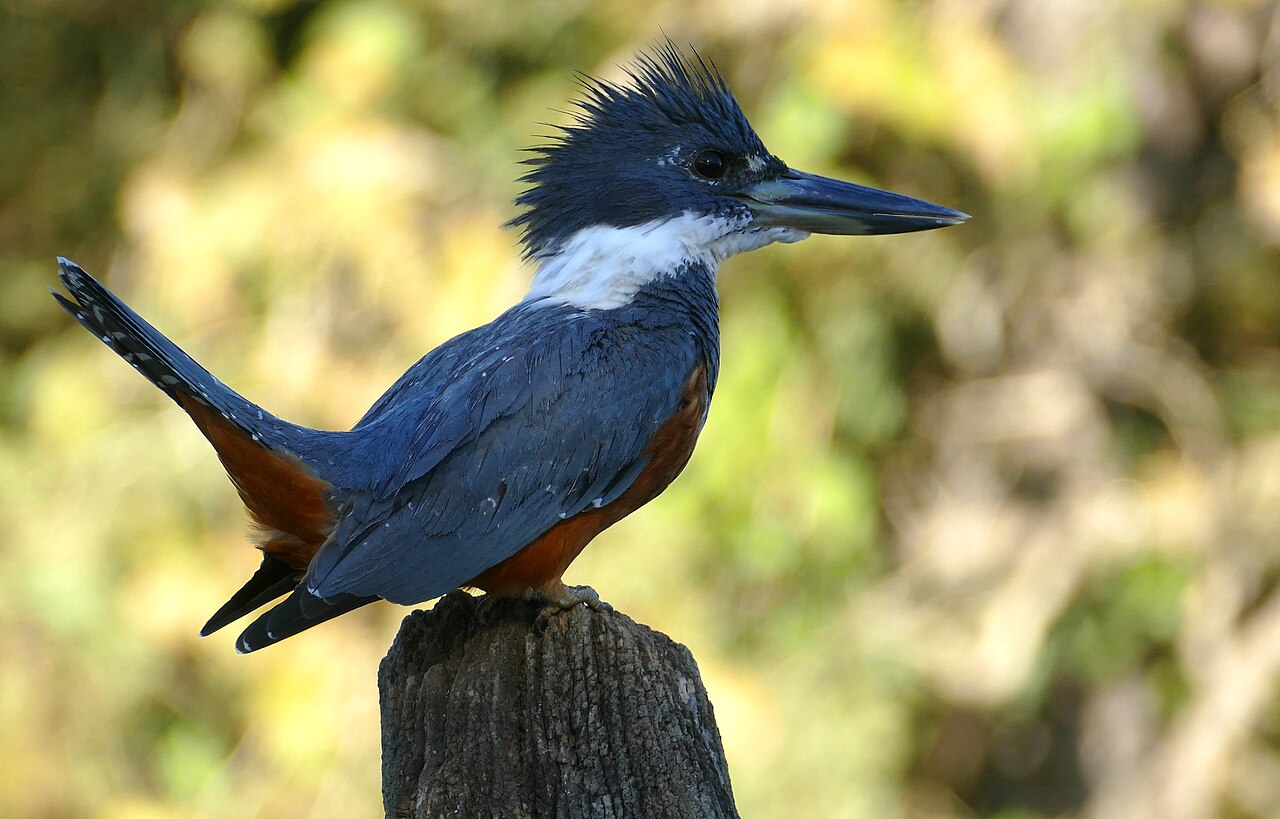
The Ringed Kingfisher is the largest kingfisher in the Western Hemisphere and reaches the United States only in the extreme south of Texas, along the lower Rio Grande. A heavy-bodied, shaggy-crested hunter with a massive, dagger-shaped bill, slaty blue above and chestnut below, with a white collar. Since the first record in 1888 and the first nest in 1970 the range has crept slowly northward.
Voice
The call is a low, rattling call, slower and deeper than that of the Belted Kingfisher, given as the bird flies low over the water or launches from a lookout perch. Young birds beg with a hoarse klek; adults also give a softer klek in contact. There is no song; the rattle, louder and lower-pitched than in any other North American kingfisher, carries far across open water.
Recording: Niels Krabbe — CC BY-SA 4.0 · Pichincha: Río Guaycuyacu, Ecuador · xeno-canto
Identification
A heavily built kingfisher with a large, shaggy crest, a massive bill and a relatively short tail. The male is slaty blue above with a white collar and an unbroken chestnut breast and belly, showing white underwing coverts in flight. The female shares the same chestnut underparts but carries above it a broad blue-grey breast band, separated by a narrow white line — a reversed pattern from most North American birds, in which it is usually the male that carries the extra band. Juveniles show a transitional plumage with patches of the female pattern. Flight is heavy and direct, with slow wingbeats; the bird hovers high over the water before plunging straight down.
Confusion species
Belted Kingfisher, found in the same rivers and coastal waters, is clearly smaller, has a lighter bill and a blue-grey rather than chestnut breast; only the female Belted Kingfisher shows a rufous band, and it is narrow and confined to the flanks, against the fully chestnut underparts of Ringed Kingfisher. At a distance size alone can be hard to judge, but the combination of massive bill, shaggy double crest and the much heavier, rattling call all but rules out confusion.
Habitat
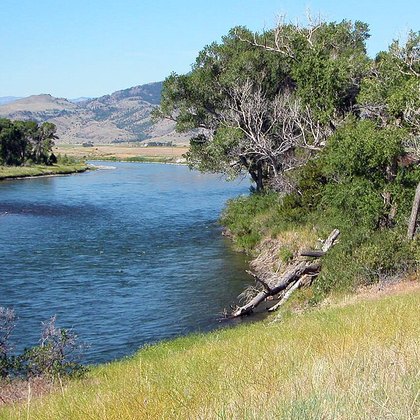
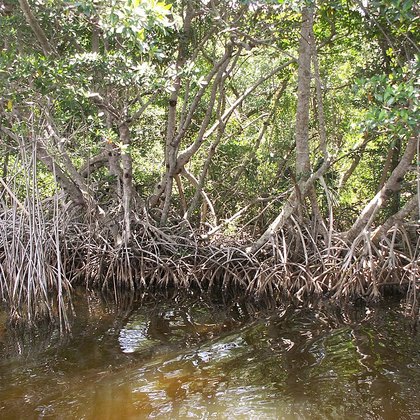
Clear to slightly turbid rivers, lakes, estuaries, lagoons and mangrove coasts with enough fish, from sea level into the lower mountain valleys. The nest tunnel needs a steep, bare bank of sand or clay, often along a larger river than Belted Kingfisher will settle for. In the southern part of the range the species also uses mangrove forest and sheltered coastal lagoons, habitats that Belted Kingfisher largely avoids.
Where the bird is most often found, arranged by the USNVC — the vegetation classification of the United States and Canada — and CMECS for sea and coast.



Range and movements
The range runs from the extreme south of Texas through Mexico, Central America and most of South America to Argentina and Chile — the largest range of any kingfisher in the Americas. In the United States the first record dates only from 1888 and the first confirmed nest from 1970; since then the species has bred consistently along the lower Rio Grande Valley, with occasional records further north in Texas. It is resident; northern breeders do not withdraw, though individuals may wander after the breeding season.
- Resident
- Winter
- Passage
- dark = core range, pale = thinly spread
Where and when to look
Scan the Rio Grande near Falcon Dam and Salineño for a large, loudly rattling bird on a high dead branch or wire over the water; the call carries so far that it is often heard before Belted Kingfisher at the same spot. When in doubt, look above all at the colour of the breast: fully chestnut in both sexes of Ringed Kingfisher, against blue-grey in the male Belted Kingfisher.
Conservation
Widespread worldwide and not threatened, with a population considered to be increasing and a range that is gradually extending north in Texas. Within the United States the breeding population remains small and confined to a narrow strip along the border; channelized banks and the water level of the Rio Grande, managed for irrigation and by dams, are the main local concerns.
Scientific name
Megaceryle torquata | (Linnaeus, 1766)
Linnaeus described the species in 1766 as Alcedo torquata, among the Old World kingfishers; it has since been moved to another genus, hence the parentheses around author and year. The genus Megaceryle unites the largest kingfishers in the world and is built from Greek megas, 'large', and keryle, an ancient Greek word for kingfisher. torquata is Latin for 'collared', after the bird's white collar.