All species › Passerines › Finches, euphonias and allies › Laysan Finch
Laysan Finch | Telespiza cantans
Laysanvink | Palila de Laysan
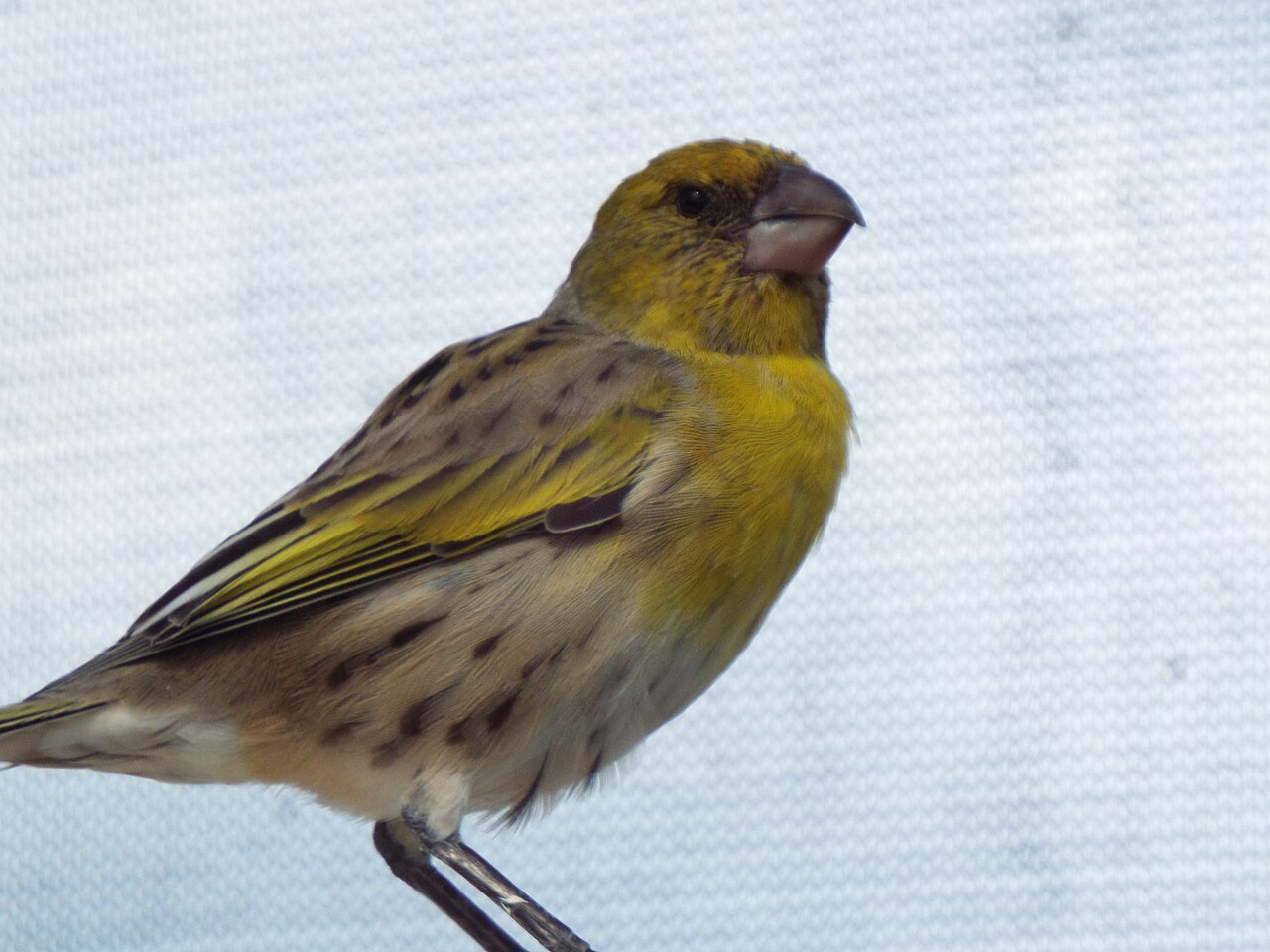
The Laysan Finch is a large honeycreeper with a heavy finch bill, a yellow head and a grey neck, living on only two low coral islands of the northwestern Hawaiian chain. It eats nearly anything: seeds, insects, carrion and the eggs of nesting seabirds — and that is what carried it through the stripping of Laysan that wiped out the island's other land birds.
Voice
The song is a drawn-out warbling series of whistled and rolling notes, canary-like in tone and different from bird to bird; males extend their repertoire and take up phrases from neighbours. The call is a short, hard chep. On a treeless island they sing from tussocks of kawelu grass, from a shrub or from a piece of driftwood, so the sound carries across the whole colony.
No freely licensed recording has been found for this species yet; what to listen for is described below.
Identification
The male has a bright yellow head, throat, breast and mantle, a grey neck and hindneck and a whitish belly. The female is duller, with brown streaking over head and back. Both have a heavy, pale conical bill, black legs and large feet; juveniles are largely streaked brown and take two years to reach adult plumage. It walks much on the ground, hops in grass tussocks and is little shy: birds get into tents, buckets and under tarpaulins. With the bill it chips holes in the eggs of White Tern and Laysan Duck; larger seabird eggs it cannot open.
Confusion species
Nihoa Finch is the only genuinely similar species: it is smaller, with a proportionally smaller bill and more streaking below. The two share no island, so locality decides. On Laysan a streaked juvenile might suggest an introduced bunting, but no other passerine lives on the island. On Midway the species went in 1944; birds there call for certainty about their origin.
Habitat
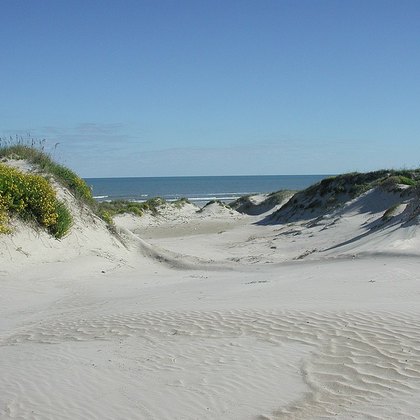
Low, flat sandy islands without forest, vegetated with the native bunchgrass kawelu and with naupaka scrub, herbs and prostrate vines. It uses the whole vegetated surface of the island, nests in grass tussocks and comes to the edges of seabird colonies and to the hypersaline lagoon on Laysan. Fresh water is all but absent; it takes its moisture from food.
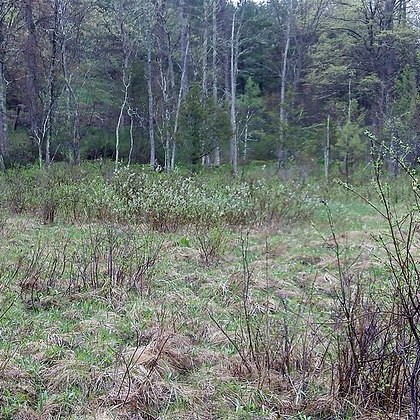
Where the bird is most often found, arranged by the USNVC — the vegetation classification of the United States and Canada — and CMECS for sea and coast.

Range and movements
Naturally on Laysan alone, an island of about four hundred hectares. In 1967 birds were moved to Pearl and Hermes Reef, where populations hold on Southeast Island and Grass Island; introductions on North Island and Seal-Kittery had died out by 1998. An 1891 introduction on Midway was wiped out by rats in 1944, and a monitoring project now runs again on Eastern Island at Midway. The species does not migrate and rarely even crosses between neighbouring islets.
- Resident
- dark = core range, pale = thinly spread
Where and when to look
Laysan and Pearl and Hermes Reef lie in the Papahanaumokuakea Marine National Monument and cannot be entered without a permit, so in practice sightings are confined to research visits. Anyone who gets there need not search: the birds come to camp. Watch the extent of yellow on head and mantle, which is what separates male, female and second-year bird.
Conservation
Numbers swing widely with rainfall and seed supply: between 1968 and 1990 counts averaged about 11,000 birds with a margin of some 4,000, and in 1998 came to nearly 10,000. Rabbits released in 1903 stripped Laysan bare within twenty years; the Laysan Honeycreeper, Laysan Millerbird and Laysan Rail were lost in the process, while the finch held on at fewer than a hundred birds by eating carrion and eggs. The rabbits were removed in 1923 and the population recovered, but with permanently reduced genetic variation. Present pressures are sea-level rise, which may drown the low islets of Pearl and Hermes before 2100, alien plants, and the risk of rats arriving by ship.
Scientific name
Telespiza cantans | Wilson, 1890
Scott Wilson described the species in 1890 as Telespyza cantans, and as it has remained in that genus, author and year carry no parentheses. Telespiza is compounded from Greek tele 'far off' and spiza 'finch', after the remoteness of the islands. The species name cantans is Latin for 'singing'. The type locality was given as Midway, but that rests on an error: the specimen came from Laysan.